


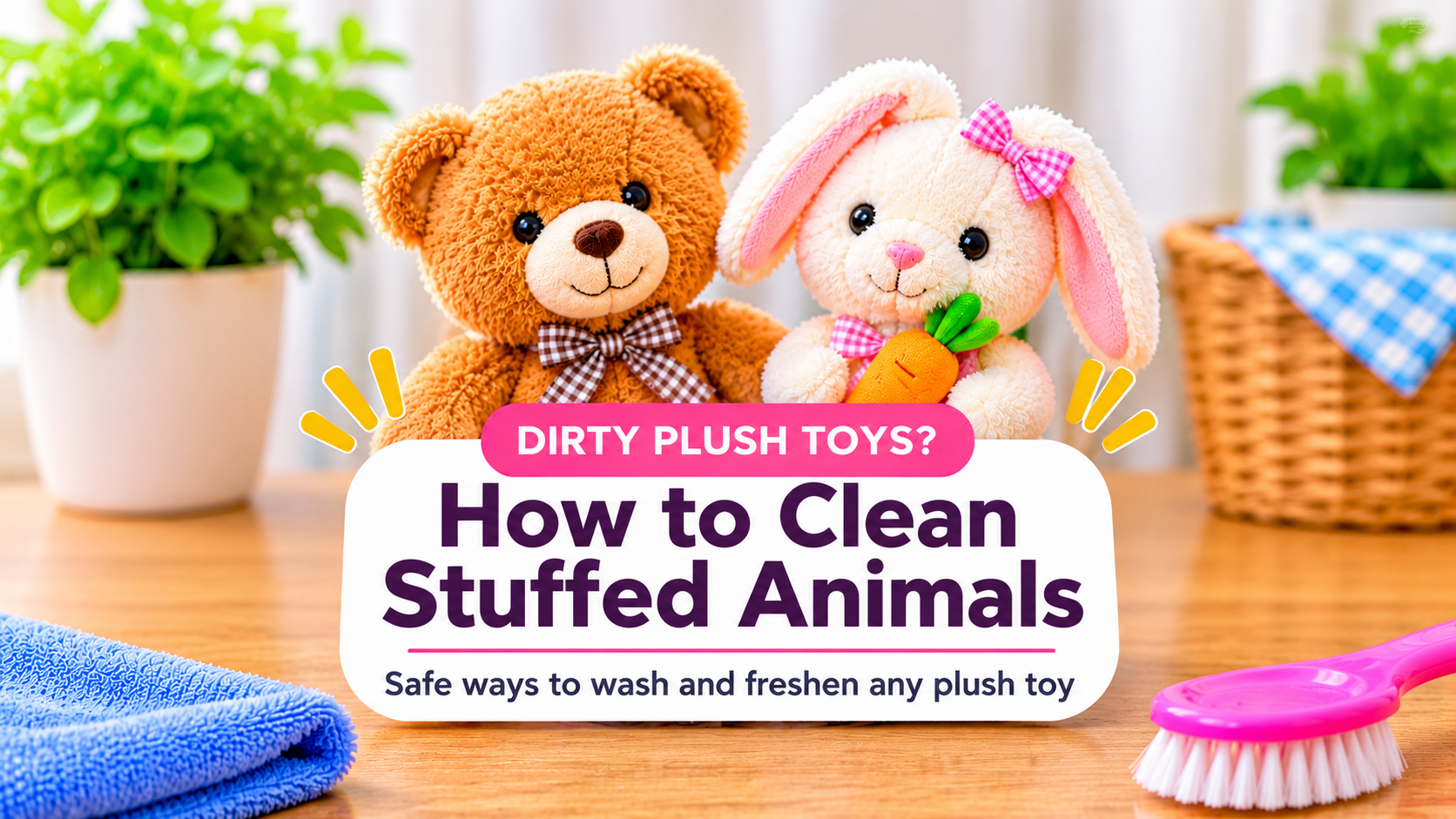
How to Clean Stuffed Animals: A Complete Guide to Safe Washing
Stuffed animals are some of the most loved items in any home. They get hugged, dragged around, dropped on floors, and carried everywhere, which means they collect dust, dirt, spills and germs. Cleaning them regularly keeps them fresh, hygienic and safe for children, but it also needs to be done carefully so the toy does not get damaged.
In this complete guide, you will learn how to check a plush toy before cleaning, the best ways to machine wash, hand wash and spot clean, how to dry stuffed animals safely, and how to deal with special cases like electronic toys and delicate keepsakes.
Why You Should Clean Stuffed Animals Regularly
Plush toys attract more than you might think. Over time, they collect:
- Dust and dust mites
- Dirt, sticky food and drink spills
- Pet hair and dander
- Sweat, saliva and odors
- Germs, especially when toys are shared or carried outside
Regular cleaning keeps these toys fresher and more pleasant to cuddle, and it is especially helpful for children with allergies or toys that go to bed with a child every night.
Before You Start: Check the Stuffed Animal
Not every plush toy can be washed the same way. A quick check can save the toy from damage.

1. Read the Care Label
Most stuffed animals have a care tag sewn into a seam. It usually says whether the toy is machine washable, hand wash only or surface clean only. Follow the label whenever it is available.
2. Look for Electronics
Toys with batteries, music boxes or sound modules should not be soaked or put in the washing machine. These toys should be spot cleaned only.
3. Check Glued and Delicate Parts
Glued eyes, noses, ribbons and decorations can loosen or fall off in water. Antique, vintage or sentimental toys may also be too fragile for a wash.
4. Check the Seams
Look for loose stitches or small holes. Repair them before washing, or the stuffing can leak out during the wash.
What You Need to Clean Stuffed Animals
- Mild liquid detergent or baby-safe laundry soap
- A pillowcase or mesh laundry bag
- Clean white cloths or towels
- A soft brush or old toothbrush
- Baking soda (for freshening)
- A bowl or clean sink for hand washing
- A hair dryer on cool setting (optional)
Choose the Right Cleaning Method

| Type of Toy | Best Cleaning Method |
|---|---|
| Machine washable plush | Gentle cycle in a pillowcase or mesh bag |
| Hand wash only plush | Hand wash in cool or lukewarm soapy water |
| Surface clean only toy | Wipe with a damp cloth and mild soap |
| Electronic or musical toy | Spot clean carefully and keep electronics dry |
| Antique or delicate toy | Dry surface cleaning or professional help |
How to Machine Wash Stuffed Animals
If the care label says the toy is machine washable, this is the fastest and easiest method.

Step 1: Place the Toy in a Pillowcase or Mesh Bag
This protects the toy from rough movement and keeps small parts from snagging on the washing machine. Tie or zip the bag closed.
Step 2: Use the Gentle Cycle With Cold or Lukewarm Water
A gentle cycle is kinder to fabric and stitching. Avoid hot water, because it can damage fur, glue and some dyes.
Step 3: Add a Small Amount of Mild Detergent
Use a gentle, baby-safe detergent in a small amount. Too much soap can be difficult to rinse out of the stuffing and may irritate skin.
Step 4: Rinse Well and Remove Extra Water
If the toy still smells of soap, run an extra rinse. Gently press out extra water with a clean towel. Do not twist or wring the toy.
Step 5: Dry Completely
Air dry the toy or use the lowest heat setting for a short time if the label allows it. Make sure the toy is completely dry before giving it back to a child.
How to Hand Wash Stuffed Animals
Hand washing is the safest choice for delicate toys and anything that is not machine washable.
- Fill a sink or bowl with cool or lukewarm water and add a small amount of mild detergent.
- Submerge the toy and gently squeeze the soapy water through the fabric.
- Use a soft brush or cloth to clean stained areas gently.
- Drain the soapy water and rinse the toy with clean water until the soap is gone.
- Press out the water with a clean towel without wringing.
- Reshape the toy and let it air dry.
How to Spot Clean Stuffed Animals
Spot cleaning is ideal for toys that cannot be soaked, such as toys with electronics, or for small stains.
- Mix a few drops of mild detergent with water.
- Dampen a clean cloth in the mixture and wring it out well.
- Dab the stained area gently. Do not rub hard.
- Wipe again with a cloth dampened with plain water to remove soap.
- Blot with a dry towel and let the toy air dry.
How to Freshen Stuffed Animals Without Washing
Use Baking Soda
Place the toy in a large bag or container with a few tablespoons of baking soda. Seal it, shake gently, and let it sit for several hours or overnight. Then shake or brush off the baking soda and vacuum any leftover powder with a brush attachment. This helps lift odors and dust.
Vacuum the Surface
Use a brush attachment on low suction to remove dust and pet hair from fur and fabric.
Air the Toy Outdoors
Fresh air helps reduce odors. Hang the toy in a shaded, breezy spot for a few hours.
How to Dry Stuffed Animals Properly
Drying is the most important step. Stuffing that stays damp can develop mold and unpleasant odors.
- Press out extra water with a clean towel before drying.
- Air dry the toy in a well-ventilated place, away from direct heat.
- Turn and reshape the toy several times while it dries.
- Use a dryer only if the label allows it, on the lowest heat or an air-only setting.
- Fluff the fur with a soft brush once the toy is dry.
- Make sure the center of the toy feels completely dry before storing it.
Cleaning Special Types of Stuffed Animals
Stuffed Animals With Batteries or Music Boxes
Do not submerge these toys. Wipe the surface with a damp cloth and mild soap, and keep water away from the electronics. If the battery pack is removable, take it out before cleaning.
Vintage and Sentimental Toys
Older toys can be fragile. Use dry surface cleaning, such as gentle brushing or low suction vacuuming. If the toy is valuable, a professional cleaner may be the safest option.
Large Plush Toys
Big toys may not fit in a washing machine and take a long time to dry. Surface clean them or use baking soda and a vacuum instead.
Toys With Long or Silky Fur
Wash gently and brush the fur with a soft brush while it is damp. Air dry fully to avoid matting.
Common Mistakes to Avoid

- Ignoring the care label. It is the best guide for each toy.
- Using hot water or high heat. Heat can damage fur, melt glue and shrink fabric.
- Using bleach or harsh chemicals. They can fade color and irritate skin.
- Not rinsing well. Leftover soap can irritate skin and attract dirt.
- Storing a toy that is still damp. This can lead to mold and odors.
- Wringing the toy. This can break stitches and lump the stuffing.
How Often Should You Clean Stuffed Animals?
- Everyday favorites: every 2 to 4 weeks, or sooner if dirty.
- Bedtime toys: about once a month.
- Toys that stay on shelves: a few times a year, and dust them lightly in between.
- After illness or spills: clean as soon as possible.
How to Keep Stuffed Animals Clean Longer
- Dust or vacuum toys lightly each week.
- Keep toys away from food and drinks.
- Store toys in a clean, dry toy box or on a shelf, not on the floor.
- Rotate toys so they are not all handled every day.
- Wash children’s hands before playtime when possible.
Safety Tips
- Use mild, baby-safe detergents for children’s toys and rinse well.
- Check that eyes, noses and small parts are firmly attached before giving the toy back to a young child.
- Keep detergents and cleaners out of reach of children and pets.
- Never put toys with batteries in water.
- Throw away toys with mold, a strong musty smell or damage that exposes the stuffing.
Frequently Asked Questions
Can you put stuffed animals in the washing machine?
Many can, but check the care label first. Use a mesh bag, a gentle cycle and cold water. Do not machine wash toys with electronics or delicate parts.
How do you clean stuffed animals that cannot be washed?
Spot clean them with a damp cloth and mild soap, or freshen them with baking soda and a vacuum with a brush attachment.
How do you dry a stuffed animal quickly?
Press out extra water with a towel, then air dry in a well-ventilated spot. A cool hair dryer or a low-heat dryer cycle can help if the label allows it.
What is the best detergent for washing plush toys?
A mild, fragrance-free or baby-safe detergent in a small amount is a good choice for most stuffed animals.
Why does my stuffed animal smell after washing?
A musty smell usually means the stuffing is still damp inside. Dry the toy longer in a ventilated place, and replace it if the smell does not go away.
How do you clean a stuffed animal with a music box?
Spot clean the outside with a damp cloth, and do not soak it. If the sound module is removable, take it out first.
Final Thoughts
Cleaning stuffed animals does not have to be complicated. Check the care label, choose the right method, use mild soap and cool water, and dry the toy completely. With a little care, your favorite plush friends can stay clean, soft and ready for more cuddles for many years.