





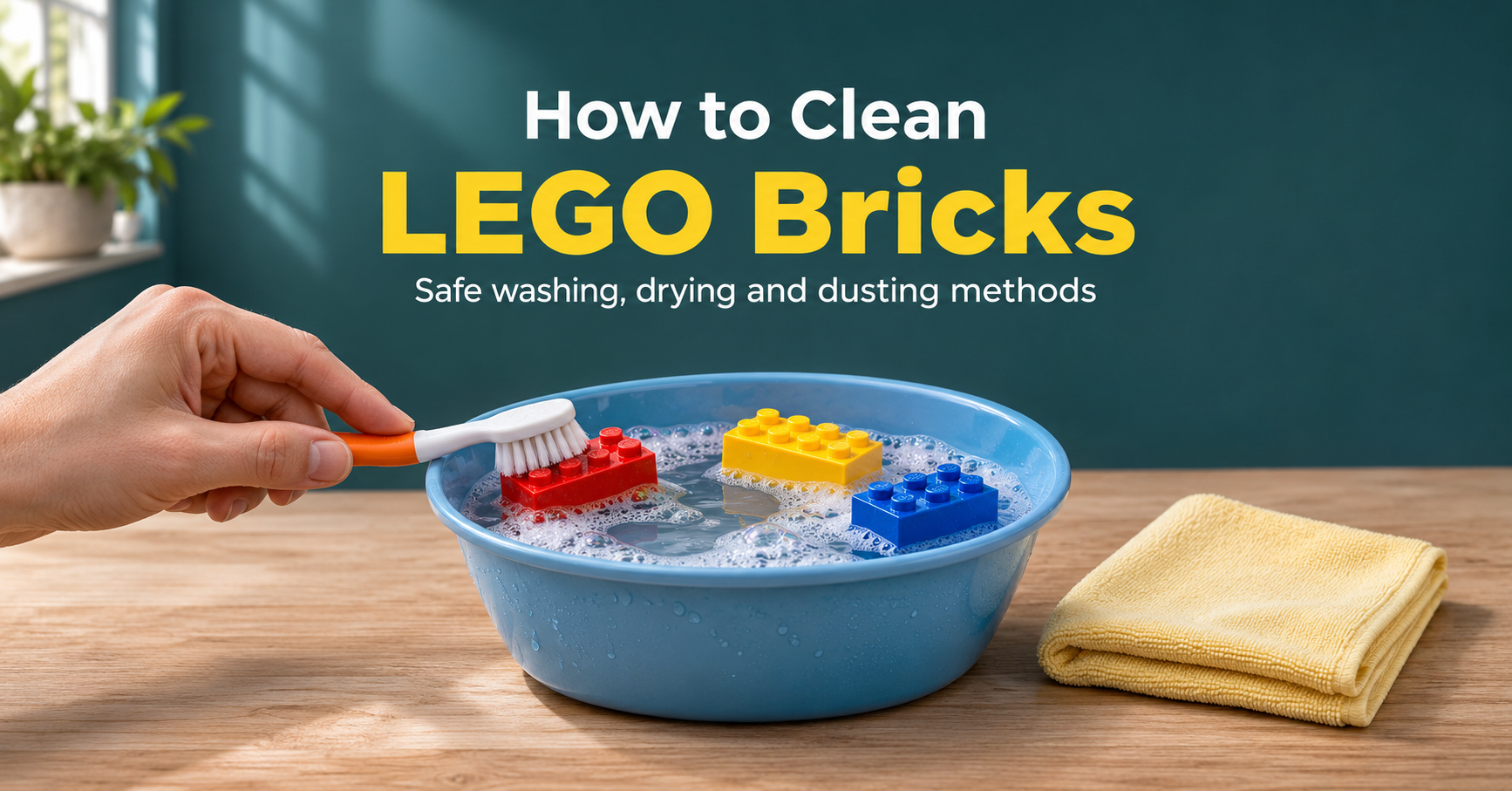
How to Clean LEGO Bricks: The Complete Guide to Washing, Drying and Dusting
Toy bricks live a hard life. They are built, crushed, dropped under the sofa, carried around in sticky hands and sometimes even chewed. Add the dust that settles on a display shelf and the grime that builds up in a big toy box, and a once-bright collection can quickly start to look dull and dirty.
Cleaning LEGO bricks is easy and does not need special products, but there are a few rules that protect the plastic, the printing and the stickers. In this complete guide you will learn how to dust a finished model, how to wash loose bricks safely, how to dry them, how to deal with stains, mold and second-hand sets and which common cleaning mistakes to avoid.
Why Clean LEGO Bricks?
- Hygiene: Bricks are handled all day and often touched by children who then touch their faces. Regular cleaning removes germs, grease and sticky residue.
- Allergy comfort: Dust, pet hair and dust mites collect on bricks, especially on display shelves and in closed boxes.
- Better look: Clean bricks keep their bright colors and shine, and a clean model looks far better on display.
- Smoother building: Grime on studs can make bricks feel gritty and harder to press together or pull apart.
- Second-hand safety: Pre-owned bricks can arrive dusty, sticky or smelly. A wash makes them fresh, and safe to hand to children.
What You Need
All of these items are cheap and easy to find at home:
- A large plastic bowl or basin (use a bowl, not the sink, so small pieces cannot fall down the drain)
- Mild dish soap
- Lukewarm water
- A soft toothbrush or small soft brush
- A soft makeup or paint brush for dusting
- Microfiber cloths and clean towels
- A colander or mesh strainer for rinsing
- Cotton swabs for tight spots
- An air blower (the rubber squeeze-bulb type) or a vacuum with a soft brush attachment
Choose the Right Method for the Mess
Not every brick needs a full wash. Start with the lightest method that does the job, and only step up if the bricks are still dirty. The ladder below shows how.
Method 1: Dust Built Models Without Taking Them Apart
A finished model on a shelf does not need to be washed. In fact, water is not a good idea for models with stickers, moving parts or lights. Regular dusting keeps them looking good.
- Brush gently. Use a soft makeup brush or a clean paint brush to sweep dust from the studs, corners and gaps. Work from the top of the model downward so loose dust falls onto areas you have not cleaned yet.
- Blow out the gaps. A rubber air blower removes dust from tight spots. Canned compressed air is stronger but can blow small parts off, and the cold spray may leave marks, so keep it at a distance and use short bursts.
- Vacuum with care. Use the lowest power and a soft brush attachment, and hold the model firmly with your other hand. For loose parts, cover the nozzle with a piece of mesh or a stocking so nothing gets sucked up.
- Wipe flat surfaces. Use a dry microfiber cloth, or one that is only barely damp, on large smooth pieces, tiles and transparent parts.
Method 2: Hand Wash Loose Bricks
For loose bricks that are sticky, grimy or just in need of a good freshen-up, washing by hand in lukewarm soapy water is the safest method. Here is the whole process at a glance.
Step 1: Sort Your Pieces
Take out anything that should not be soaked: electronic parts, motors, battery boxes, lights, and pieces with fragile or peeling stickers. Clean those separately with a cloth (see the section on special parts). Everything else can go in the bowl.
Step 2: Fill the Bowl With Lukewarm Water
Fill a bowl with lukewarm water and add a few drops of mild dish soap. Do not use hot water. Warm water is fine, but keep it no hotter than about 40 degrees Celsius (104 degrees Fahrenheit), which should feel comfortably warm on your wrist but never hot. The temperature guide below explains why this matters.
Step 3: Soak and Swish
Put the bricks in the bowl, but do not overfill it, so the pieces can move freely in the water. Let them soak for five to ten minutes, then swish them around with your hands. Soaking loosens sticky residue and dirt so you do not need to scrub as hard.
Step 4: Scrub the Dirty Spots
Use a soft toothbrush on studs, edges and any grimy areas. A cotton swab works well for the small gaps and for the insides of hollow bricks. Do not use abrasive pads, steel wool or hard-bristled brushes, which can scratch the plastic and dull the shine.
Step 5: Rinse Thoroughly
Lift the bricks into a colander and rinse them under a gentle stream of lukewarm water until all soap is gone. Shake the colander well. Soap left on bricks can feel sticky and attracts dust, so do not skip this step, especially for bricks that younger children play with.
Step 6: Dry Completely
Spread the bricks in a single layer on a clean towel. Place hollow pieces with the open side facing down so water drains out of the tubes, and shake out any bricks that trap water. Let everything air dry in a well-ventilated place, away from direct sun and heat. A cool-air fan can speed things up. Do not use a hair dryer, radiator or oven, because heat can warp the bricks.
Drying usually takes several hours, and overnight is best for a big batch. Make sure every piece is completely dry before you put them back into a box, because trapped moisture is the main cause of musty smells and mold.
How to Clean Special Parts
Some pieces need extra care. Use the guide below to decide what can go in the water and what needs a gentler touch.
- Electronic parts: Never submerge motors, lights, battery boxes or smart hubs. Remove the batteries and wipe the outside with a dry or barely damp cloth, then let them air dry.
- Printed and sticker parts: Wash them quickly and gently without scrubbing the printed surface. Do not leave them soaking for a long time, because stickers can lift and edges can peel.
- Minifigures: Wash gently with a soft brush. The printed faces and torsos can wear off if scrubbed hard. Wipe hair pieces carefully to avoid pulling them off.
- Transparent pieces: They scratch easily. Use only soft microfiber or your fingertips, and dry them with a soft cloth so there are no water spots.
- Baseplates and large plates: Wash them separately in a larger container, or wipe them with a damp soapy cloth, and stand them up to dry so water does not pool on the studs.
Cleaning Second-Hand and Used Bricks
Bricks from a flea market, a garage sale or an online marketplace can be great value, but they often need a thorough clean before use.
- Inspect first. Remove broken, cracked or very chewed bricks, and any parts that are clearly not genuine bricks or that are covered in glue or paint.
- Wash in a large bowl. Use lukewarm soapy water and soak for longer, perhaps up to thirty minutes for really grimy bricks.
- Scrub where needed. Use a soft toothbrush on stubborn grime and the insides of studs.
- Rinse and dry fully. Rinse in a colander and air dry for at least several hours.
- Add a smell treatment if needed. For musty or smoky bricks, add a spoonful of baking soda to the wash water, then rinse well and dry in a well-ventilated room.
Dealing With Stains, Mold and Discoloration
Ink and Marker Stains
Marker or pen on bricks can sometimes be lifted with a cotton swab dampened with a little rubbing alcohol. Test it on a small, hidden spot first, because alcohol can also remove printing and may cloud some plastics. Never use strong solvents such as nail polish remover or paint thinner.
Sticky Residue
For tacky spots such as old adhesive or sweet drinks, soak the bricks in lukewarm soapy water a little longer and rub gently with a soft cloth or brush. A drop of dish soap rubbed on the spot with a cotton swab often works.
Mold and Mildew
Bricks stored damp can develop black, green or white spots. Wear gloves, wash the pieces in lukewarm soapy water and scrub the affected areas with a soft brush, paying attention to the insides of hollow bricks. Dry them completely in a well-ventilated place. If bricks are heavily moldy, if anyone in your household has allergies or asthma or if the smell does not go away, it is safer to throw those pieces out.
Yellowed White Bricks
White and light grey bricks can slowly turn yellow with age and exposure to sunlight. Unfortunately, cleaning cannot reverse this change, because it happens inside the plastic. Some hobbyists use chemical whitening treatments, but these can make the plastic brittle, so they are not recommended for beginners. To prevent yellowing, keep your bricks and displays out of direct sunlight.
Can You Put LEGO Bricks in the Dishwasher or Washing Machine?
Many people ask this because it seems like a huge time saver, but hand washing is the safer choice. High heat, strong detergents and tumbling can warp bricks, fade colors, remove printing, peel stickers and damage small parts. Bricks can also get trapped in the filter or spray arm. Even if some people report success, the risk of permanent damage is not worth the saved time, particularly for rare, printed or valuable pieces.
How to Disinfect LEGO Bricks
Warm soapy water and a good rinse remove most dirt and germs physically, and that is sufficient for normal use. After an illness in the house, wash all the bricks the children have been playing with using the hand wash method above. Avoid bleach and strong disinfectants, which can damage the plastic and leave residues on bricks that children put in their mouths. If you want to wipe a built model, use a barely damp cloth, and test any disinfectant wipe on a hidden piece first, avoiding printed parts and stickers.
Quick Reference Table: Dirt Type and Best Fix
| Problem | Best Fix | Avoid |
|---|---|---|
| Dust on a built model | Soft brush, air blower, low-power vacuum | Water and strong air blasts |
| Fingerprints and light smudges | Barely damp microfiber cloth | Abrasive sponges |
| Sticky, dirty loose bricks | Soak in lukewarm soapy water, brush, rinse, dry | Hot water |
| Musty or smoky smell | Wash with a spoon of baking soda, air out well | Perfumes and sprays |
| Marker or ink marks | Test a little rubbing alcohol on a cotton swab | Strong solvents |
| Mold or mildew | Wash, scrub and dry fully, or discard if heavy | Storing damp bricks |
| Electronic or motor parts | Wipe with a dry or barely damp cloth | Soaking or submerging |
Common Cleaning Mistakes to Avoid
- Using hot water or heat to dry: This is the number one way to warp bricks.
- Using bleach or harsh chemicals: They can fade colors, make plastic brittle and leave harmful residue.
- Scrubbing prints and stickers: The artwork is easy to rub off and cannot be replaced.
- Washing electronics: Water can destroy motors, lights and battery boxes.
- Putting damp bricks away: Moisture leads to mold and a musty smell.
- Washing over an open sink: Small parts can disappear down the drain, so always use a bowl and a colander.
- Using abrasive tools: Scouring pads and hard brushes leave scratches that cannot be repaired.
How to Keep Bricks Clean for Longer
A few easy habits keep bricks fresher between washes.
- Display models in a case. A glass or acrylic display case keeps dust off finished sets and cuts cleaning time dramatically.
- Dust little and often. A quick brush every week or two is much easier than a deep clean once a year.
- Keep food and drink away. Sticky snacks and spills are the main cause of grimy bricks.
- Store in a cool, dry place. Avoid damp basements, garages and lofts.
- Wash new second-hand batches before mixing them with your existing collection, so dirt and smells do not spread.
How Often Should You Clean LEGO Bricks?
It depends on how you use them. Bricks that children play with every day and keep in an open toy box benefit from a wash every few months, or sooner after illness or sticky spills. Display models should be dusted every week or two. Stored collections in lidded boxes may need only a wash once or twice a year, or when you bring out older boxes after a long time.
Frequently Asked Questions
What is the best way to clean LEGO bricks?
For loose bricks, hand washing in lukewarm water with a few drops of mild dish soap is the best method. Soak, brush gently, rinse and air dry completely. For built models, dust with a soft brush and an air blower instead of washing.
Can I wash LEGO bricks in the dishwasher?
It is not recommended. Heat, strong detergent and tumbling can warp bricks, fade colors, remove printing and peel stickers. Hand washing is safer.
What temperature water is safe for LEGO bricks?
Keep it lukewarm, no hotter than about 40 degrees Celsius (104 degrees Fahrenheit). Hot water can warp the plastic.
How do I clean a LEGO model that is already built?
Brush off dust with a soft brush, blow out gaps with an air blower or use a low-power vacuum with a soft brush, and wipe smooth surfaces with a barely damp microfiber cloth. Do not wash built models with stickers, moving parts or electronics.
How do I dry LEGO bricks quickly?
Spread them on a towel in a single layer, stand hollow pieces open side down and use a cool-air fan. Avoid hair dryers, radiators and direct sun, since heat can warp bricks.
Can I use bleach or vinegar on LEGO bricks?
Bleach is not recommended because it can damage the plastic and leave residue. Mild soap and water are enough for nearly every cleaning job.
How do I remove a musty smell from old bricks?
Wash them in lukewarm soapy water with a spoonful of baking soda, rinse well and let them dry completely in a well-ventilated room. If the smell is from mold and remains after washing, it is safest to discard the affected pieces.
Is it safe for children to play with bricks after washing?
Yes, as long as they are rinsed thoroughly to remove all soap and fully dried. Clean, dry bricks are a better choice than dusty or sticky ones.
Final Thoughts
Knowing how to clean LEGO bricks keeps your collection fresh, hygienic and fun to build with for many years. Dust built models, wash loose bricks by hand in lukewarm soapy water, treat electronics, stickers and printed parts gently, dry everything completely and store your bricks in a dry place away from sunlight.
With these simple habits and a little patience, even a dull, dusty or second-hand collection can look bright and new again.
LEGO is a trademark of the LEGO Group, which does not sponsor, authorize or endorse this article.