





Every LEGO fan eventually faces the same problem: the collection grows, the bricks spread across the house, and a missing piece shows up at the worst possible moment. Learning how to store LEGO sets properly solves all of this. Good storage keeps your bricks clean, your sets complete, your colors bright and your instruction manuals crisp, and it makes building faster and more fun.
This guide covers everything you need: the best storage methods, how to sort bricks, how to clean them, the ideal room conditions, and how to protect built models, minifigures and manuals. Whether you own five sets or five hundred, you will find a system here that fits your space and budget.
Quick Answer: How to Store LEGO Sets Properly
If you only have a minute, here is the short version:
- Keep sets in labeled zip bags inside clear, airtight plastic bins, or in the original box if you want to preserve its value.
- Store loose bricks in shallow drawers or bins, sorted by color or by part type.
- Choose a cool, dry, stable room (about 15–25°C or 59–77°F) away from direct sunlight.
- Clean bricks gently with lukewarm water and mild soap before long-term storage, and let them dry completely.
- Protect built models from dust with acrylic cases or enclosed shelves.
- Label everything so you can find any set or part in seconds.
Why Proper LEGO Storage Matters
LEGO bricks are made from durable ABS plastic, so they last for decades. Even so, poor storage causes real problems that are easy to avoid:
- Lost pieces. Small parts and special elements disappear quickly when sets are mixed together in one big bin.
- Color fading and yellowing. Strong sunlight can fade bright colors and yellow white or light-gray bricks over time.
- Dust and grime. Open shelves collect dust, pet hair and fingerprints that are hard to remove from small gaps.
- Damaged boxes and manuals. Damp air can cause mold and curled paper, which hurts both usability and collector value.
- Frustration. Searching through hundreds of loose bricks for one small part drains the fun out of building.
A few smart habits remove nearly all of these problems. Let us start with choosing the right storage method.
4 Best Ways to Store LEGO Sets
There is no single perfect solution. The right choice depends on whether your sets are built or unbuilt, how many loose bricks you own, and how much space you have.

1. Clear Stackable Bins
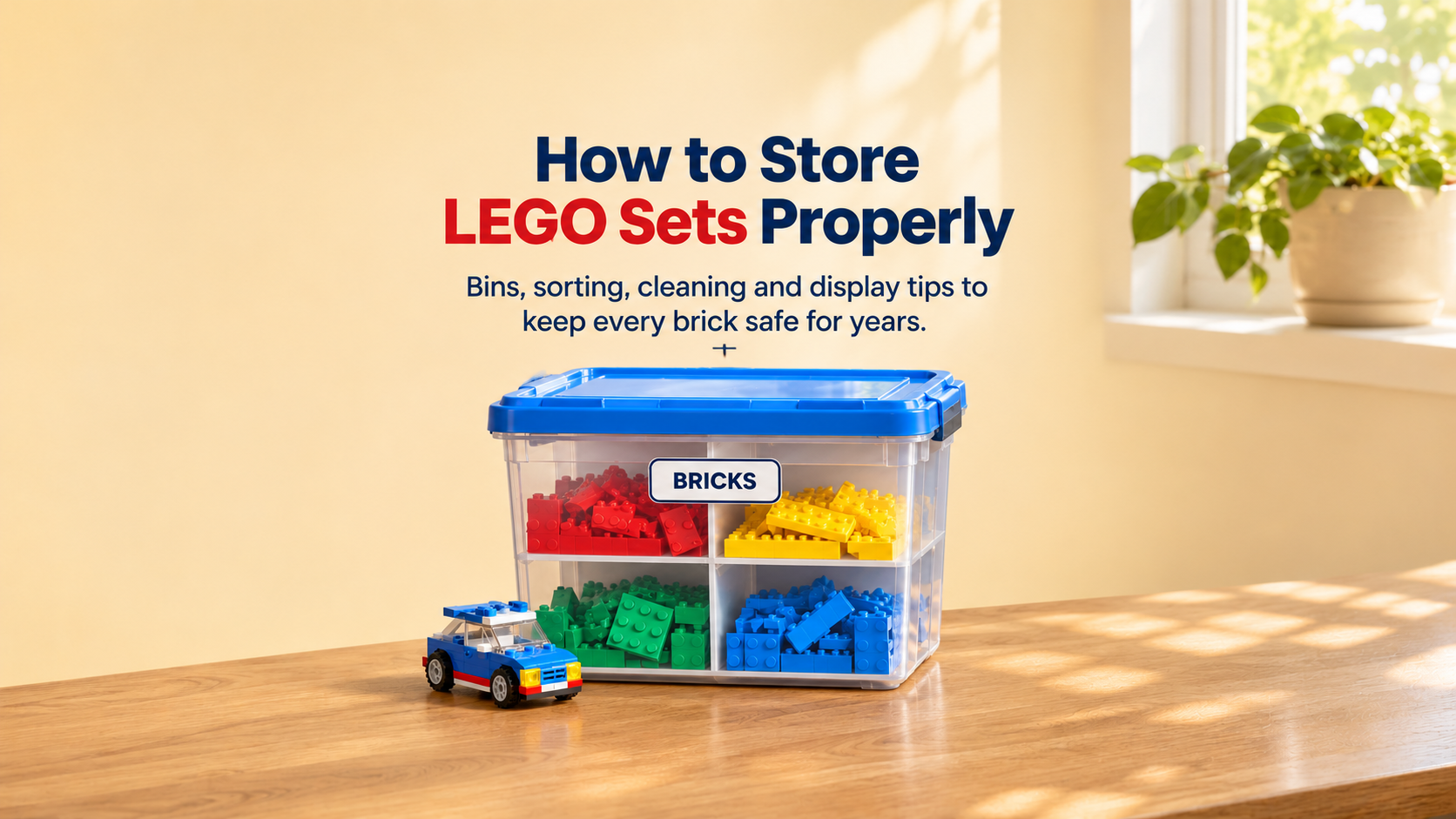
Clear plastic bins with snap-on or airtight lids are the most popular choice for good reason. They protect against dust and spills, they stack to save floor space, and you can see what is inside without opening them. Choose bins made from sturdy plastic with secure latches, and avoid cheap thin bins that crack or bow under weight.
Bins are ideal for storing bagged sets, large collections of loose bricks, and bulky parts such as baseplates and wheels. Keep each bin to a manageable weight so you can lift it safely.
2. Drawer Organizer Units
Shallow drawer units are excellent for loose bricks. Because the drawers are not deep, you avoid the “dig to the bottom” problem that comes with big bins. You can assign each drawer to a category, such as plates, tiles, slopes, wheels or transparent parts, and find what you need quickly. Small dividers inside each drawer help separate similar elements.
3. Original Boxes and Zip Bags
Many builders keep the original box together with the numbered bags and manual. This is the best choice for collectors who want to preserve resale value or for anyone who plans to rebuild a set exactly as designed. If you do not have room for every box, you can break down a set, place the parts in a labeled zip bag, and keep the manual and a photo of the box together with it.
4. Display Shelves and Cases
Finished models deserve a place to shine. Wall shelves, glass cabinets and acrylic display cases keep models visible while shielding them from dust. A closed case dramatically reduces the amount of cleaning you will need to do, especially for detailed models with many small parts.
Storage Methods Compared
| Method | Best For | Main Advantage | Main Drawback |
|---|---|---|---|
| Clear stackable bins | Bagged sets and loose bricks | Dust protection and easy stacking | Heavy when full |
| Drawer units | Loose bricks sorted by type | Fast part finding | Takes more space |
| Original box + bags | Collectors and unbuilt sets | Keeps sets complete and valuable | Boxes use a lot of room |
| Display shelves/cases | Built models | Shows off your work | Needs wall or floor space |
How to Sort LEGO Bricks the Smart Way
Storage containers are only half of the system. How you sort your bricks decides how easy it is to build later. Pick one method and stay consistent.

Sort by Set
Keep every set in its own labeled bag or bin, ideally with the set number written on it. This is the easiest way to keep sets complete and rebuild them later. Its weakness is that you cannot easily build your own creations without opening many bags.
Sort by Color
Sorting by color is quick and works well for creative building. Give each main color its own container, then split large groups by size or type. The downside is that rare or special parts can get lost in big color piles, and rebuilding an official set takes longer.
Sort by Part Type
Sorting by part type means grouping plates, tiles, slopes, round pieces, wheels, windows and similar elements together. It takes the most effort at the start, but it is the fastest way to find a specific piece. Many experienced builders combine this method with a light color split inside each category.
The Best Choice: A Hybrid System
For most people, a hybrid system works best. Keep sets you may want to rebuild in labeled bags, and sort all loose bricks by part type. This gives you the benefits of both methods without making either one too complicated.
The Ideal Storage Environment for LEGO Bricks
Where you store your collection matters as much as what you store it in. Plastic bricks tolerate normal household conditions well, but extreme conditions cause slow, permanent damage.

Temperature
Aim for a stable room temperature of roughly 15–25°C (59–77°F). Large swings and extreme heat can warp thin parts, while very cold conditions can make plastic more brittle. This is why attics and uninsulated garages are poor choices.
Humidity
Keep humidity in a comfortable range of about 40–60%. Damp air does not harm the bricks themselves, but it can cause mold on cardboard boxes, curled instruction manuals and musty smells. If you live in a humid climate, add silica gel packets to bins and cabinets and consider a small dehumidifier in the room.
Sunlight
Direct sunlight is the biggest enemy of display collections. Ultraviolet light fades colors and can cause white and light-gray bricks to turn yellow over the years. Place shelves away from windows, use curtains or UV-filtering film, or choose a UV-protective acrylic case for your best models.
Location
Choose a spare room, closet or bedroom shelf rather than an attic or basement. Attics overheat in summer, and basements can be damp or flood. If a basement is your only choice, keep bins on shelves rather than directly on the floor.
How to Clean LEGO Bricks Before Storing Them
Storing dirty bricks traps dust and oils inside your containers. Cleaning them first takes a little time, but it keeps your collection fresh for years. This is especially useful for second-hand bricks and sets that have been on display.

- Dust off. For built models, remove dust with a soft brush or an air blower before taking anything apart.
- Soak. Fill a basin with lukewarm water, never hotter than about 40°C (104°F), and add a small amount of mild dish soap. Soak the bricks for a short time and swish gently.
- Rinse. Rinse thoroughly under clean lukewarm water so no soap residue remains.
- Air dry. Spread the bricks on a clean towel in a single layer. Keep them out of direct sunlight and away from heaters.
- Store. Put the bricks into their containers only when they are completely dry. Trapped moisture can cause odors and mold.
Important: avoid hot water, bleach, harsh chemicals, dishwashers and tumble dryers. They can warp the plastic or damage printed and sticker-decorated parts. Do not soak parts that have stickers, electronics or motors. Wipe those gently with a slightly damp cloth instead.
How to Store Special Items: Minifigures, Manuals and Stickers
The small extras are easy to forget, yet they are often what make a set complete and valuable. Give them their own plan.

Minifigures and Small Parts
Use a compartment box or small labeled bags for minifigures, accessories and tiny elements. Keep printed parts away from soft rubber or vinyl toys, which can sometimes stain or transfer color. A compartment box with removable dividers works well for sorting accessories by theme.
Instruction Manuals
Store manuals upright in a binder, magazine file or clear sleeves so the spines do not bend. Keep them dry, flat and away from sunlight. Writing the set number on the front of each manual makes it simple to match it with the correct bag or box. Many builders also keep a digital copy of each manual so they can rebuild a set even if the paper copy is damaged.
Stickers and Sticker Sheets
Unused sticker sheets should be kept flat inside a clear sleeve or between the manual pages. Bending or heat can make stickers curl and lose their adhesion. When you apply stickers, make sure the part is clean and dry and take your time to align them.
How to Protect Built LEGO Models on Display
Built sets are the pride of many collections, but they require a different approach from loose bricks.
- Use a closed case. Acrylic display cases keep out dust, pet hair and curious fingers, and many offer UV protection.
- Dust regularly. If you use open shelves, brush models weekly or monthly with a soft makeup brush or a small air blower. Avoid pressing hard on delicate parts.
- Choose a stable surface. Place models on sturdy shelves that will not wobble and keep them well away from the edge.
- Consider lighting. LED lighting looks great and produces little heat, but avoid placing models next to hot bulbs.
- Keep out of reach. Protect fragile builds from young children and pets.
How to Store Unopened and Collectible LEGO Sets
If you collect sealed sets, condition matters. Boxes can be dented, crushed or discolored by poor storage.
- Store boxes in a cool, dry, dark place away from sunlight.
- Avoid stacking boxes too high, because the bottom boxes can crush or warp over time.
- Use shelves rather than stacking on the floor. This also protects against floods and pests.
- Consider clear protective box cases for rare or valuable sets.
- Keep a simple inventory with set numbers, purchase dates and condition notes.
Storage Do’s and Don’ts
Use this checklist before you pack anything away.

What to Look for in LEGO Storage Products
The market is full of storage options, so it helps to know which features really matter. When you compare bins, drawers and display cases, check these points:
- Clear material. Transparent containers let you see contents instantly and save you from opening every lid.
- Secure, airtight lids. Latching lids keep out dust, moisture and insects.
- Stackable design. Bins with interlocking lids stay stable when stacked and save floor space.
- Sturdy construction. Thick plastic and strong handles hold up under the weight of many bricks.
- Size and depth. Shallow containers are easier for loose bricks, while deeper ones suit bagged sets.
- Removable dividers. Adjustable compartments let your system grow with your collection.
- UV protection. For display cases, UV-filtering acrylic helps prevent fading.
- Label space. A spot for labels makes your system easy to maintain.
Common LEGO Storage Mistakes to Avoid
- Dumping everything into one huge bin. It looks tidy but makes finding anything difficult and encourages lost parts.
- Skipping labels. Without labels, even the best system turns back into a mess after a few months.
- Storing sets without their bags. Mixed sets are hard to separate and rebuild.
- Using damp locations. Moisture damages boxes and manuals even when the bricks are fine.
- Overfilling containers. Lids that will not close properly let dust and pests inside.
- Placing display models in sunlight. The damage is slow, so many people notice it only after it is permanent.
- Stacking heavy bins too high. Bottom bins can crack, and lifting heavy loads risks injury.
Tips for Small Spaces and Growing Collections
- Go vertical. Use tall shelves or stackable drawers to use wall height instead of floor space.
- Use under-bed bins. Flat, wheeled boxes slide under beds and hold bagged sets or baseplates.
- Rotate your collection. Display a few models at a time and store the rest in bins.
- Dismantle sets you no longer display. Bagging and labeling parts saves a lot of room.
- Take photos. Photograph built models and boxes so you can rebuild them or track your collection.
- Set aside a build tray. A shallow tray keeps pieces together while you build and speeds up cleanup.
Frequently Asked Questions
What is the best way to store LEGO sets?
The best method for most people is to keep each set in labeled zip bags inside clear, airtight bins, with manuals stored in a binder. Loose bricks work best in shallow drawers sorted by part type. Collectors can keep sets in their original boxes in a cool, dry, dark place.
Should I keep LEGO sets in the original boxes?
Keeping original boxes is worth it if you collect for value or want to preserve a set exactly as it was released. If you build for fun and space is limited, bagged sets in plastic bins are far more space-efficient and still keep everything organized.
How do I store LEGO bricks to avoid losing pieces?
Use labeled bags or containers for each set, avoid mixing sets together, and keep a photo or digital copy of the manual. Building on a tray or over a mat also prevents pieces from rolling away.
Can I store LEGO in a garage, attic or basement?
It is best to avoid these locations. Attics and garages can reach extreme temperatures, and basements can be damp or flood. If you have no other option, use sealed bins with silica gel packets and keep them off the floor.
Does sunlight damage LEGO bricks?
Yes. Long exposure to direct sunlight can fade colors and cause white and light-gray bricks to turn yellow. Keep display models away from windows or use a UV-protective case.
How often should I clean my LEGO collection?
Dust display models every few weeks with a soft brush. Wash loose bricks only when they are visibly dirty or before long-term storage, using lukewarm water and mild soap.
How do I store LEGO instruction manuals?
Keep them upright in a binder, magazine file or sleeves in a dry place. Writing the set number clearly on the cover makes it easy to match each manual with its bag or box.
Is it better to sort LEGO by color or by type?
Color sorting is faster to set up and great for creative building. Part-type sorting is better for finding specific pieces. A hybrid system works best: bagged sets for rebuilding and loose bricks sorted by type.
Final Thoughts
Knowing how to store LEGO sets properly protects your bricks, saves you time and makes every building session more enjoyable. Start with a simple system: bag your sets, sort your loose bricks, label every container and choose a cool, dry, shaded location. Clean your bricks before long-term storage, protect your built models with cases or regular dusting, and keep manuals and stickers in good condition.
You do not need to organize everything in a single weekend. Begin with one shelf, one bin or one set, and expand the system as your collection grows. A well-organized collection stays looking great, stays complete and is always ready for your next build.