







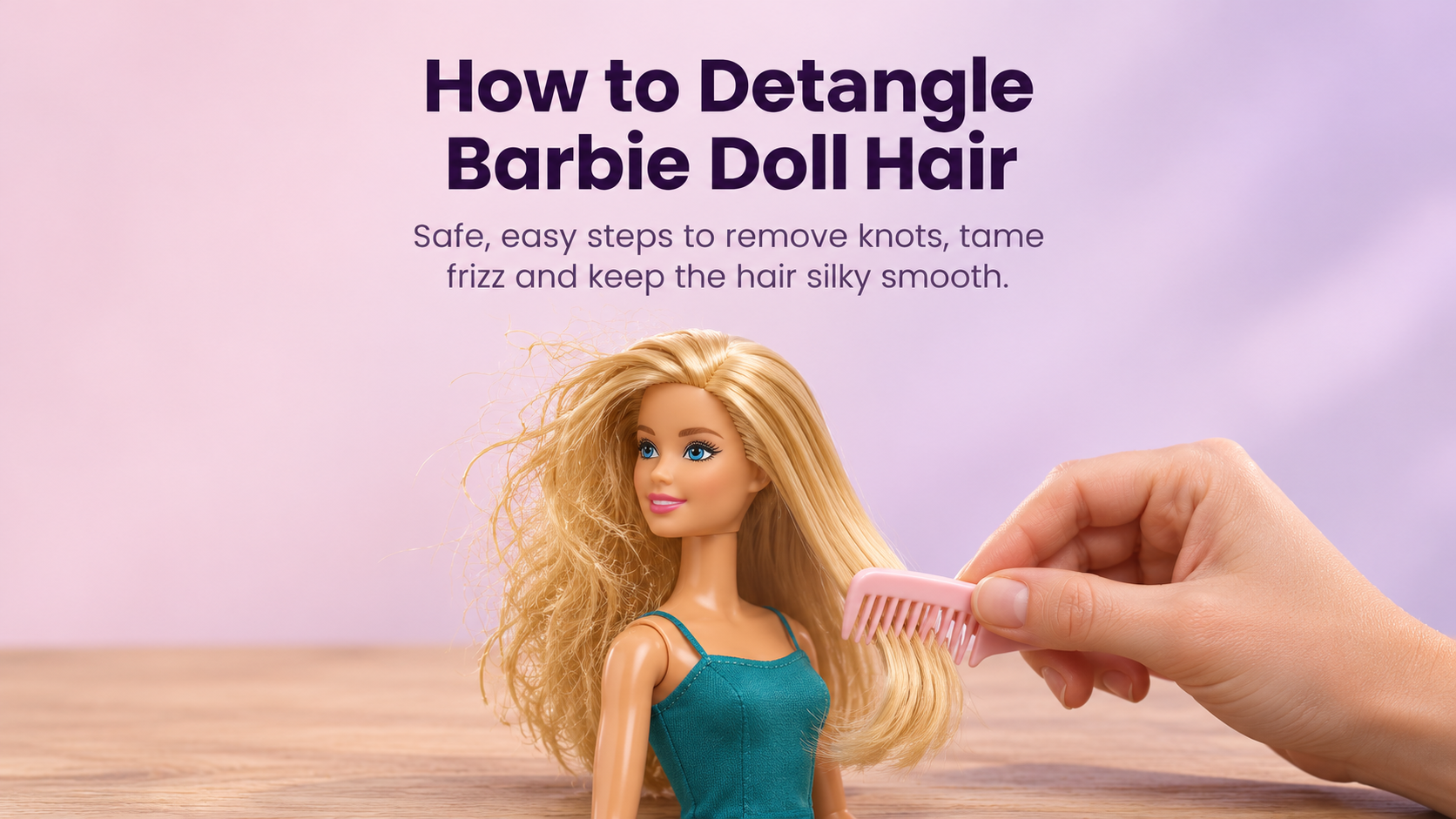

Few things are more frustrating than pulling a favorite Barbie doll out of the toy box and finding her hair twisted into a knotted mess. The good news is that tangled Barbie hair can almost always be fixed at home with a few inexpensive supplies and some patience. This guide shows you exactly how to detangle Barbie doll hair safely, without pulling out the rooted strands or leaving the hair frizzy.
You will learn why Barbie hair tangles so easily, what tools and products work best, a complete step-by-step method for light and severe tangles, how to handle frizz and static, and how to keep the hair smooth afterward.
Why Barbie Hair Tangles So Easily
Most Barbie dolls have long, fine nylon hair rooted into a vinyl head. Unlike human hair, it has no natural oils to keep it slippery, so it picks up static and knots quickly. Common causes include:
- Constant friction. Hair rubbing against clothes, other toys and storage bins forms knots, especially around the nape and the ends.
- Dry brushing. Brushing dry hair from the roots creates tension and static, which makes tangles tighter.
- Dust and lint. Fibers collect dirt, which locks tangles in place.
- Hair ties and clips. Rubber bands and tight clips pull and bend the strands.
- Rough fabrics. Velvet, tulle, faux fur and sequins catch long hair.
- Heat and sunlight. These dry out nylon fibers and encourage frizz.
- Product buildup. Styling products turn sticky and bind strands together.
Know Your Barbie’s Hair Before You Start
The safest method depends on the type of doll you have. Most modern Barbie dolls have nylon hair that tolerates softener and warm water, but older and collector dolls need extra care.
| Doll type | Typical hair | Safe approach |
|---|---|---|
| Modern play dolls | Rooted nylon | Softener soak, gentle combing, hot water method for frizz |
| Vintage dolls | Older rooted nylon or saran; may be fragile | Light softener mist only, very gentle combing, no hot water, test a hidden strand |
| Collector or wigged dolls | Synthetic wig fibers; some human hair | Check the wig material, use light conditioner mist, avoid heat unless the wig is heat-friendly |
| Dolls with re-rooted hair | Mixed; plugs may be looser | Detangle extra gently and support the roots with your fingers |
Tools and Materials You Will Need

- Wide-tooth comb. Smooth, rounded teeth protect the roots. This is your main detangling tool.
- Wire doll brush or soft slicker brush. Ideal for finishing, as the loose pins glide through nylon hair.
- Fabric softener or conditioner. Choose unscented. Mix softener at about one part to three parts water, or use a light leave-in conditioner diluted with water.
- Spray bottle. Lets you mist evenly without soaking the doll.
- Cup for hot water. Only needed for frizz repair on synthetic hair.
- Towels and hair clips. Clips make sectioning easy and towels catch drips.
- Plastic wrap. Useful for covering the face and body.
Buying tip: when choosing a detangling comb or doll brush, look for a smooth finish with no rough seams, wide spacing between teeth, and a comfortable handle that lets you control light pressure. Avoid metal-toothed combs with sharp tips.
How to Detangle Barbie Doll Hair: Step-by-Step

Step 1: Prep and Protect the Doll
Undress the doll and remove jewelry, headbands and ties, since these snag in the hair as you work. Lay a towel under the head. Cover the face with a dry cloth or plastic wrap so the painted features stay dry. Barbie heads are usually hollow, so do not hold the doll upside down in water, as moisture can get inside the head and cause trouble later.
Step 2: Soften the Hair
Mix one part fabric softener with three parts water in the spray bottle and mist the hair until it is damp, not dripping. Work the solution in with your fingers and wait ten to twenty minutes. For severe tangles, wrap the hair in a damp towel and wait a little longer. The softener reduces static and lets the fibers slide apart.
Step 3: Section the Hair
Divide the hair into four to six sections and clip away the ones you are not working on. Smaller sections give you better control and prevent new tangles from forming while you comb.
Step 4: Comb from the Ends Up
Hold the hair firmly just above the part you are combing so the roots are not pulled. Start at the last two to three centimeters and use the wide-tooth comb in short, gentle strokes. Once the ends are smooth, move a little higher and repeat until you reach the roots.
- Use fingers to loosen larger knots before using the comb.
- If a knot will not release, add more softener and tease it open with the tip of a pin or rat-tail comb.
- Stop if the hair stretches or you feel resistance. More product and patience work better than force.
Step 5: Rinse and Dry
Rinse the hair in a bowl of clean water or under a gentle flow while angling the head so water drains away from the neck opening. Squeeze out excess water with a towel. Let the hair air-dry, laid flat or hung with the head tilted slightly forward so water does not collect inside. Wait until it is completely dry before doing anything else.
Step 6: Finish and Style
Once dry, run the wire doll brush lightly through the hair and trim any damaged ends if needed. A loose braid or low ponytail with a soft fabric tie keeps the hair neat for storage and play.

Special Cases and Fixes
Severely Matted Hair
For thick knots at the nape, use the soaking method twice. Apply the softener solution, wait twenty minutes, and then pick at the outer edges of the knot only. Open the tangle gradually from the outside in. Cutting should be a last resort, and even then trim only the worst of it.
Frizzy or Curly Kinks
Nylon hair that has frizzed or kinked can often be relaxed with the hot water method.

- Heat water until very hot but not boiling, around 70 to 80 degrees Celsius (160 to 175 degrees Fahrenheit).
- Dip only the hair into the water and keep the face and the painted hairline out of it.
- Comb the hair straight while it is warm.
- Rinse with cool water to set the shape and air-dry.
Static and Flyaways
A light mist of the diluted softener solution on a dry brush calms static quickly. Avoid hairspray, which makes hair sticky.
Sticky or Greasy Hair
Wash the hair in lukewarm water with a drop of mild soap, rinse well and then follow with the softener mist before detangling. Heavy oils can leave the hair greasy and may stain vinyl, so a light softener or conditioner is a better choice.
Hair That Is Pulling Out at the Roots
If plugs are loose, stop combing that area and support the roots with your fingers. Small bare patches can be re-rooted with a doll re-rooting tool. For large bare areas, a professional re-root or a replacement head may be the best option.
How to Keep Barbie Hair Tangle-Free

- Brush gently once a week from the ends upward, ideally after a light softener mist.
- Braid long hair loosely for storage and playtime.
- Use soft fabric ties and remove them when the doll is put away.
- Store dolls upright or flat with the hair smoothed, ideally away from rough fabrics.
- Keep dolls out of direct sun and away from heaters.
- Refresh every few months with a diluted softener mist and a gentle comb-through.
Common Mistakes to Avoid
- Dry brushing from the roots instead of the ends.
- Using a regular hair brush with stiff bristles.
- Soaking the whole doll or submerging the head.
- Using heated styling tools on nylon.
- Using too much product, which leaves the hair heavy and sticky.
- Skipping the hidden strand test on a vintage or collectible doll.
Frequently Asked Questions
What is the best way to detangle Barbie hair?
Soften the hair with diluted fabric softener or conditioner, then comb gently from the ends up with a wide-tooth comb in small sections. Rinse and air-dry afterward.
Is fabric softener safe for Barbie hair?
It is commonly used on nylon doll hair when diluted and rinsed out. Test it on a hidden strand first, and use a conditioner if you prefer. Be more cautious with vintage or collectible dolls.
How often should I detangle my doll’s hair?
A light brush-through once a week prevents most tangles. A full soften-and-detangle routine is only needed when knots appear, or every few months for maintenance.
Can I use a normal hair brush?
A standard brush with stiff bristles can pull out rooted hair. A wide-tooth comb followed by a wire doll brush is safer.
Can I use a hair dryer?
Only on a cool setting from a distance. Hot air can frizz or melt nylon, so air-drying is the safest option.
What if the knots will not come out?
Add more softener, wait longer and work from the outside of the knot inward. If a small section is hopeless, trim only that part rather than pulling.
Will the hair get tangled again?
Some tangling is normal with long nylon hair, but regular gentle brushing, loose braids and smart storage keep it to a minimum.
Final Thoughts
Learning how to detangle Barbie doll hair comes down to three habits: soften first, comb from the ends up, and never force a knot. With the right tools and a little patience, even badly tangled hair can become smooth and silky again. Add a quick weekly brush and a loose braid for storage, and your Barbie will stay ready for play or display.