






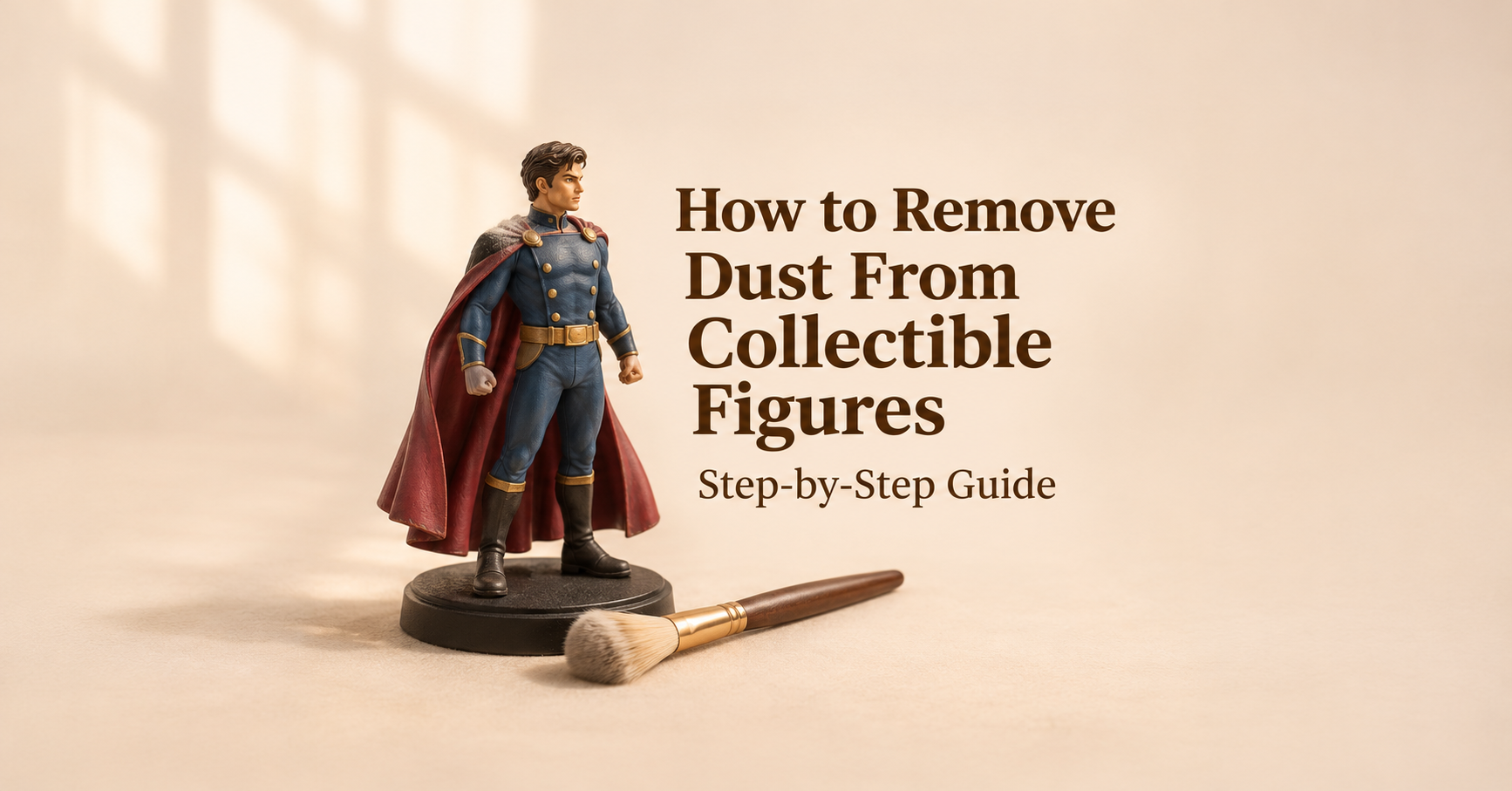
A collectible figure can look stunning on day one, but give it a few weeks on an open shelf and a soft gray layer begins to settle on its shoulders, hair, and base. Dust dulls glossy paint, hides fine detail, and makes even an expensive statue look neglected. Worse, careless dusting can scratch finishes, snap thin parts, and wear away paint, which hurts both the look and the value of a collection.
This guide explains how to remove dust from collectible figures safely and effectively. You will learn why dust sticks so stubbornly, which tools are safe and which are risky, how to dust different kinds of figures, how to handle fragile parts and tight crevices, and how to keep dust from coming back so quickly. It applies to PVC figures, vinyl collectibles, resin statues, vintage pieces, and boxed items.
In this guide
- Why dust sticks to collectible figures
- The safest tools for dusting
- Step-by-step dusting method
- Dusting different types of figures
- Handling fragile parts and tight crevices
- Removing stubborn dust
- Dusting boxed and case-displayed collectibles
- How to prevent dust from building up
- Dusting schedule
- Mistakes to avoid
- Frequently asked questions
Why Dust Sticks to Collectible Figures
Household dust is a mix of tiny fibers from fabric and carpets, skin flakes, pet dander, pollen, soot, and fine grit. Collectible figures attract it more than many other objects for a few reasons.
- Static electricity. Plastics such as PVC and vinyl build up a static charge that pulls dust out of the air and holds it on the surface.
- Complex shapes. Folds, hair, armor plates, and tiny details create ledges and pockets where dust settles and hides.
- Surface texture. Matte and textured finishes hold dust more tightly than smooth gloss.
- Air movement. Fans, heating vents, and open windows circulate dust and deposit it on shelves.
- Oily residue. Fingerprints and kitchen vapors leave a slightly tacky film that traps dust.
The Safest Tools for Dusting Collectible Figures
Using the right tools matters more than anything else. The goal is to lift dust off the surface rather than grind it in. Here are the tools collectors trust, from the gentlest to the more specialized.
| Tool | Best For | Notes |
|---|---|---|
| Hand air blower (rocket blower) | Delicate parts, tight spots, first pass | No contact, so no scratching. The safest option. |
| Soft makeup brush or goat-hair brush | Most surfaces, details, hair, folds | Choose very soft, clean bristles. Wash it regularly. |
| Soft paintbrush or small detail brush | Crevices, engraved lines, fine details | Use a clean, soft brush that has never held paint thinner. |
| Microfiber cloth | Smooth, glossy surfaces and bases | Use a clean, dry cloth. Fold it so the surface is soft. |
| Cotton swabs | Tiny crevices and spots | Use lightly, and watch for loose fibers. |
| Canned air (duster) | Sturdy figures, hard-to-reach spots | Use with care. See the warning below. |
| Soft-brush vacuum attachment | Large, sturdy statues only | Low suction, brush held between the nozzle and figure. |
Step-by-Step Dusting Method for Collectible Figures
Follow this routine for most figures. Work gently, work in good light, and never rush, because most damage happens when people press too hard or try to finish quickly.
Step 1: Prepare your workspace
Lay a soft towel or microfiber cloth on a table. This protects the figure if it slips and catches the dust you remove. Wash and dry your hands first, because oils from your skin transfer to plastic and attract more dust. For valuable figures, consider wearing clean cotton gloves, which also stop fingerprints on glossy paint.
Step 2: Blow off loose dust
Hold the figure securely by its base or torso, never by a thin limb, sword, or wing. Use a hand blower to puff air over the figure, starting at the top. This removes the bulk of the dust without touching the paint and moves it away from the figure, so it does not simply settle back down.
Step 3: Brush gently
Take a soft brush and sweep lightly across the surface, from top to bottom. Use short, flicking strokes that lift the dust rather than dragging it across the paint. Let the bristles do the work, without pressing down. Clean the brush by tapping it on a towel as you go so you do not reapply dust.
Step 4: Wipe smooth surfaces
For flat, glossy areas such as bases, armor plates, and statue bodies, wipe lightly with a clean, dry microfiber cloth. Use no pressure and move in one direction. Stop if the cloth catches on any rough or raised paint.
Step 5: Finish and check
Look at the figure from several angles under good light, then tilt it slightly to see dust in recesses. Repeat blowing and brushing on any spots you missed. Return the figure to its display only after you have wiped down the shelf or base where it stands.
Dusting Different Types of Collectible Figures
PVC and anime-style figures
These smooth, painted figures are among the easiest to dust but also the most prone to static. Use a hand blower, a soft brush, and a lightly dry microfiber cloth. Avoid wiping the same area repeatedly, which builds static and pulls more dust. Pay special attention to hair, skirts, and accessories that hold dust in folds.
Vinyl collectibles
Vinyl figures with a matte or soft finish hold dust more tightly. Brush gently and use a barely damp microfiber cloth for stubborn areas. Do not let moisture sit in seams or around painted details.
Resin statues
Resin pieces are often hand-painted and can have a delicate finish. Brush lightly and avoid water on unsealed paint. Because resin statues can be heavy, hold them by the base and place them on a soft surface while you work.
Metal and die-cast pieces
Dust metal pieces with a soft brush and microfiber cloth. Avoid damp cloths on bare metal, which can leave water marks or begin to corrode.
Flocked, fuzzy, or fabric-covered collectibles
Some collectibles have flocked fur or fabric outfits. Use a soft brush with a flicking motion to lift dust out of the fibers, working in the direction of the pile. Avoid wiping, which can press dust into the surface.
Vintage and rare pieces
Older collectibles may have brittle plastic, fading paint, or loose decals. Use only a hand blower and the softest brush, and avoid any moisture. If a piece is valuable or delicate, consider asking a professional conservator or an experienced collector before cleaning.
| Figure Type | Best Method | Avoid |
|---|---|---|
| PVC / anime figures | Blower, soft brush, dry microfiber | Repeated rubbing that builds static |
| Vinyl collectibles | Soft brush, barely damp cloth if needed | Soaking seams |
| Resin statues | Soft brush and blower | Water on unsealed paint |
| Die-cast metal | Soft brush, dry cloth | Damp cloths on bare metal |
| Flocked or fabric parts | Soft brush in pile direction | Wiping or pressing |
| Vintage pieces | Blower and softest brush only | Any moisture or chemicals |
Handling Fragile Parts and Tight Crevices
Thin swords, antennae, capes, wings, and strands of hair break easily. For these parts:
- Support the part from behind with one finger while you brush the front.
- Brush along the length of the part, never across it.
- Use the lightest possible touch or skip contact entirely and use only the hand blower.
- Remove accessories if they are designed to come off, and dust them separately.
For tight crevices, such as engraved lines, joints, and recessed details, use a small detail brush, a toothpick wrapped with a soft cloth, or a cotton swab with a gentle rolling motion. Roll the swab rather than dragging it, so fibers do not catch and the dust lifts away cleanly. Check the swab for stray cotton fibers afterwards.
Removing Stubborn Dust and Grime
Sometimes dust has been sitting so long that it forms a greasy film, especially in kitchens or homes where people smoke or cook often. When brushing and blowing do not work, try the next-gentlest option.
- Test first. Pick a hidden spot, such as under the base or behind a cape.
- Dampen a cloth. Use a microfiber cloth or cotton swab dampened with plain water and wrung out until barely damp.
- Dab, do not rub. Press lightly, then lift. Rubbing can wear paint and scratch gloss.
- Add a tiny bit of mild soap if needed. A drop of mild dish soap in a bowl of water on a swab removes greasy film. Wipe again with a plain damp swab to remove soap.
- Dry immediately. Pat with a dry microfiber cloth and let the figure air dry before returning it to its case.
Dusting Boxed and Case-Displayed Collectibles
Many collectors keep figures in their original packaging or in display cases. These need dusting too, but the technique is different.
Original boxes and window packaging
Dust cardboard with a soft, dry brush, working away from the edges so corners do not bend. Wipe plastic windows gently with a clean microfiber cloth. Never use water or cleaning sprays on cardboard, which can stain, warp, and reduce a collectible’s value. Wear clean cotton gloves, and handle boxes by the edges.
Glass and acrylic display cases
Dust the outside of the case regularly and clean the inside only when it is empty. Use a soft cloth on glass. Acrylic scratches easily, so use only a microfiber cloth and a cleaner made for acrylic, never glass cleaners with ammonia. Anti-static cloths help acrylic stay cleaner for longer.
Shelves, bases, and plinths
Wipe shelves with a slightly damp cloth, dry them, and let them settle before replacing figures. Clean bases and plinths with a soft brush, since dust collects around the base of a figure first.
How to Prevent Dust From Building Up
The best dusting is the dusting you never have to do. A few smart habits can slash the amount of dust that lands on your collection.
- Use a display case. Glass or acrylic cases with tight doors block most dust. Choose cases with sealed edges or magnetic doors for the best protection.
- Pick a low-dust location. Keep collectibles away from vents, open windows, fans, and carpeted high-traffic areas.
- Keep the room clean. Vacuum with a good filter and wipe surfaces regularly, because dust in the room becomes dust on the figures.
- Use an air purifier. A purifier with a fine filter removes airborne particles before they settle.
- Control humidity. Very dry air increases static, while damp air encourages mold. A moderate level keeps both in check.
- Reduce pet hair and fabric fibers. Pets and soft furnishings are big dust sources, so place collectibles away from them.
- Handle figures less. Fingerprints and skin oils attract dust.
- Use dust covers. A clean, soft cloth or acrylic cover protects figures during renovations or long absences.
- Avoid smoke and cooking vapors. These leave sticky residue that makes dust cling.
How Often Should You Dust Collectible Figures?
| Display Setup | Suggested Dusting Frequency |
|---|---|
| Open shelf in a busy room | Every one to two weeks |
| Open shelf in a low-dust room | Every two to four weeks |
| Closed display case | Every one to three months |
| Boxed and stored collectibles | Every few months |
| Rare or fragile pieces | Only when needed, with the gentlest method |
Regular, light dusting is better than occasional deep cleaning. A quick pass with a soft brush is far less risky than scrubbing a thick layer of old dust.
Mistakes to Avoid When Dusting Collectible Figures
- Using a feather duster, which can snag on small parts and spread dust around.
- Using paper towels or tissues, which are abrasive and leave lint.
- Using sticky lint rollers or adhesive putty on paint, which can pull paint and leave residue.
- Pressing hard with a brush or cloth, which scratches glossy surfaces.
- Using household cleaning sprays, which can discolor paint and dull finishes.
- Holding a figure by a fragile limb, sword, or wing.
- Using a bare vacuum nozzle, which can suck up small parts and scratch the figure.
- Blasting canned air close up, which can break parts and release cold liquid.
- Dusting in a rush or in poor light, which leads to dropped and damaged figures.
- Letting dust build for years, which forms a film that needs harsher cleaning.
Frequently Asked Questions
What is the best way to remove dust from collectible figures?
Start with a hand air blower to remove loose dust without touching the figure, then sweep gently with a soft, clean brush from top to bottom. For smooth, glossy areas, wipe lightly with a dry microfiber cloth.
Can I use canned air on collectible figures?
Only with care. Hold the can upright, at least 20 to 30 centimeters (8 to 12 inches) away, and use short bursts. A hand air blower is safer, because canned air can release cold liquid and blow off loose parts.
How do I remove dust from figure hair and fine details?
Use a soft detail brush and gently flick along the direction of the hair or detail. A hand blower helps lift dust out of folds, and a cotton swab rolled lightly can reach narrow grooves.
Why do my figures get dusty so fast?
Plastic builds static that attracts dust, and fans, vents, carpets, and pets add more dust to the air. A closed display case and a cleaner, lower-traffic location reduce the problem a lot.
Is it safe to use a damp cloth on collectible figures?
A barely damp microfiber cloth is fine for many sturdy PVC and vinyl figures, but avoid it on unsealed paint, vintage pieces, bare metal, and anything with loose parts. Test on a hidden spot first and always dry the figure afterwards.
How do I dust figures in their original boxes?
Use a soft, dry brush on the cardboard and a clean microfiber cloth on the plastic window. Never use water or cleaning sprays on cardboard, because stains and warping reduce the collectible’s value.
How often should I dust my collection?
For figures on open shelves, every one to four weeks depending on how dusty the room is. Figures in closed cases can go one to three months between dustings.
Final Thoughts
Learning how to remove dust from collectible figures protects both the look and the long-term value of your collection. The safest approach is always the gentlest one: a hand blower first, a soft brush second, and a dry microfiber cloth only where needed. Test damp methods on a hidden spot, treat fragile parts with extra care, and keep tools clean so you never grind dust into the paint.
Combine careful dusting with smart prevention, such as a closed display case, a low-dust location, and good room hygiene, and your figures will stay crisp, glossy, and display-ready for years.