








How to Store Action Figures: The Complete Guide to Protecting Your Collection
Whether you own five figures or five hundred, learning how to store action figures properly is the single best way to protect both their looks and their value. Plastic gets brittle, paint fades, joints loosen and boxes crumple faster than most collectors expect. The good news is that almost all of this damage is preventable with a few smart habits and the right storage setup.
In this guide you will learn what actually damages action figures, the ideal room conditions, the best storage methods for loose and boxed figures, how to handle accessories, and a simple routine that keeps your collection in excellent shape for years.
Why Proper Action Figure Storage Matters
Action figures are made from a mix of materials: hard ABS plastic, soft PVC vinyl, rubber, fabric, paint, and sometimes small metal parts. Each reacts differently to light, heat and moisture. Poor storage can cause:
- Faded or yellowed plastic from sunlight and UV exposure.
- Warped limbs and leaning poses from heat or long-term pressure.
- Sticky, greasy surfaces when soft vinyl releases plasticizers.
- Paint transfer and discoloration when figures touch each other.
- Mold, mildew and rust in humid places.
- Lost accessories and broken parts.
For collectors, condition also drives resale value. A mint figure with a crisp box is worth far more than the same figure with a scuffed finish or a crushed package.

The Ideal Conditions for Storing Action Figures
Before choosing shelves or boxes, choose the right place. The environment matters more than the container.
Temperature
Aim for a steady room temperature between roughly 15°C and 24°C (60°F to 75°F). Sudden swings are as harmful as high heat, because plastic expands and contracts and can stress joints and glued parts.
Humidity
Keep relative humidity around 40 to 50 percent. Higher levels encourage mold on cardboard and rust on metal pins, while very dry air can make some plastics brittle. A small digital hygrometer is an inexpensive way to monitor your room.
Light
Direct sunlight is the number one cause of fading and yellowing. Even light through a window on a cloudy day contains UV. Place your collection away from windows, or use UV-filtering display cases and window film. Avoid hot bare bulbs near shelves; LED lighting is cooler and safer.

Places to Avoid
- Attics and garages: extreme heat and cold cycles.
- Basements: dampness, mold and flood risk.
- Near radiators, heaters or air-conditioner vents: constant temperature swings.
- Kitchens and bathrooms: steam and grease in the air.
A bedroom closet or a spare room with stable climate is usually the best spot.
Prepare Your Figures Before Storing
Good storage starts with a little preparation. Skipping this step lets dirt and oils settle into the surface over time.
- Dust them off. Use a soft makeup brush or a clean, dry microfiber cloth to reach crevices and joints.
- Clean gently if needed. For stubborn grime, use a slightly damp cloth with a drop of mild dish soap, then dry completely. Avoid alcohol, acetone and harsh cleaners, which can strip paint and cloud plastic.
- Dry fully. Moisture trapped in joints invites mold and rust.
- Return to a neutral pose. Arms and legs should rest in a relaxed, natural position. Long periods in extreme poses can leave limbs bent permanently, especially with soft vinyl.
- Gather accessories. Match weapons, hands, capes and stands to the right figure before packing.
The Best Ways to Store Action Figures
There is no single perfect method. The right choice depends on whether you display, keep boxed, or need to store in bulk.

1. Display Cases and Shelves
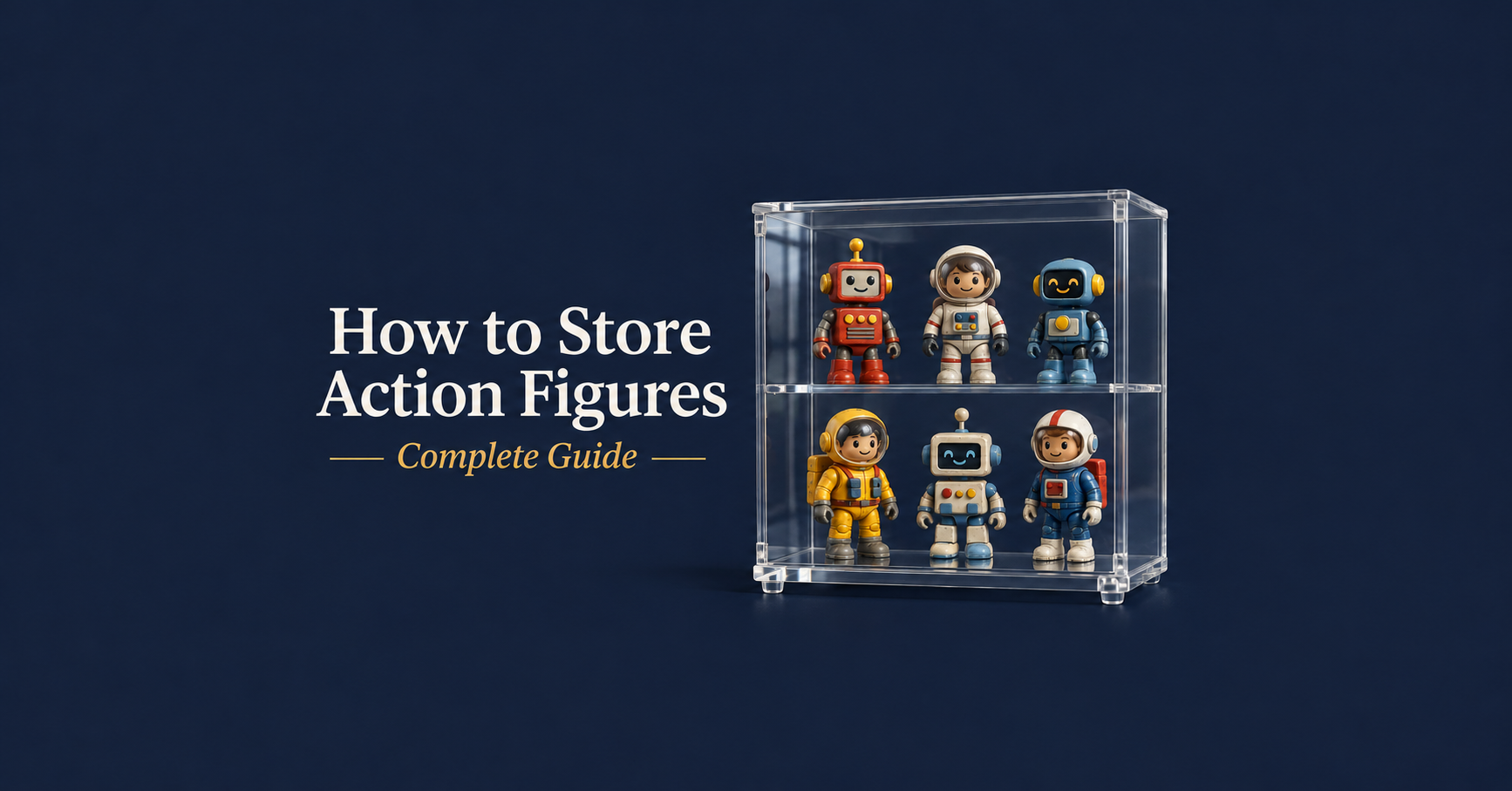
If you love seeing your collection, an enclosed display is the best option. Glass or acrylic cabinets with doors keep dust out while letting you enjoy your figures. Look for:
- UV-protective acrylic or glass.
- Adjustable shelves so tall and small figures both fit.
- Solid, stable construction that will not wobble or tip.
- Good ventilation or small gaps so air does not stagnate.
Place figures with a little space between them so they do not rub, and use clear display stands for dynamic poses and balance. Open shelves look great but collect dust quickly, so they suit less valuable figures or collectors who dust often.
2. Original Packaging
For carded or boxed figures, the packaging is part of the value. Store them upright or lying flat on a stable surface and never stack heavy items on top. To protect the packaging:
- Use clear protective cases, such as plastic box protectors, to prevent corner dents and shelf wear.
- Store cards in sleeves or card protectors to guard against bending and edge damage.
- Keep them out of sunlight, which fades printed artwork fast.
- Do not use tape or stickers directly on boxes.
If you open a figure but want to keep the box, flatten or store the box carefully with the inserts so everything can go back together later.
3. Storage Bins and Boxes
When shelf space is limited, bins are a practical option. Choose sturdy, food-safe or archival-grade plastic containers with tight lids. Avoid cardboard for long-term storage in humid areas.
- Wrap each figure in acid-free tissue paper or soft cloth. Avoid newspaper, which can leave ink and acid on the surface.
- Do not use rubber bands, twist ties or elastic, which can stain or dent plastic.
- Place heavier figures at the bottom and lighter ones on top, and never overfill.
- Add a few silica gel packs to absorb moisture, and replace or recharge them regularly.
- Label the outside of each bin so you do not need to dig through everything.
Keep Different Materials Apart
One of the most overlooked storage mistakes is letting different plastics touch. Soft PVC and vinyl figures can release plasticizers that react with painted or hard-plastic figures, leading to sticky patches, stains or paint damage. Store vinyl figures separately from painted figures, and use a barrier of acid-free tissue or clear inert plastic wrap between figures that must share a container.
How to Store Accessories and Small Parts
Small pieces such as extra hands, helmets, weapons and effect parts go missing easily. Try these habits:
- Use small resealable bags and label each one with the figure name.
- Store accessories with the matching figure whenever possible.
- Keep a shallow organizer tray with compartments for loose parts.
- Take a quick photo of a complete figure so you remember its full set-up.
Keep soft accessories like capes and fabric clothing away from direct light and humidity, since fabric can fade and attract mold.
Protecting Your Collection From Dust and Pests
Dust is the quiet enemy of every shelf. It dulls paint, settles into joints and makes cleaning harder as it builds up. Enclosed cases are the easiest fix. For open displays, dust every week or two with a soft brush. Seal boxes in storage bins, and avoid leaving food or drinks near your collection to reduce the chance of insects and mice.
Special Tips for Vintage and Valuable Figures
- Handle with clean, dry hands or soft cotton gloves to avoid oils.
- Store them in a stable, climate-controlled room rather than a closet that changes with the season.
- Avoid frequent posing. Old plastic can become brittle, and joints may crack.
- Consider insurance and an inventory list for high-value collections, with photos and purchase details.
Storing Figures With Stands, Bases and Heavy Parts
Top-heavy figures can slowly lean when stored upright for years. Use proper stands, keep the base flat on the shelf, and avoid forcing a pose the figure cannot hold on its own. For larger statues and scale figures, always support them from the base and use sturdy shelves rated for the weight.

A Simple Routine to Keep Your Collection Healthy
- Weekly: quick dusting for open displays.
- Monthly: check that nothing is leaning, sticking, or shifting.
- Every three to six months: inspect stored bins, refresh silica gel, and look for signs of moisture, odor or pests.
- Yearly: review your collection, reorganize, and update your inventory list.
Common Action Figure Storage Mistakes
- Leaving figures on a sunny windowsill.
- Storing in a hot attic or damp basement.
- Wrapping figures in newspaper or tight rubber bands.
- Stacking heavy boxes on top of packaging.
- Letting soft vinyl and painted figures touch.
- Forgetting to dust or check stored bins.
Frequently Asked Questions
Is it better to keep action figures in the box or out of it?
It depends on your goals. Keeping them sealed in the box protects value and condition, while displaying them out of the box lets you enjoy them. Many collectors do both: one to display and one sealed.
What is the best container to store action figures long term?
A sturdy plastic bin with a tight lid, acid-free tissue wrapping and silica gel packs is a reliable choice. For display, a UV-protective enclosed cabinet works best.
Why are my action figures sticky?
Stickiness usually comes from soft vinyl releasing plasticizers, often made worse by heat and by contact with other plastics. Clean gently, let the figure dry fully and store it separately in a cool place.
Can I store action figures in a garage or attic?
It is not recommended. Temperature extremes and humidity can cause warping, fading, mold and brittleness. A temperature-stable indoor room is much safer.
How do I stop action figures from fading?
Keep them out of direct sunlight, use UV-filtering cases or window film, and prefer LED lighting over hot bulbs.
Should I use silica gel with my collection?
Yes, in enclosed bins and cabinets in humid climates. Silica gel packs help keep moisture low, but you should check and replace or recharge them regularly.
Final Thoughts
Knowing how to store action figures properly does not require expensive gear. Choose a cool, dry, dim space, clean your figures before packing, separate different materials, protect them from dust and pressure, and check on your collection regularly. With these habits, your figures will stay vibrant, clean and display-ready for many years, whether you collect for fun, nostalgia or long-term value.