




Why Toy Batteries Corrode (and How to Stop It From Happening Again)
You open the battery compartment of your child’s favorite toy and find a crusty white or blue-green mess around the terminals. It is a familiar problem for parents, gift-givers and collectors alike. So why do toy batteries corrode, and is there anything you can do about it? The short answer is that corrosion is usually the result of a leaking battery, and leaks are almost always preventable.
This guide explains the science in simple words, lists the most common causes, shows you how to clean corrosion safely, and gives you practical habits to keep every toy working for years.
What Is Battery Corrosion?
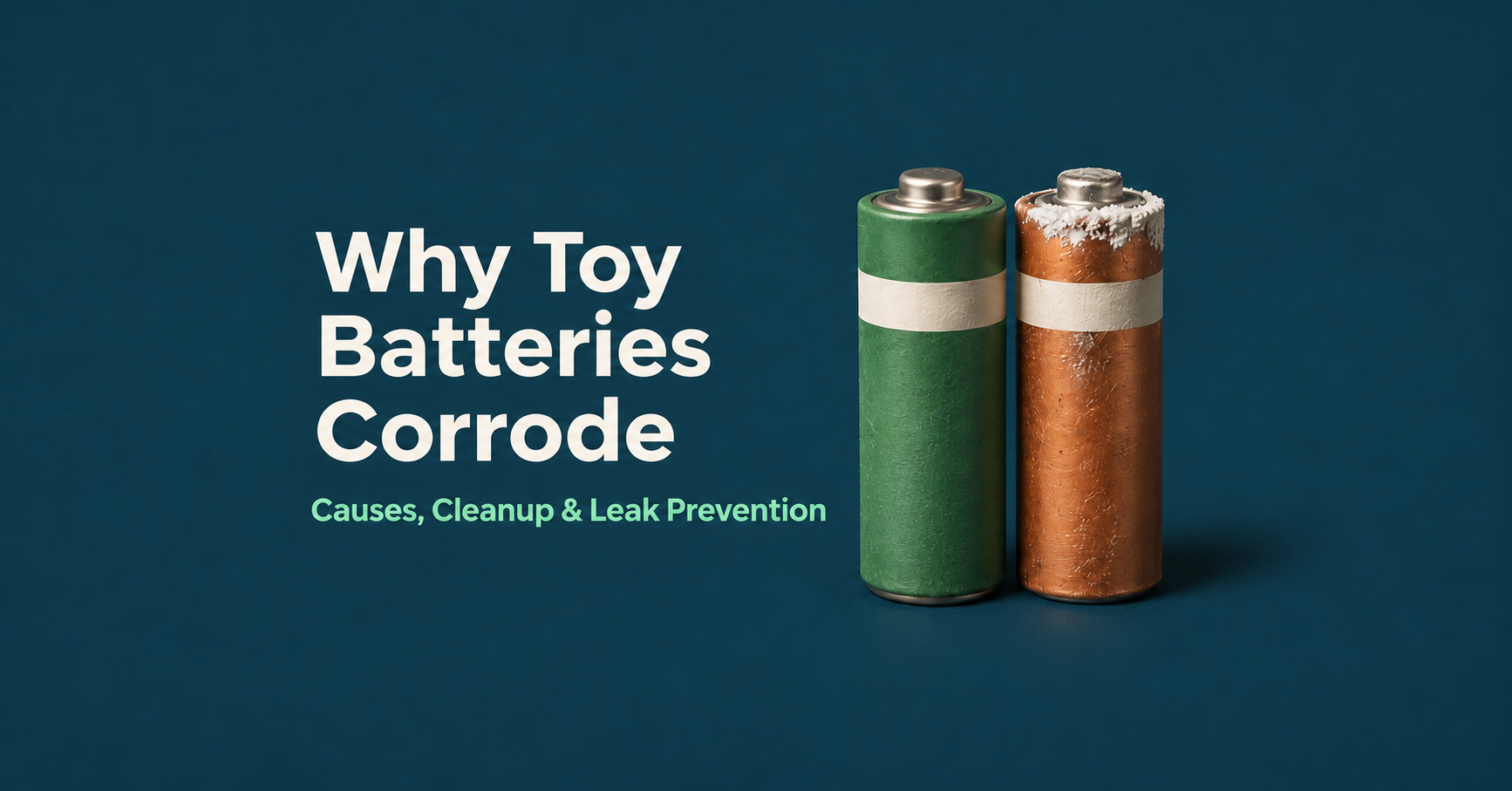
Battery corrosion is the crusty, powdery build-up you see on battery terminals and contacts. It is not the battery itself. It is the dried residue of chemicals that escaped from inside a battery and then reacted with air and metal.
In everyday alkaline batteries (the common AA, AAA, C and D cells used in most toys), the inside contains an alkaline electrolyte, usually potassium hydroxide. When this liquid leaks out and meets carbon dioxide in the air, it slowly forms white, fluffy crystals. When it reacts with the metal contacts in the toy, you may also see green or blue deposits.
Why Do Toy Batteries Corrode? The Science in Simple Terms
Every battery produces power through a chemical reaction. As the battery is used, the active materials inside are slowly consumed. Over time, and especially once a battery is fully drained, the chemistry inside can change in ways that produce gas, mostly hydrogen. That gas raises the pressure inside the sealed casing.
When the pressure gets high enough, or when the casing weakens through age, heat or damage, the seal gives up. A tiny amount of electrolyte seeps out through the seal or the vent. It reacts with air and with the metal terminals, and corrosion begins.

The Most Common Reasons Toy Batteries Corrode
1. Dead Batteries Left Inside the Toy
This is the number one cause. A battery that is fully drained is more likely to leak than a fresh one. Toys that are switched on and left running, or that have a tiny standby drain, can fully drain their batteries without anyone noticing. If the dead cells stay in for weeks or months, leakage becomes much more likely.
2. Mixing Old and New Batteries
When a new battery is paired with a weaker one, the weaker cell can be pushed past its limit by the stronger one. This over-discharge stresses the weaker cell and raises the risk of leaking. Always replace all batteries in a toy at the same time.
3. Mixing Brands, Chemistries or Types
Alkaline, zinc-carbon and rechargeable cells discharge at different rates and voltages. Combining them in the same toy leads to uneven wear and increases leak risk. Use the same brand, type and age of battery in every slot.
4. Heat and Humidity
Warm storage speeds up chemical reactions inside the battery and can soften seals. Moisture in the air can add to corrosion on the contacts. A toy stored in a hot attic, a car, a damp basement or beside a heater is much more likely to end up with leaky batteries.
5. Long Storage Without Use
Batteries slowly self-discharge even when nothing is using them. A toy that sits in a toy box for a year with batteries installed is a classic case of corrosion waiting to happen, especially with seasonal or rarely played toys.
6. Low-Quality or Expired Batteries
Cheap, poorly sealed or old batteries have a greater chance of leaking. Every battery has an expiry or best-before date, and past that date the seals and internal chemistry are less reliable. Always check the date on the packaging before buying and before installing.
7. Physical Damage or Short Circuits
Dented, crushed or punctured batteries, and batteries that touch metal objects in a drawer, can short circuit and leak. Loose batteries should never be stored in a pocket, bag or drawer with coins, keys or other metal items.

Which Batteries Leak Most Often?
- Zinc-carbon (heavy duty) batteries: older, cheaper cells that tend to leak more easily, especially when drained.
- Alkaline batteries: the most common choice for toys. They are reliable but can leak if left in a drained state for a long time.
- Lithium batteries: generally the most leak-resistant and a good option for long-term storage and devices that are used infrequently.
- Rechargeable NiMH batteries: less prone to the white crystal leak of alkaline cells, though they can still leak if damaged, misused or charged with the wrong charger.
Is Battery Corrosion Dangerous?
The residue can irritate the skin, eyes and nose, so treat it with respect. Avoid touching it with bare hands, do not rub your eyes while cleaning, and keep children and pets away from the toy until it is cleaned. If any residue gets on your skin, rinse with plenty of water. If it gets into your eyes, rinse with water right away and seek medical advice. Never try to clean a toy while a child is playing with it.
How to Clean Corroded Toy Batteries Safely
Many toys can be rescued if you act early. Here is a simple method for the typical white crust from alkaline batteries.
- Protect yourself. Wear disposable gloves and eye protection, and work in a ventilated space on a protected surface.
- Remove the batteries. Take them out carefully, wearing gloves. If a battery is leaking, place it in a plastic bag. Do not throw it in a regular bin if your local rules require battery recycling.
- Neutralize the residue. Because the leaked material from alkaline batteries is alkaline, a mild acid helps. Dip a cotton swab in white vinegar or lemon juice and dab it onto the corrosion. You may see slight fizzing.
- Scrub gently. Use a fresh cotton swab, an old toothbrush or a small piece of cloth to lift the crust. A wooden toothpick can help remove stubborn bits from tight corners.
- Wipe and dry. Clean the contacts with a swab lightly dampened with isopropyl alcohol, then allow everything to dry fully before inserting new batteries.
- Check the contacts. If the metal looks shiny again, you are good to go. If it is still dull or eaten away, the contacts may be damaged.

When Cleaning Does Not Work
If the corrosion has spread deep into the circuit board, wires or electronics, or if the metal contacts are heavily damaged, the toy may not be repairable. Some devices can have the contacts replaced, but for inexpensive toys replacement is often the practical choice. Never use water to flood the compartment, and never attempt cleaning with the toy powered on.
What Not to Do
- Do not touch the residue with bare hands.
- Do not use sharp metal tools that can scratch contacts or cause a short circuit.
- Do not soak the toy in liquid.
- Do not heat or burn leaking batteries.
- Do not mix cleaning chemicals together.
How to Prevent Toy Batteries From Corroding
Prevention is far easier than repair. These habits will dramatically cut the odds of leaks.
- Remove batteries from toys that will not be used for a few weeks or longer. This single habit prevents most corrosion.
- Replace all batteries together and never mix old with new.
- Use the same brand and type in every slot.
- Buy fresh, reputable batteries and check the expiry date.
- Switch the toy off after play, and use the power switch if it has one.
- Store toys in a cool, dry place away from sunlight, heaters and damp areas.
- Check seasonal and rarely used toys every few months.
- Consider lithium or rechargeable batteries for toys that stay in storage or are used heavily.
- Remove weak batteries quickly. If a toy slows down, makes weaker sounds or dims its lights, change the batteries.

Choosing the Best Batteries for Toys
Different toys have different power needs. Here is a quick guide.
- High-drain toys such as remote-control cars, motorized toys and light-and-sound toys: choose quality alkaline or rechargeable NiMH batteries.
- Low-drain or occasional-use toys such as clocks, simple lights and small figures: lithium batteries are a good long-lasting choice.
- Toys used daily: rechargeable batteries with a proper charger save money and reduce waste.
- Toys for very young children: always choose toys with a secured battery compartment closed by a screw, and keep spare batteries well out of reach.
Whatever you choose, buying from reputable brands, checking the packaging for damage and following the toy’s manual will serve you better than going for the cheapest multipack.
Proper Battery Disposal
Leaking or worn-out batteries should not go into regular household waste. Check local rules, and take used batteries to a battery recycling point or collection bin. Cover the terminals of lithium batteries with tape before disposal, and store used batteries in a non-metal container until you can drop them off.
Frequently Asked Questions
Why do batteries leak even when the toy is not being used?
Batteries slowly self-discharge and age even when idle. Over many months, seals weaken and chemistry changes, which can cause a leak. Removing batteries from stored toys avoids this.
Can corroded batteries damage a toy permanently?
Yes. If the residue reaches the circuit board or wires, or eats into the metal contacts, the damage can be permanent. Prompt cleaning gives the best chance of saving the toy.
What is the white powder on a battery?
It is typically potassium carbonate, formed when leaked alkaline electrolyte reacts with carbon dioxide in the air. It looks like white, crusty or fluffy crystals.
Is vinegar or baking soda better for cleaning battery corrosion?
For the common alkaline battery leak, mild acids like white vinegar or lemon juice neutralize the residue. Baking soda is better suited to the acidic leaks of some other battery types, such as car batteries, so check which type of battery you are dealing with.
Do rechargeable batteries corrode less?
They are generally less likely to produce the crusty alkaline leak, but they are not immune. Use the right charger, avoid over-discharging and follow the manufacturer’s guidelines.
How often should I check batteries in toys?
Every two to three months for toys in storage, and any time a toy begins to slow down, sound weak or flicker.
Final Thoughts
Toy batteries corrode because chemicals escape from drained, aging or poorly stored cells and react with air and metal. The fix is simple: take batteries out of toys that are not in use, never mix old and new or different types, choose quality fresh batteries, and keep toys somewhere cool and dry. With these habits, and a quick, careful clean if corrosion ever appears, your toys will keep working and stay safe for the children who love them.