




How to Clean Battery Corrosion From Toys: A Safe, Step-by-Step Guide
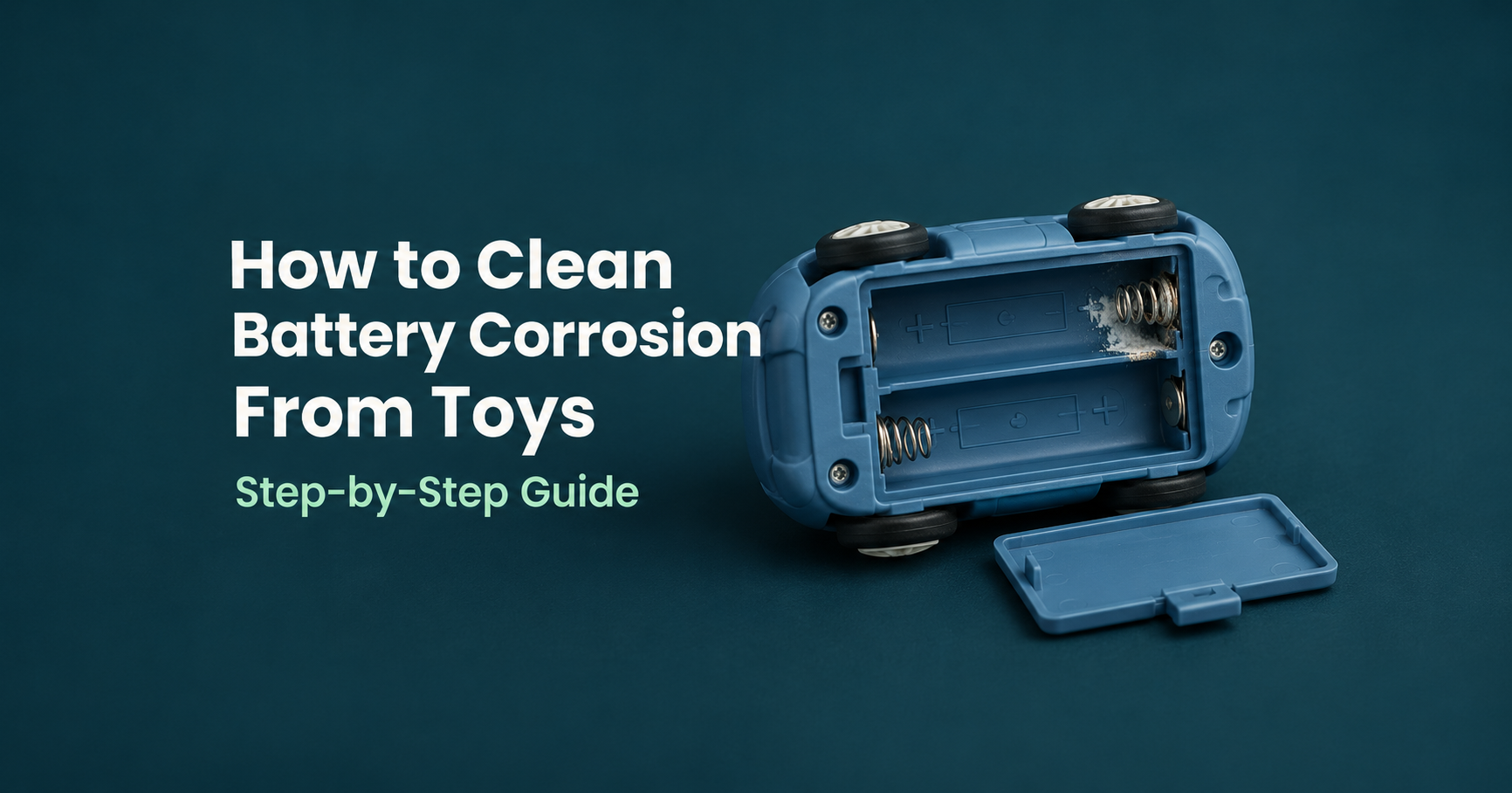
You pop open the battery compartment of a favorite toy and find a crusty white, blue or green mess clinging to the contacts. Before you throw the toy away, take a breath: in most cases, battery corrosion can be cleaned with a few household items and a little patience. This guide shows you exactly how to clean battery corrosion from toys safely, what to do for stubborn cases, and how to stop it from coming back.
Before You Start: Safety First
The residue from a leaking battery can irritate skin, eyes and airways. Take a few simple precautions before you begin:
- Wear disposable gloves and eye protection.
- Work in a well-ventilated area on a surface you can wipe clean, such as a table covered with paper towels.
- Keep children and pets away while you clean.
- Do not touch your face or eyes during cleaning, and wash your hands thoroughly afterwards.
- If residue touches your skin, rinse with plenty of water. If it gets in your eyes, rinse immediately with water and seek medical advice.
Identify the Type of Corrosion
Not all battery corrosion looks the same. Knowing what you are dealing with helps you choose the right approach.
- White, powdery or crystalline crust: the classic leak from alkaline batteries (AA, AAA, C, D and 9V). This is the most common kind in toys.
- Blue-green crust: usually forms when leaked chemicals react with copper or brass contacts.
- Orange-brown rust: typically appears on steel springs when moisture has been involved.

What You Will Need
- Disposable gloves and eye protection
- White vinegar or fresh lemon juice
- Cotton swabs
- An old toothbrush (soft bristles are best)
- Isopropyl alcohol (rubbing alcohol)
- A dry cloth or paper towels
- A wooden toothpick or small plastic spudger for tight spots
- A small screwdriver, if the compartment is screwed shut
- Optional: a fine pencil eraser or fine-grit sandpaper for stubborn deposits on metal contacts

How to Clean Battery Corrosion From Toys: Step by Step
Step 1: Turn Off the Toy and Put On Your Protection
Switch the toy off if it has a power switch, then put on your gloves and eye protection. Work on a protected surface in good light.
Step 2: Remove the Batteries Carefully
Open the battery compartment (use a screwdriver if needed) and remove all the batteries. Pull them out gently, and do not force a battery that is stuck. Place any leaking or damaged batteries in a sealed plastic bag for proper disposal. Do not handle them with bare hands, and never throw them in a fire.
Step 3: Brush Away Loose Residue
Use a dry cotton swab or a dry old toothbrush to gently remove loose crystals. Do this before using any liquid. Tip the toy so that loose particles fall onto your paper towel, away from the toy’s mechanism.
Step 4: Neutralize the Residue
Leaked alkaline battery material is a base, so a mild acid helps break it down. Dip a cotton swab in white vinegar or lemon juice and wring out most of the liquid. The swab should be damp, not dripping. Dab it onto the corrosion and let it sit for one to two minutes. You may see light fizzing, which is normal.
Step 5: Scrub Gently
Use a fresh cotton swab or the old toothbrush to scrub the contacts and springs. Use a wooden toothpick to reach corners and to pick out stubborn bits. Repeat the dab-and-scrub process with new swabs until the corrosion is gone. Avoid metal tools, which can scratch the contacts or short out the circuit.
Step 6: Wipe With Alcohol and Dry
Wipe the contacts and compartment with a swab lightly dampened with isopropyl alcohol. This removes leftover residue and helps moisture evaporate quickly. Let everything air dry completely, ideally for at least 15 to 30 minutes, and be sure the compartment is dry before reinserting batteries.
Step 7: Check the Contacts and Test the Toy
Look closely at the metal contacts and springs. They should look clean and shiny. Insert fresh batteries of the same brand and type, then turn the toy on. If it works, you have saved it.

How to Clean Stubborn or Heavy Corrosion
If the corrosion is thick, hardened or has been there for a long time, try these extra steps:
- Let vinegar soak a little longer. Apply a vinegar-dampened swab or a small piece of paper towel and leave it for up to five minutes, then scrub.
- Use a pencil eraser on flat metal contacts to gently rub away the final film.
- Use fine sandpaper sparingly on heavily tarnished contacts. Use light pressure so that you do not remove the metal plating.
- Use a cotton swab with a little lemon juice and salt as a mild abrasive paste for rust on springs, then wipe clean and dry.
Cleaning Different Parts of a Toy
Metal Springs and Contacts
These are the most important parts to clean. If a spring is badly rusted, bent or crumbling, replacing it is better than cleaning it. Replacement contacts are available for many devices, and a repair service can help with more valuable toys.
Battery Compartment Doors and Plastic Surfaces
Wipe plastic with a cotton swab dampened with water or a little vinegar, then dry it. Avoid strong solvents that might cloud or soften the plastic.
Wires and Circuit Boards
If corrosion has crept onto wires or a circuit board, be extremely careful. Use only a tiny amount of isopropyl alcohol on a swab and an old, soft toothbrush. Never pour liquid onto a circuit board, and allow plenty of time to dry. If the board is badly affected, it is best to ask a technician or consider replacing the toy.
Remote Controls, Plush Toys With Battery Packs and Sealed Toys
Many toys have battery packs that are closed with screws. Always open them fully before cleaning. Do not attempt to clean parts you cannot reach safely, and never wet fabric or stuffing that houses electronics.
What Not to Do
- Do not use bare hands to touch leaked residue.
- Do not soak the toy in water or any liquid.
- Do not use metal tools that can scratch or short-circuit the contacts.
- Do not mix vinegar with bleach or other chemical cleaners.
- Do not turn the toy on while it is wet.
- Do not reuse leaking batteries.
Why Baking Soda Is Not Always the Right Choice
You may see baking soda recommended online. Baking soda neutralizes acid, which makes it a good match for leaks from lead-acid batteries such as those in cars. The leaked material from common alkaline toy batteries is alkaline instead, so a mild acid like vinegar or lemon juice is the better partner. If you are not sure which type of battery leaked, check its label and use the method that matches.
When to Replace Instead of Clean
Cleaning will not rescue every toy. Consider replacing the toy or the affected part if:
- The metal contacts or springs have been eaten away or crumble when touched.
- Corrosion has spread into the circuit board, switches or motor.
- The toy still does not work after cleaning and fitting fresh batteries.
- The toy is inexpensive and the repair would cost more than a replacement.
How to Dispose of Leaking Batteries
Leaking and used batteries should not go into regular household waste. Seal them in a plastic bag or a non-metal container and take them to a battery recycling point. For lithium batteries, cover the terminals with tape before disposal.
How to Prevent Battery Corrosion in the Future
Once your toy is clean, a few habits will keep the corrosion away:
- Remove batteries from toys you will not use for a few weeks or longer.
- Replace all batteries at once, and never mix old with new.
- Use the same brand and type of battery in every slot.
- Buy fresh batteries from reputable brands and check the expiry date.
- Store toys in a cool, dry place, away from heat, humidity and sunlight.
- Switch toys off after play and change batteries as soon as performance fades.
- Consider lithium or rechargeable batteries for toys that are used rarely or very heavily.
- Check stored toys every two to three months.

Frequently Asked Questions
Can you fix a toy with battery corrosion?
Often, yes. If the corrosion is limited to the battery contacts and springs, cleaning usually restores the toy. If the circuit board or wiring has been damaged, the toy may not be repairable.
What is the best thing to clean battery corrosion with?
For the common white crust from alkaline batteries, white vinegar or lemon juice on a cotton swab, followed by isopropyl alcohol to finish, is a reliable and inexpensive combination.
Is it safe to touch battery corrosion?
It is best not to. The residue can irritate skin and eyes, so always wear gloves and eye protection, and wash your hands afterwards.
How long should I let vinegar sit on corrosion?
One to two minutes is enough for light corrosion. For thicker deposits, you can let it sit for up to five minutes and repeat as needed.
Can I use water to clean battery corrosion?
Use as little as possible. A slightly damp swab is fine for plastic parts, but do not soak the compartment or pour water inside a toy with electronics.
Why does my toy not work after cleaning?
The contacts may still have a thin film of corrosion that is not visible, or the spring may have lost its tension. Try cleaning again with an eraser or fine abrasive, check that the batteries are fresh and correctly inserted, and test with a different set of batteries.
Can corrosion come back after cleaning?
It can if the same conditions repeat. Remove batteries during storage, never mix old and new batteries, and avoid heat and humidity.
Final Thoughts
Learning how to clean battery corrosion from toys is a handy skill for any parent, collector or gift-giver. With gloves on, a little white vinegar, a few cotton swabs and some patience, most corroded battery compartments can be restored in less than half an hour. Clean carefully, dry thoroughly, and adopt good battery habits afterwards, and your toys will keep working for many more playtimes to come.