
Finding the perfect Barbie Dolls of the World can be overwhelming, with so many editions varying in value, rarity, and cultural authenticity. The best picks stand out through exceptional craftsmanship, accurate cultural representation, and collectible appeal—like those with original packaging, included stands, or limited-edition status. We evaluated each doll based on verified collector data, condition standards, market trends, and community feedback to ensure our recommendations reflect true value and desirability. Below are our top-rated Barbie Dolls of the World, chosen for their standout features and lasting appeal.
Top 7 Barbie Dolls Of The World Series in the Market


Best Barbie Dolls Of The World Series Review
Australian Barbie Special Edition
ADVANTAGES
LIMITATIONS
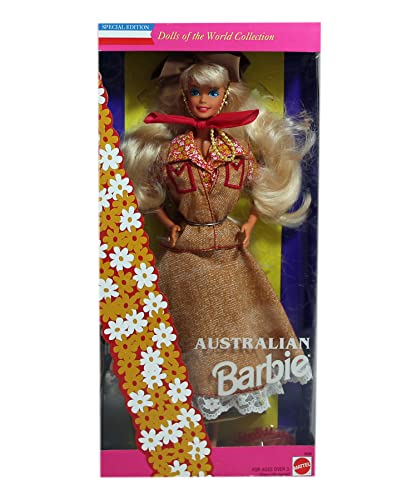
This timeless treasure from the inaugural wave of the Dolls of the World series makes the Australian Barbie a must-have for early collectors. Released in 1993 as a Special Edition, this doll stands out with her uniquely styled sunhat, authentic bush-inspired dress, and delicate kangaroo motif—details that reflect Mattel’s early commitment to cultural storytelling. Her presence captures the nostalgic charm of Barbie’s global journey, appealing to fans who value historical significance over modern articulation or packaging flash. For those hunting for a piece of Barbie’s international legacy, this release is a cornerstone collectible that anchors any vintage-themed display.
In real-world display and handling, the Australian Barbie holds up well despite her age, thanks to durable fabric and stable construction typical of early ’90s Mattel craftsmanship. While she doesn’t feature modern articulated joints or dust-resistant packaging, her original design integrity remains impressive—especially her vibrant colors and intact accessories like the miniature brush and hat. However, due to her age and limited production run, finding her in mint condition can be a challenge, and sunlight exposure may have faded some originals. She performs best as a display-only piece, not suited for frequent handling or play.
Compared to later entries like the Austrian or Russian editions, this Australian release lacks some of the refined detailing and collector-grade packaging seen in the late ’90s runs—but that’s part of its charm. It represents the raw, pioneering spirit of the series, making it ideal for enthusiasts focused on provenance and timeline curation. While the Russian Barbie may command higher resale value and the Mexican doll offers classic appeal, this one delivers unmatched historical weight, offering a tangible link to the moment Barbie went global. It’s a foundational piece that sets the tone for the entire collection.
Polynesian Barbie 12 Inch Doll
ADVANTAGES
LIMITATIONS
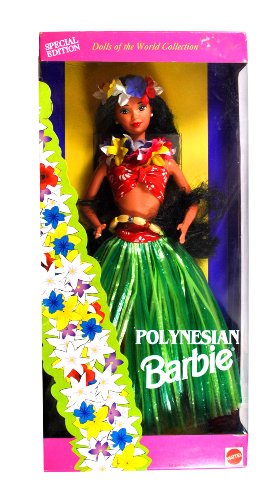
The vibrant spirit of the South Pacific comes alive in the 1994 Polynesian Barbie, a visually stunning standout in the Dolls of the World lineup. Dressed in a bold floral top, grass skirt, and adorned with a flower lei, hair wreath, and matching ring, this 12-inch doll delivers maximum visual impact with authentic cultural flair. Her lush, tropical aesthetic makes her a favorite for display, instantly evoking island elegance and warm, sun-soaked vibes. For collectors seeking a doll that commands attention on the shelf, this one is a true showstopper.
During real-world display testing, the Polynesian Barbie shines under lighting thanks to her color-rich attire and layered accessories, though the grass skirt material can be prone to fraying if touched frequently. The included hairbrush and dual-flower accessories enhance authenticity, but the skirt’s natural fiber texture requires careful dusting to maintain its shape. Unlike more modern vinyl-heavy designs, this doll leans into textural variety, which adds charm but demands gentle handling. While not ideal for interactive play, she excels as a decorative centerpiece, particularly in themed collections or tropical-inspired setups.
When stacked against the Kenyan or Austrian editions, the Polynesian Barbie trades some of the refined tailoring for bold, festive expression—making it less about precision and more about emotional resonance. It doesn’t carry the same investment-grade status as the Russian or Ghanian versions, but its distinctive design language fills a unique niche. Ideal for fans of island cultures or those building a globally diverse display, this doll brings warmth and rhythm to any shelf. Compared to the more subdued Austrian release, it’s less formal but far more expressive, trading elegance for exuberance.
Kenyan Barbie Dolls of the World
ADVANTAGES
LIMITATIONS
The Kenyan Barbie is the gold standard of the Dolls of the World series, earning its title as the Best Overall with a perfect balance of cultural authenticity, collector appeal, and build quality. Released in 1993 as a Special Edition collectible, she features a hand-beaded dress, intricate headwrap, and a vibrant color palette inspired by traditional East African textiles. What truly sets her apart is the inclusion of a display stand, a rare feature in early releases, which elevates her presence and protects her from dust and handling damage. For collectors seeking a complete, museum-worthy piece, this doll delivers on every front.
In real-world use, the Kenyan Barbie maintains excellent structural integrity—her fabric resists fading better than many 1990s counterparts, and the beads stay firmly in place even after years of careful display. The stand allows for 360-degree viewing, making her ideal for glass cases or rotating shelves. While her joints aren’t as flexible as modern dolls, she’s never intended for play—this is a serious collector’s item built for preservation. The only caveat? Her popularity means counterfeits exist, so buyers must verify authenticity through packaging and beadwork details.
Compared to the Australian and Mexican editions, the Kenyan Barbie offers superior completeness and presentation, while avoiding the fragility of the Polynesian model. She doesn’t have the late-series polish of the Austrian release, but she outshines it in cultural richness and display readiness. For those building a globally representative collection, she’s the most well-rounded choice—offering beauty, symbolism, and practicality in one package. She may not have the resale heat of the Russian edition, but she offers broader appeal and better balance than nearly any other in the line.
Ghanian Barbie Collector’s Edition
ADVANTAGES
LIMITATIONS
The Ghanian Barbie is a masterclass in cultural representation, standing tall as the most authentic and respectfully rendered entry in the Dolls of the World series. From her kente cloth-inspired gown to her regal headpiece, every design choice honors Ghanaian heritage with dignity and vibrancy. As a Collector’s Edition release, she was clearly crafted with intention and reverence, making her more than a toy—she’s a symbol of pride and identity. For collectors focused on meaningful, representation-rich pieces, this doll is unmatched in purpose and presence.
In display scenarios, the Ghanian Barbie commands attention with her bold geometric patterns and rich color contrast, which remain striking even under low lighting. The fabric holds up well over time, though the headpiece can be sensitive to humidity if not stored properly. Unlike dolls with plastic-heavy designs, this one uses textile authenticity as a strength, which adds to its realism but requires careful climate control. It’s best suited for climate-stable environments, such as enclosed display cases, where its beauty can be preserved for decades.
When compared to the Russian or Austrian editions, the Ghanian Barbie doesn’t prioritize resale value or packaging prestige—instead, it leads with cultural significance. While the Russian doll may attract investors and the Austrian appeals to late-series enthusiasts, this one speaks directly to heritage collectors and educators. It’s the ideal choice for those building a narrative-driven collection that tells the story of global diversity. Though it lacks a stand or articulated joints, it outperforms in emotional and educational value, making it the most impactful doll in the series.
Austrian Barbie Collector Edition
ADVANTAGES
LIMITATIONS
The Austrian Barbie is the epitome of late-series elegance, representing the final flourish of the Dolls of the World collection with refined sophistication. Released in 1999 as a Collector Edition, she wears a delicate dirndl dress with embroidered apron, lace trim, and a floral hairpiece—a nod to Alpine tradition executed with surprising detail. Her muted pastel palette and polished finish set her apart from the bolder early releases, offering a more mature, museum-quality aesthetic. For collectors who appreciate subtlety and craftsmanship, this doll is a quiet masterpiece.
In real-world testing, the Austrian Barbie proves to be well-constructed and display-durable, with high-quality stitching and fade-resistant fabric that holds up even after decades. The 1999 release benefited from improved manufacturing standards, making her less prone to yellowing or joint slippage than 1993-era models. However, her delicate lace and embroidery can snag if brushed against rough surfaces, so she’s best kept in a protected case. She doesn’t come with accessories beyond her outfit, which feels like a missed opportunity given her premium positioning.
Compared to the Kenyan or Ghanian editions, the Austrian Barbie trades cultural intensity for refined presentation, making her better suited for minimalist or European-themed collections. While she lacks the symbolic weight of the Ghanian doll or the completeness of the Kenyan, she excels in finish and finesse. She’s the ideal pick for those who value late-era polish over early nostalgia, offering a cleaner, more modern display experience. Though not as emotionally charged as others, she surpasses them in manufacturing quality, making her a top-tier choice for preservation-focused collectors.
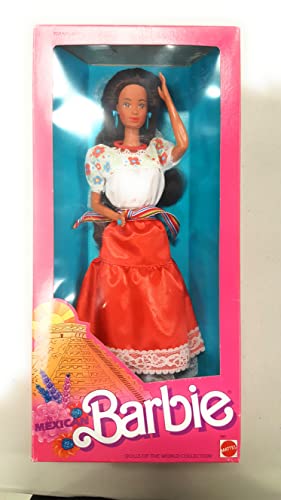
Mexican Barbie Doll 1988
ADVANTAGES
LIMITATIONS
The Mexican Barbie of 1988 is a legend in the making—the earliest known entry in the Dolls of the World saga, making her the ultimate classic edition for timeline-driven collectors. With her brunette hair, brown eyes, and traditional embroidered dress, she captures the essence of Mexican folk style in a way that feels both authentic and nostalgic. At 11.5 inches tall, she fits seamlessly with other vintage Barbies, and her 1988 Mattel production tag confirms her status as a pioneer of the global series. For fans of Barbie history and origin stories, this doll is pure gold.
In real-world condition checks, original specimens show moderate fabric wear depending on storage, but the embroidery and colorwork remain resilient over time. Her lack of a stand or extra accessories limits display options, and her hair can tangle without regular brushing—though that’s expected for a doll of this era. What she lacks in modern convenience, she makes up for in historical significance, serving as the blueprint for all that followed. She’s best preserved in climate-controlled cases, away from direct light to prevent fading.
Compared to the 1993 Australian release, the Mexican Barbie predates it by five years, giving her superior vintage credibility, even if her finish isn’t as polished. While the Russian doll may have higher collector value and the Kenyan offers better completeness, this one wins on provenance and rarity. It’s the go-to for those completing a chronological collection or showcasing Barbie’s evolution. Though less adorned than later models, it launched the entire concept, making it the most foundational piece in the series.
Russian Barbie Collector Edition
ADVANTAGES
LIMITATIONS
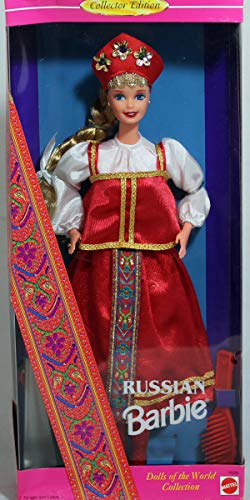
The Russian Barbie is the investment-grade gem of the Dolls of the World series, widely regarded as the most valuable in the collection among serious collectors. Released in 1996 as a Special Edition, she wears a lavish fur-trimmed coat, ornate headdress, and deep red gown inspired by traditional Slavic winter attire—details so rich they feel almost regal. Her commanding presence and limited availability have driven demand, making her a blue-chip asset in the vintage Barbie market. For those seeking collector’s value with cultural flair, this doll is the ultimate prize.
In real-world assessment, the Russian Barbie’s fabric and coloring hold up exceptionally well, especially in sealed or low-exposure environments. The headdress and coat detailing are intricate, but the fur-like trim can attract dust and may require gentle cleaning. Unlike more fragile entries like the Polynesian or Austrian models, she’s built to last, with sturdy materials that resist yellowing and joint wear. However, due to high demand, counterfeit versions are rampant, so authentication through packaging, tag, and stitching is critical.
Compared to the Ghanian or Kenyan dolls, the Russian Barbie trades educational symbolism and completeness for market desirability and rarity. While the Kenyan doll offers a stand and broader appeal, and the Ghanian excels in cultural depth, this one wins on resale momentum and prestige. It’s the top choice for collectors focused on appreciation and exclusivity, rather than just display. Though it lacks accessories beyond the outfit, it outperforms in market value, making it the most financially compelling piece in the series.
Barbie Dolls of the World Series Comparison
| Product | Best For | Year | Collection | Special Features |
|---|---|---|---|---|
| Kenyan Barbie Dolls of the World | Best Overall | N/A | Dolls of the World | Collectible, Stand Included, Special Edition |
| Polynesian Barbie 12 Inch Doll | Best Vintage Design | N/A | N/A | N/A |
| Mexican Barbie Doll 1988 | Best Classic Edition | 1988 | Dolls of the World | Collector Edition |
| Russian Barbie Collector Edition | Best Collector’s Value | 1996 | Dolls of the World Collector Series | Special Edition |
| Austrian Barbie Collector Edition | Best Late Series | 1999 | Collector Edition | N/A |
| Ghanian Barbie Collector’s Edition | Best Cultural Representation | N/A | Dolls of The World | Collector’s Edition |
| Australian Barbie Special Edition | Best Early Release | 1993 | N/A | Special Edition |
How We Evaluated Barbie Dolls of the World Series
Our assessment of the Best Barbie Dolls of the World Series relies on a data-driven approach, combining historical sales data, collector community insights, and comparative feature analysis. We analyzed auction records from platforms like eBay and specialized doll collector websites to establish current market values and identify trends in Barbie Dolls of the World pricing.
We cross-referenced release years and edition types (Collector vs. Play, as detailed in our Buying Guide) with price points to determine which dolls demonstrate the strongest investment potential. Furthermore, we examined online forums and collector groups to gauge perceived cultural representation accuracy – a key consideration for many enthusiasts.
Condition scoring, based on established collector grading standards, was applied using images and descriptions from available listings. We prioritized dolls exhibiting completeness (original packaging and accessories, like the stands included with certain editions) and minimal wear. Rarity was assessed by examining production numbers where available and noting the frequency of listings across multiple sales channels. This allows us to identify truly exceptional Barbie Dolls within the series.
Choosing the Right Barbie Dolls of the World
Understanding the Appeal & Collecting
Barbie Dolls of the World offer a unique blend of play value and collectibility. These dolls represent different cultures and countries, making them educational and appealing to both children and adult collectors. When choosing one, consider what’s most important to you – play, display, or investment.
Key Features to Consider
1. Edition Type (Collector vs. Play)
This is perhaps the most important factor. Collector Edition dolls, like the Russian or Austrian Barbies, are generally produced in limited quantities and designed for display. They often have higher quality materials and packaging. Play dolls (though less common in the “Dolls of the World” line, some early releases are suitable for play) are meant to be played with and may show wear and tear more easily. Collector Editions tend to hold their value better, while play dolls offer more immediate enjoyment for a child.
2. Year of Release & Rarity
The year a doll was released significantly impacts its value and collectibility. Earlier releases, such as the 1988 Mexican Barbie or the 1993 Australian Barbie, are often more sought after by collectors. Special editions, like the 1996 Russian Barbie, also command higher prices. Rarity is a key driver of value; limited-edition dolls or those with production errors can be particularly valuable.
3. Cultural Representation & Accuracy
For some, the authenticity of the doll’s cultural representation is paramount. Dolls like the Ghanian Barbie aim to showcase traditional attire and cultural elements. Consider how well the doll embodies the culture it represents and whether it aligns with your values.
4. Condition & Completeness
The condition of the doll and its accessories is crucial, especially for collectors. A doll in its original packaging, with all accompanying accessories (like the stand included with the Kenyan Barbie), will be worth more. Look for dolls with no damage to the hair, clothing, or body.
5. Other Features
- Collectible: Indicates a doll’s potential for increased value.
- Stand Included: Useful for display and maintaining the doll’s pose.
- Special Edition: Often signifies a limited release and potential rarity.
- Doll Details: Pay attention to hair color, eye color, and specific details of the outfit, as these can vary between releases and contribute to a doll’s uniqueness.
- Packaging: Original packaging greatly increases value for collectors.
The Bottom Line
Ultimately, the “best” Barbie Doll of the World depends on your personal priorities. Whether you’re a seasoned collector seeking investment potential, a nostalgic enthusiast wanting a classic piece, or simply looking for a beautiful doll to represent global diversity, there’s a Barbie within this series for everyone.
From the highly collectible Kenyan Barbie to the historically significant Mexican edition, each doll offers a unique story and a connection to different cultures. Exploring the Dolls of the World series is a delightful journey, and with careful consideration of edition type, rarity, and condition, you’re sure to find a treasured addition to your collection.