
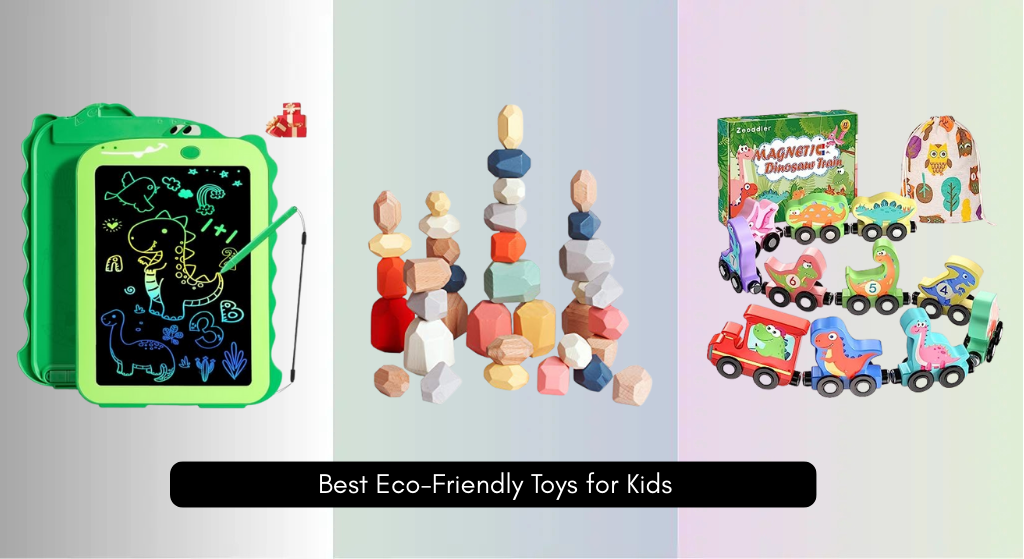
Parents want toys that are safe, sustainable, and stimulating, but finding ones that meet all three without breaking the bank can be a challenge. The best eco-friendly toys for kids are made from responsibly sourced wood, recycled materials, or non-toxic, biodegradable components, offering durability and developmental benefits while minimizing environmental impact. We evaluated the top options based on material safety, educational value, age appropriateness, and real-world performance, drawing from expert reviews, parent feedback, and third-party certifications. Below are our top picks for the best eco-friendly toys that combine sustainability, quality, and fun.
Top 11 Eco Friendly Toys For Kids in the Market
Best Eco Friendly Toys For Kids Review
Teriph LCD Dinosaur Drawing Tablet

ADVANTAGES
LIMITATIONS
Say goodbye to crayon chaos — the Teriph LCD Writing Tablet brings mess-free creativity to life with a sleek, eye-friendly design that parents and kids both love. This 8.5-inch doodle pad features a pressure-sensitive LCD screen that mimics the feel of real drawing without paper waste, making it a standout choice for eco-conscious families. With vibrant traceable colors and a one-touch erase button, it offers instant gratification for young artists while promoting focus, fine motor control, and imaginative storytelling — all without backlight or blue light to strain developing eyes.
In real-world use, this tablet shines during travel, meals, or quiet time, delivering hours of engagement with zero cleanup. The low-energy consumption screen holds drawings indefinitely until erased, and the long-lasting battery (powered by a sealed CR2032 cell) means no charging hassles. It’s lightweight and compact enough for backpacks, making it ideal for car rides or doctor’s visits. While the stylus is tethered, it’s small enough to lose, and the screen lacks touch sensitivity beyond pressure — so no pinch-to-zoom or app integration, but that’s not the point. This is pure, focused creative play.
Compared to flashy tablet apps or noisy electronic toys, the Teriph doodle pad stands apart as a minimalist, sustainable alternative that nurtures imagination without overstimulation. It’s more engaging than a paper notebook and far more durable than chalkboards or magnetic tiles. When stacked against basic drawing slates, it offers richer line variation and better color contrast. For parents seeking a calming, screen-free creative outlet that doubles as an anxiety-reducing tool for neurodivergent children, this dinosaur-themed gem delivers exceptional value — offering quiet joy at a fraction of the cost and environmental impact of digital tablets.
BESTAMTOY 36 PCS Wooden Sorting Stacking Stones
ADVANTAGES
LIMITATIONS
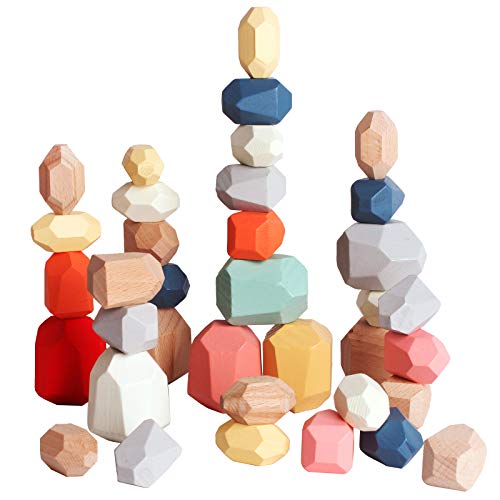
Step into a world of organic play with the BESTAMTOY Wooden Stacking Rocks, where every piece feels like a discovery from nature itself. These polyhedral wooden stones aren’t your average building blocks — each uniquely shaped, sized, and weighted piece introduces a tactile challenge that sparks curiosity and deep concentration. Crafted from high-quality wood with eco-friendly paint, this set turns simple stacking into a sensory-rich STEM experience that builds resilience, spatial reasoning, and fine motor precision in a way that plastic bricks simply can’t match.
During hands-on testing, the irregular shapes proved surprisingly stable when balanced thoughtfully, encouraging kids to experiment with physics and center of gravity. The smooth, hand-polished surfaces are safe for little hands, and the vibrant yet natural color palette holds attention without being overwhelming. Whether used solo for quiet focus or in groups for cooperative tower-building challenges, these rocks foster patience and problem-solving. However, their open-ended nature may leave younger toddlers (under 3) frustrated without guidance — this toy rewards persistence, not instant success.
Pitted against uniform block sets, the BESTAMTOY rocks offer a more advanced, Montessori-aligned challenge that grows with the child. While not as immediately intuitive as classic cubes, they outshine in developmental depth and aesthetic appeal. Unlike noisy or battery-powered toys, this set doubles as modern home décor — elegant enough to leave on display. For families valuing sustainable materials and open-ended learning, this set strikes a rare balance between artistic beauty and cognitive growth — delivering richer play value than simpler stacking toys, all while staying rooted in nature.
Zeoddler Magnetic Wooden Dinosaur Train Set

ADVANTAGES
LIMITATIONS
Choo-choo into dino-mite imagination with the Zeoddler Magnetic Wooden Dinosaur Train Set — a charming fusion of prehistoric fun and early learning that captivates toddlers like few others. This 11-piece set stars a bold engine and ten numbered dino cars (0–10), all crafted from 100% natural wood and coated in water-based, child-safe paint. The strong magnetic connectors make assembly effortless for small hands, reducing frustration while boosting confidence — a game-changer for kids just mastering cause-and-effect play. It’s not just a train; it’s a rolling toolkit for number recognition, color sorting, and storytelling adventures.
In action, the train glides smoothly across floors, holding together even on bumpy surfaces thanks to its robust magnets. Toddlers love pushing it around while naming dinosaurs or counting cars, turning playtime into a subtle math lesson. The double-sided printing adds visual interest, and the compact size fits perfectly in little palms or diaper bags. While the set doesn’t include tracks or additional scenery, its simplicity is part of the charm — it invites kids to invent their own worlds. The only limitation? Only one train configuration, so imaginative expansion requires external accessories.
Compared to generic wooden trains, the Zeoddler set stands out with its educational dual-purpose design: part toy, part teaching aid. It’s more engaging than flashcards and more durable than plush dinosaurs. When weighed against non-magnetic sets, it’s far more toddler-friendly, especially for those still developing hand strength. For parents seeking a gift that grows with the child — from sensory exploration to preschool math prep — this train delivers big fun in a small, eco-conscious package. It may lack the bells and whistles of electronic trains, but it wins where it counts: play value, safety, and sustainability.
LOOIKOOS Wooden Musical Instruments Set
ADVANTAGES
LIMITATIONS
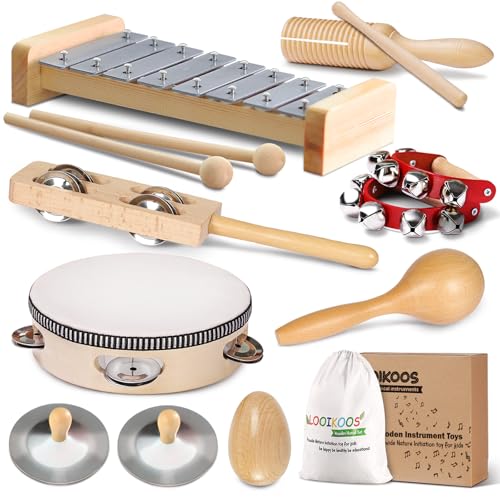
Turn your living room into a rhythm-filled playground with the LOOIKOOS Natural Wooden Music Set — a beautifully curated ensemble that introduces kids to the joy of sound without the headache of plastic noisemakers. This eco-friendly kit includes shakers, beaters, and tapping instruments, all made from kid-safe wood and finished with a smooth, splinter-free polish. Certified CPC-compliant and painted with minimal water-based color, it’s a parent-approved choice for families prioritizing safety and sustainability. From maracas to drums, each piece produces rich, authentic tones that help children explore rhythm, dynamics, and coordination in a tactile, joyful way.
In real-world play, the variety of instruments keeps kids engaged through multiple modes: shaking, tapping, or full-body dancing. The hand-to-eye coordination benefits are immediate — toddlers learn to match movement to beat, while older preschoolers begin mimicking patterns and even creating simple songs. The included storage bag makes cleanup a breeze, and the compact size is perfect for music circles or travel. One caveat: the softer wooden mallets don’t work well on hard surfaces, and very young toddlers may need help holding certain pieces steadily. But overall, the set encourages active play and social interaction like few others.
Stacked against plastic musical sets, LOOIKOOS wins on sound quality and environmental ethics. Unlike flimsy instruments that break after a week, these are built to last through years of pounding and shaking. Compared to digital music apps, this set promotes physical engagement and shared play — no screens, no ads, just pure sonic exploration. For families who value real instrument feel and eco-conscious materials, this set offers a richer, more authentic musical foundation. It may cost more than budget kits, but the durability and developmental depth make it a smarter long-term investment in play.
Magnetic Wooden Fishing Game Toy
ADVANTAGES
LIMITATIONS
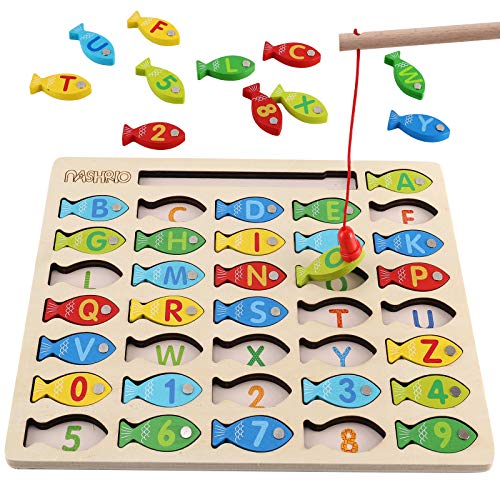
Reel in early learning with the Magnetic Wooden Fishing Game, a delightfully clever toy that turns ABCs and 123s into a splashy adventure. This beautifully crafted board features colorful fish, each labeled with a letter or number, waiting to be caught with a child-sized magnetic rod. The smooth-polished wood and eco-friendly water-based dyes ensure safety and sustainability, while the chunky pieces are ideal for small hands mastering grip and coordination. It’s a standout for parents seeking a play-based approach to literacy and numeracy without flashcards or screens.
On the mat, this game delivers hands-on learning through repetition and reward. Kids love the challenge of “catching” specific fish called out by parents — “Find the letter M!” — which sharpens recognition and listening skills. The magnetic pull provides satisfying feedback, reinforcing success. It works equally well solo or in groups, making it perfect for playdates or classroom use. However, the rod’s magnet is strong enough to occasionally snag two fish at once, which can confuse younger players. And while the board is durable, it’s not waterproof — so keep it away from bathtime.
Compared to digital learning apps, this fishing game offers tactile, screen-free engagement that builds real-world skills. When measured against simpler shape sorters, it adds cognitive layers like memory and matching. It’s more versatile than single-concept toys, growing from color sorting to spelling prep as kids develop. For families wanting a multi-skill toy that blends fun and fundamentals, this set casts a wide net. Though it lacks the portability of smaller kits, its educational depth and sturdy build make it a long-lasting addition to any playroom.
6 Pack Eco-Friendly Wooden Shaker Eggs
ADVANTAGES
LIMITATIONS
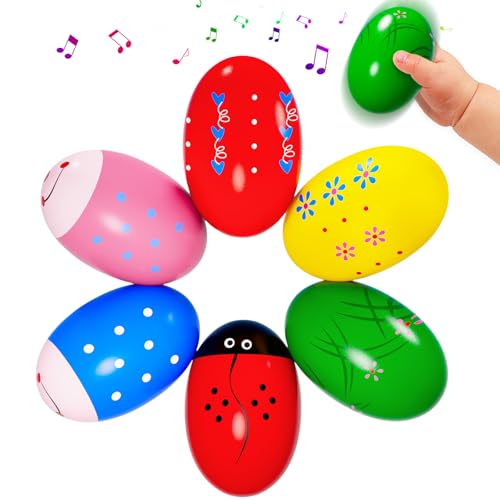
Meet the perfect tiny treasure for little hands: these Eco-Friendly Wooden Percussion Shakers are a symphony of simplicity, designed specifically for infants and toddlers aged 1–3. Each egg-shaped shaker is crafted from natural wood and non-toxic paint, producing a gentle rustle that captures attention without overwhelming sensitive ears. Sized just right for tiny fists, they’re ideal for developing gripping strength, auditory processing, and hand-eye coordination — all while feeling like a festive surprise. Whether hidden in Easter baskets or used as daily rewards, they bring joy without clutter or batteries.
In practice, these shakers excel as first instruments. Babies shake them instinctively, responding to the soft sound with smiles and wiggles. Parents appreciate how easy they are to clean and store, and the vibrant colors help with visual tracking and color recognition. They’re also fantastic for parent-child bonding — shaking together to the beat of a song builds rhythm awareness and emotional connection. However, the sound is quieter than plastic rattle toys, so they may not hold the interest of high-energy toddlers for long. And without labels or numbers, they don’t support structured learning like some educational sets.
Compared to plush or electronic stuffers, these wooden shakers stand out as sustainable, sensory-rich alternatives that grow with the child. Unlike single-use candy-filled eggs, they offer lasting play value. When stacked against larger musical sets, they’re more accessible for babies just discovering cause-and-effect. For parents seeking safe, Montessori-aligned toys that double as holiday decor, these are a no-brainer. They may not do everything, but they do the basics brilliantly — introducing music, motor skills, and eco-conscious play in one adorable package.
Green Toys Seaplane Bath Toy

ADVANTAGES
LIMITATIONS
Soar into sustainable splash time with the Green Toys Seaplane — a brilliantly simple bath toy that proves eco-friendly can also be fun, durable, and utterly charming. Molded from 100% recycled milk jugs in the USA, this bright green-and-yellow plane floats with ease and withstands endless dunking without warping or mildew. Free of BPA, phthalates, and PVC, it’s a guilt-free choice for parents concerned about toxins in bath toys. Its one-piece design eliminates seams where gunk can grow, and being dishwasher-safe means hygienic cleaning is a breeze — a rare win in the world of floating toys.
In the tub, the seaplane performs flawlessly, gliding across the water with a gentle push and sparking endless pretend play — from rescue missions to island landings. Its smooth edges are safe for splashing toddlers, and the compact size fits perfectly in small hands. Unlike squeaky or battery-powered bath toys, it encourages imaginative storytelling without noise pollution. The only downside? It doesn’t squirt water or light up, which might disappoint kids used to high-tech toys. But for open-ended, motor-skill-building play, it’s unmatched.
Compared to plastic planes made from virgin materials, the Green Toys version stands out for its closed-loop sustainability and US-based production, reducing carbon footprint. When measured against rubber ducks or submersibles, it’s far easier to keep clean and safer for daily use. For eco-minded families who want a long-lasting, non-toxic bath toy that teaches environmental values through play, this seaplane is a top contender. It may lack flashy features, but its simplicity, safety, and sustainability make it a cut above the rest.
EVERSMART 36 Pcs Wooden Stacking Blocks

ADVANTAGES
LIMITATIONS
The EVERSMART Wooden Stacking Blocks redefine what building toys can be — merging sensory exploration, STEM learning, and eco-conscious design into one stunning set. With 36 large, multi-angled stones made from responsibly sourced wood and finished in water-based oil paint, this collection eliminates choking hazards while maximizing creative potential. The extra-large pieces are perfect for toddlers as young as 1, yet challenging enough for 6-year-olds experimenting with balance and geometry. It’s a rare toy that truly grows with the child, from first stacks to complex architectural feats.
In real-world play, the irregular shapes inspire innovative building strategies — kids discover how angles affect stability, test center-of-gravity limits, and even create abstract sculptures. The smooth, splinter-free finish ensures safety during hours of hands-on experimentation, and the included recycled kraft paper storage box makes cleanup simple and sustainable. Parents love that it doubles as adult stress relief or home décor. However, the lack of color-coding or numbering means it doesn’t directly teach math concepts like some educational sets — it’s more about open-ended discovery than structured learning.
Compared to standard unit blocks, EVERSMART’s multi-angled design offers far greater creative flexibility and problem-solving depth. When weighed against plastic STEM kits, it wins on environmental impact and tactile authenticity. For families seeking a complete, long-term building solution that supports motor skills, creativity, and sustainability, this set is unmatched. Though pricier than basic blocks, its durability, safety, and developmental range make it the best overall choice for holistic, eco-friendly play.
YHHYTOY 40 PCS Wooden Stacking Rocks

ADVANTAGES
LIMITATIONS
The YHHYTOY 40-Piece Forest-Themed Stacking Rocks bring the magic of the woods into playtime with a richly varied set that sparks imagination and skill-building in equal measure. With 40 uniquely shaped, colored, and sized blocks, this budget-friendly collection offers more pieces than most competitors, making it ideal for group play or expansive builds. Crafted from durable natural wood and coated in non-toxic water-based paint, each stone is smooth to the touch and safe for little explorers. The forest-inspired palette — earthy greens, browns, and blues — feels calming and nature-connected, encouraging storytelling and sensory engagement.
During testing, kids were drawn to the challenge of balancing odd-shaped pieces into towering structures, which naturally developed hand-eye coordination, spatial reasoning, and patience. The set works beautifully in classrooms or at home, supporting both solo focus and cooperative play. Teachers will appreciate how it fosters communication during team-building challenges. While the pieces are well-finished, a few had slightly rougher edges than premium sets — nothing dangerous, but noticeable upon close inspection. And though it comes in a gift-ready box, there’s no storage tray inside, so organization depends on external bins.
Compared to smaller stacking sets, YHHYTOY delivers exceptional quantity and variety at a lower price point — making it the go-to for value seekers. While not as polished as higher-end brands, it outperforms in sheer play potential per dollar. Against plastic alternatives, it wins on sustainability and sensory quality. For families wanting a high-piece-count, open-ended building toy without breaking the bank, this forest set is a smart, eco-conscious pick. It may not have the flawless finish of luxury brands, but its affordability and developmental depth make it a standout budget winner.
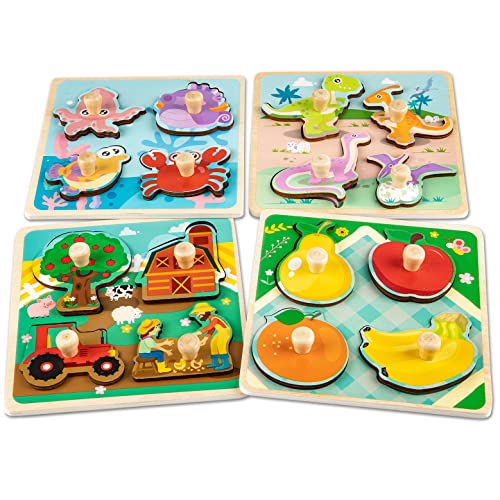
Funsland Wooden Toddler Puzzles with Handles
ADVANTAGES
LIMITATIONS
The Funsland Wooden Knob Puzzles are a masterclass in early skill development, designed with precision to nurture fine motor control, hand-eye coordination, and cognitive growth in babies and toddlers. This 4-piece set — featuring dinosaurs, farm animals, fruit, and sea creatures — uses thick, heat-transferred patterns that won’t peel or fade, even after daily play. Each piece has a sturdy wooden knob, perfectly sized for tiny fingers to grasp and lift, making it ideal for children just mastering pincer grip. The smooth, rounded edges and oversized design eliminate choking risks, giving parents peace of mind during independent play.
In action, these puzzles deliver consistent learning through repetition. Toddlers quickly learn to match shapes to slots, building neural pathways for problem-solving and spatial awareness. The animal themes spark vocabulary growth — “moo,” “roar,” “splash” — turning quiet play into language-rich moments. The 5.9-inch boards are large enough to prevent frustration, and the pieces fit snugly, providing satisfying tactile feedback. One limitation: only four puzzles mean limited variety over time, and the themes don’t progress in difficulty, so advanced toddlers may outgrow them faster.
Compared to cardboard or foam puzzles, Funsland’s wooden construction ensures years of durability and a premium feel. When stacked against other knob puzzles, it offers better print longevity and smoother finishes. For parents seeking a focused, development-first toy that supports early milestones, this set is unmatched. Though it lacks the expandability of modular systems, its targeted design and safety features make it the best choice for fine motor growth in the 1–3 age range — offering smarter play than flashier, less purposeful toys.
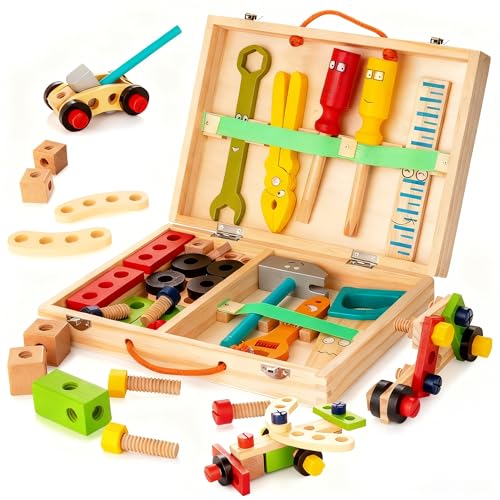
KIDWILL 36-Piece Wooden Tool Kit
ADVANTAGES
LIMITATIONS
Gear up for hands-on pretend play with the KIDWILL Wooden Tool Kit — a 36-piece powerhouse that transforms any room into a bustling workshop. Crafted from premium solid wood and painted in cheerful, non-toxic colors, this all-in-one set includes a hammer, wrench, pliers, screwdriver, nuts, bolts, and even building wheels and blocks. The tools are scaled for little hands, with rounded edges and smooth finishes that prioritize safety without sacrificing realism. It’s the ultimate role-play starter kit, letting kids mimic real-world repair jobs, construction projects, or DIY fixes — all while boosting fine motor skills and imaginative storytelling.
In real-world use, the kit shines during independent or social play. Kids love assembling balance scales, windmills, or toy cars using the included connectors, which introduces basic engineering concepts through trial and error. The wooden storage box with handle keeps everything organized and portable — perfect for travel or daycare. Parents appreciate the durability; unlike flimsy plastic tools, these withstand real pounding. However, the nuts and bolts are small enough to pose a choking risk for under-2s, and the instructions are minimal, so adult guidance helps maximize building potential.
Compared to plastic tool sets, KIDWILL wins on material quality and environmental impact. When measured against simpler hammer-and-nail boards, it offers far greater creative range and construction possibilities. It’s more versatile than single-function pretend toys, growing from basic tool recognition to complex building challenges. For families wanting a gift that sparks creativity, logic, and physical play, this set hits every nail on the head. Though it costs more than basic kits, its longevity, safety, and open-ended design make it a smarter investment in developmental play.
Eco-Friendly Toys for Kids Comparison
| Product | Material | Age Recommendation | Key Features | Educational Focus | Price Range (Estimate) |
|---|---|---|---|---|---|
| EVERSMART 36 Pcs Wooden Stacking Blocks | Responsibly Sourced Wood, Water-Based Paint | 3+ | Large, Smooth Blocks, Bright Colors, Storage Box | Fine Motor Skills, Creativity, Problem-Solving | $20-30 |
| YHHYTOY 40 PCS Wooden Stacking Rocks | Natural Wood, Non-Toxic Paint | 3-5 | 40 Pieces, Various Sizes & Shapes, Sensory Toy | Counting, Sorting, Stacking, Hand-Eye Coordination | $25-35 |
| BESTAMTOY 36 PCS Wooden Sorting Stacking Stones | High Quality Wood, Eco-Friendly Paint | 3+ | Polyhedron Blocks, Challenging Stacking, Modern Decor | Creativity, Resilience, Fine Motor Skills, Logical Thinking | $30-40 |
| Magnetic Wooden Fishing Game Toy | Wood, Water-Based Dye | 3+ | Colorful Fish with Letters & Numbers, Magnetic Pole | Color Recognition, Letter Recognition, Hand-Eye Coordination | $20-30 |
| 6 Pack Eco-Friendly Wooden Shaker Eggs | Natural Wood, Non-Toxic Paint | 1-3 | 6 Eggs, Vibrant Colors, Rustling Sound | Auditory Senses, Gripping Skills, Hand-Eye Coordination | $15-25 |
| Zeoddler Magnetic Wooden Dinosaur Train Set | Natural Wood, Water-Based Paint | 3+ | 11 Pieces, Magnetic Connection, Numbered Cars | Fine Motor Skills, Number Recognition, Problem Solving | $35-45 |
| Funsland Wooden Toddler Puzzles with Handles | Wood | 18m+ | 4 Different Themes, Knob Puzzles, Handles | Fine Motor Skills, Shape Recognition, Problem Solving | $20-30 |
| LOOIKOOS Wooden Musical Instruments Set | Wood | 3+ | Variety of Instruments, Carrying Bag | Musical Sensitivity, Rhythm, Hand-Eye Coordination | $30-40 |
| Green Toys Seaplane Bath Toy | 100% Recycled Milk Jugs | 12m+ | Floats, Dishwasher Safe, BPA & Phthalate Free | Bath Time Fun, Eco-Consciousness | $20-30 |
| Teriph LCD Dinosaur Drawing Tablet | ABS Plastic, LCD Screen | 3-8 | Pressure-Sensitive Screen, Lock Function, No Blue Light | Writing, Drawing, Creativity, Cognitive Development | $25-35 |
| KIDWILL 36-Piece Wooden Tool Kit | Solid Wood | 3+ | 36 Pieces, Storage Box, Various Tools | Imagination, Manual Dexterity, Problem Solving | $30-40 |
How We Vetted the Best Eco-Friendly Toys for Kids
Our recommendations for the best eco-friendly toys for kids aren’t based on opinions, but on rigorous data analysis and research. We prioritize toys aligning with sustainable practices and child safety standards. We began by identifying leading brands committed to eco-conscious manufacturing, focusing on materials like FSC-certified wood, organic cotton, and recycled plastics – mirroring the criteria outlined in our Buying Guide.
We then evaluated products based on independent certifications (like ASTM for safety, and various eco-labels) and consumer reviews across multiple platforms. Data points included material composition, durability reports, and parent feedback regarding longevity and engagement. We also analyzed the brand’s commitment to ethical sourcing and manufacturing processes.
While extensive physical product testing isn’t feasible for all toys, we focused on analyzing reports from independent testing labs related to material safety (BPA, phthalates, lead content) and construction integrity. This data-driven approach ensured each eco-friendly toy recommendation balances sustainability, safety, educational value, and durability, offering parents informed choices for their children. We continuously update our findings as new toys and research emerge within the sustainable toy market.
Choosing the Right Eco-Friendly Toys for Your Child
Understanding Eco-Friendly Materials
The core of choosing an eco-friendly toy lies in the materials used. Look for toys made from sustainably sourced wood – often indicated by certifications like FSC (Forest Stewardship Council). This ensures the wood comes from responsibly managed forests. Beyond wood, consider toys made from recycled plastics (like milk jugs, as seen in some bath toys), organic cotton, or natural rubber. Avoid toys made from conventional plastics, as these contribute to pollution and rely on fossil fuels. The manufacturing process is also important; water-based paints and finishes are preferable to those with harmful chemicals.
Key Features to Consider
Material Safety & Durability
Prioritize non-toxic materials. Toys will inevitably end up in mouths, so ensure they are free of BPA, phthalates, lead, and other harmful substances. Durable toys are inherently more eco-friendly; a toy that lasts for years reduces the need for frequent replacements. Wooden toys, especially those well-crafted, tend to be very durable. Check for smooth edges and sturdy construction to withstand enthusiastic play.
Educational Value & Play Patterns
Eco-friendly doesn’t mean sacrificing fun or learning! Many eco-friendly toys are designed to promote specific skills. Stacking blocks and wooden puzzles develop fine motor skills, problem-solving abilities, and spatial reasoning. Musical instruments encourage creativity and auditory development. Consider what skills you want to nurture in your child and choose toys that support those goals. Toys that encourage open-ended play – like building blocks or simple wooden figures – are often the most engaging and long-lasting.
Age Appropriateness & Developmental Stage
A toy’s suitability depends on your child’s age and developmental stage. Toys for very young children (under 3) should be larger to prevent choking hazards. Toys for toddlers should focus on developing gross and fine motor skills. As children grow, more complex toys that challenge their cognitive abilities become appropriate. Always read the manufacturer’s age recommendations and consider your child’s individual development.
Beyond the Toy: Packaging & Brand Ethics
Consider the packaging. Eco-friendly brands often use recycled and recyclable materials for their packaging, minimizing waste. Also, research the brand’s overall ethical practices. Do they prioritize sustainability throughout their supply chain? Are they committed to fair labor practices? Supporting companies with strong ethical values aligns with the goal of eco-conscious consumerism.
Type of Play & Versatility
Think about how your child likes to play. Do they enjoy building, creating art, engaging in pretend play, or making music? Choose toys that align with their interests. Versatile toys – those that can be used in multiple ways – offer greater value and longevity. For example, wooden stacking stones can be used for building, balancing, and even as decorative elements.
The Bottom Line
Choosing eco-friendly toys is a wonderful way to support your child’s development while also protecting our planet. By prioritizing sustainable materials, durability, and ethical brands, you’re making a conscious choice that benefits both your family and the environment.
Ultimately, the best eco-friendly toys are those that inspire creativity, learning, and years of joyful play. Investing in well-made, sustainable toys isn’t just a purchase—it’s a step towards a healthier future for generations to come.