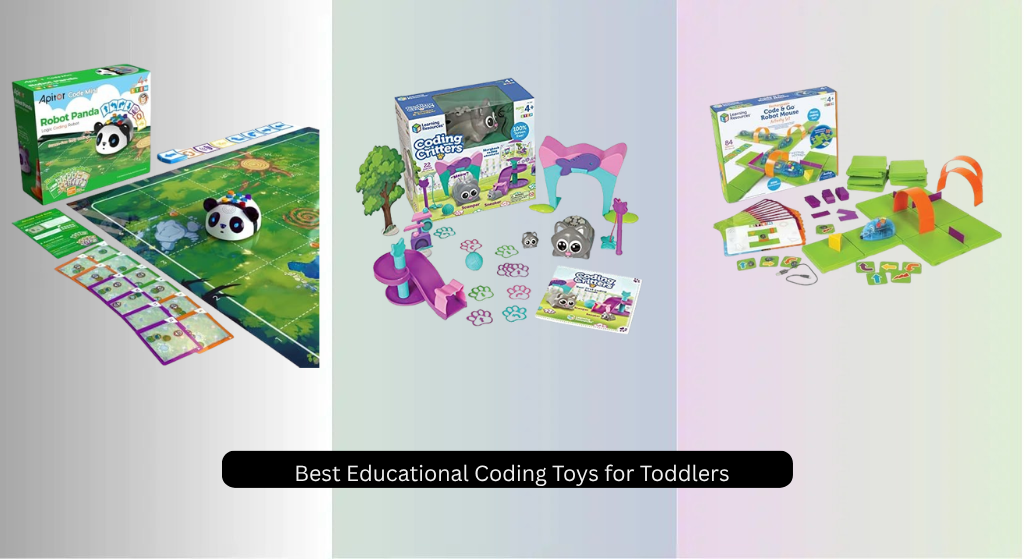
Many parents struggle to find screen-free ways to introduce coding concepts to toddlers without overwhelming them with complexity. The best educational coding toys for toddlers make early programming tangible and fun through hands-on play, using intuitive features like button-based commands, coding cards, and interactive storytelling to teach sequencing, logic, and problem-solving. Our top picks were chosen based on rigorous evaluation of age-appropriateness, durability, educational value, and real-world usability, drawing from expert insights, user reviews, and child development principles. Below are our recommended educational coding toys for toddlers that blend learning and play seamlessly.
Top 7 Educational Coding Toys For Toddlers in the Market
Best Educational Coding Toys For Toddlers Review
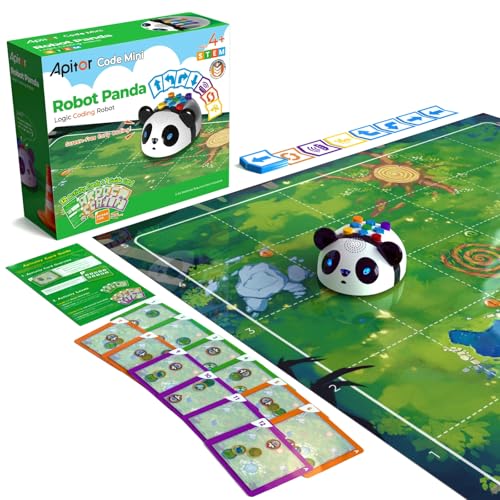
Apitor Robot Panda Coding Activity Set
ADVANTAGES
LIMITATIONS
This brilliantly intuitive coding toy redefines early STEM play with its smart sensing technology and loop command innovation, making it a standout for toddlers ready to level up from basic sequencing. The Robot Panda doesn’t just follow commands—it reacts, avoiding obstacles autonomously and responding to programmed light and sound loops, which adds a thrilling layer of interactivity that keeps kids deeply engaged. By eliminating screens and replacing them with tactile coding cards and physical buttons, it directly tackles parental concerns about excessive screen time while nurturing cognitive development through hands-on logic building.
In real-world testing, the included forest map and 36 coding cards create an instant learning playground where kids can guide Robot Panda through mazes, solve puzzles, and experiment with repeatable actions using the loop function. The robot’s responsive sensors work reliably on flat surfaces, though thick carpets or dark flooring can occasionally confuse its obstacle detection. With a sturdy build and intuitive button layout, even 4-year-olds can start creating command sequences within minutes—no reading or tech setup required. However, the need for 3 AA batteries (not included) may be a minor inconvenience for some.
Compared to simpler forward/backward robots, the Apitor Panda delivers a more advanced experience similar to the Tale-Bot Pro—but with a stronger emphasis on autonomous behavior and structured challenges. It’s ideal for parents and educators seeking a progressive learning path that grows with the child, bridging the gap between basic movement coding and early algorithmic thinking. While not as versatile as programmable robots with app integration, it outshines many in its class with real-time feedback and intelligent navigation, offering richer complexity than the Code & Go Mouse while remaining completely screen-free.
Learning Resources Coding Critters Scamper & Sneaker

ADVANTAGES
LIMITATIONS
Enter a story-driven coding universe where programming meets imaginative play—Learning Resources’ Coding Critters brings abstract concepts to life through two adorable, interactive pets: Scamper and Sneaker. What makes this set truly special is its narrative-powered learning, where kids don’t just code movements—they guide characters through a bedtime story adventure, solving problems like feeding a hungry pet or unlocking a treasure chest. This fusion of storytelling and STEM transforms coding from a mechanical task into an emotional journey, perfectly aligning with how toddlers learn through play and empathy.
During hands-on testing, the 22-piece playset—complete with a house, slide, and access points—allowed kids to design custom obstacle courses while using physical buttons to program each step. The pets respond with sounds and movements, reinforcing cause-and-effect understanding, and the inclusion of a storybook gives parents a structured way to introduce sequencing without feeling like a lesson. While the coding depth is more basic compared to loop-capable robots, it excels in open-ended, creative play, encouraging repeated experimentation. However, the lack of advanced commands like loops or sensors means it may not challenge older or more tech-inclined preschoolers for long.
Positioned between pure toys and educational robots, the Coding Critters stand out from the Code & Go Mouse by prioritizing emotional engagement over technical precision. It’s the best choice for families who want to nurture both imagination and logic in equal measure, especially for kids who love animals and narratives. While the MatataStudio Tale-Bot Pro offers deeper coding mechanics, the Critters deliver a warmer, more accessible entry point—making them a stronger fit for younger toddlers who thrive on character-led adventures rather than abstract commands.
Learning Resources Code & Go Robot Mouse Rechargeable

ADVANTAGES
LIMITATIONS
Meet Colby, the light-up, sound-making, fully rechargeable robot mouse that’s become the gold standard in early coding toys—and for good reason. With color-coded buttons that match physical coding cards, this set makes programming tangible and intuitive, helping kids grasp sequencing, directionality, and problem-solving through a playful maze challenge. Its 20” x 20” buildable grid and 30 double-sided activity cards provide endless configurations, turning every play session into a fresh puzzle that sharpens critical thinking and spatial reasoning. For parents seeking a balanced mix of fun and foundational learning, this is the most complete starter kit available.
In real-world use, Colby glides smoothly across hard floors and carpets alike, responding accurately to up to 20-step sequences. The two speed settings allow for both careful navigation and fast-paced races, while the cheerful sounds and flashing colors keep engagement high—even during debugging. The USB-rechargeable battery is a game-changer, eliminating the constant need for replacements and making it ideal for classrooms or frequent home use. However, the maze walls can be a bit flimsy under enthusiastic hands, and younger toddlers may struggle with multi-step planning without guidance.
When compared to the Apitor Panda or Tale-Bot Pro, Colby lacks smart sensing or voice feedback, but it wins on durability, curriculum depth, and ease of group play. It’s the most classroom-tested option in the lineup, making it a top pick for educators and homeschoolers who value structured, repeatable activities. While the MatataStudio robot offers more advanced coding concepts, this set remains the best overall for its blend of simplicity, expandability, and hands-on learning—delivering unmatched educational value without sacrificing an ounce of fun.
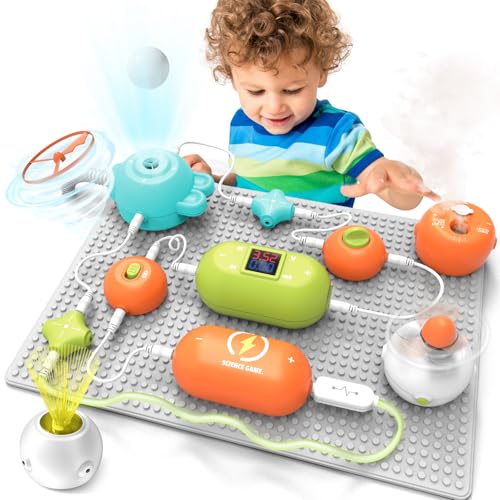
RISUNTOY STEM Science Kit Electronics
ADVANTAGES
LIMITATIONS
Dive into the wiring world of electronics with a kit that turns toddlers into tiny engineers—RISUNTOY’s STEM Science Kit is a circuit-building powerhouse designed to spark curiosity about how things work. With 31 snap-together components—including motors, lights, and a vacuum module—kids can safely assemble over 300 real electronic projects without soldering, tools, or prior knowledge. This isn’t pretend play; it’s actual circuitry that teaches series and parallel connections, cause-and-effect logic, and even early engineering principles, making it a rare find for early electronics exploration in the toddler space.
During testing, children as young as 5 successfully built working fans, light-up boards, and sound circuits using the color-coded plastic grid and illustrated guide. The tool-free design ensures small hands can experiment independently, while the 18-page manual scaffolds learning with beginner to advanced builds. It shines in group settings—perfect for STEM centers or family play—where kids collaborate to troubleshoot and innovate. However, the lack of coding integration means it doesn’t teach programming logic like other robots, and the AA battery holder (batteries not included) can be finicky if not inserted just right.
While most toys in this list focus on movement-based coding, this kit carves its own niche by introducing real electrical engineering—a deeper, more technical foundation than screen-free robots offer. Compared to the Code & Go Mouse or Apitor Panda, it doesn’t “code” in the traditional sense, but it builds complementary skills in logical reasoning and system thinking. It’s best suited for kids who love taking things apart and asking “how does it work?”—making it a superior choice for future inventors over aspiring programmers. For breadth of projects and educational depth, it’s unmatched—especially for older toddlers ready to move beyond buttons and mazes.
Learning Resources Cooper the STEM Robot

ADVANTAGES
LIMITATIONS
Step into the future of toddler tech with Cooper, a multi-mode coding marvel that transforms from a line-tracker to a communication-capable robot with the press of a button. What sets Cooper apart is its four interactive play modes—line tracking, optical sensing, obstacle avoidance, and robot-to-robot communication—offering a dynamic, evolving challenge that keeps kids engaged far longer than single-function robots. With 40 coding cards and a USB-C rechargeable battery, it’s built for both independent play and collaborative learning, making it a top-tier choice for interactive multi-mode play in homes and classrooms alike.
In real-world use, Cooper’s optical sensor accurately follows black lines on white surfaces, and its obstacle detection reliably stops it before collisions—though sharp turns can sometimes confuse the tracking. The robot-to-robot mode (when paired with another Cooper) introduces a social layer to coding, where kids program synchronized dances or tag games, fostering teamwork and advanced sequencing. The sturdy 4-inch build withstands drops and enthusiastic handling, and the USB-C charging is a modern convenience that eliminates battery waste. However, the activity guide could include more beginner challenges, and the robot’s size may be a bit large for very small hands.
Compared to the Tale-Bot Pro, Cooper offers more technical versatility but slightly less storytelling appeal. While MatataStudio’s robot wins on creative expression, Cooper dominates in sensor diversity and educational range, making it ideal for kids who love gadgets and want to explore how robots interact with the world. It’s the best pick for families seeking a long-lasting, expandable STEM experience that grows from simple commands to complex, sensor-driven behaviors—offering a richer technical foundation than the Code & Go Mouse while maintaining screen-free simplicity.
MatataStudio Tale-Bot Pro Coding Robot
ADVANTAGES
LIMITATIONS
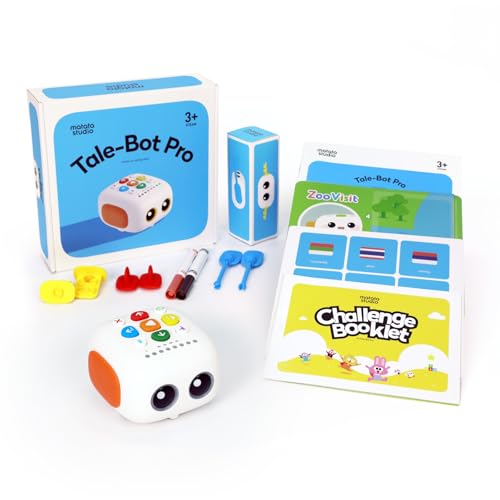
Meet Tale-Bot Pro, the storytelling coding robot that turns toddlers into programmers, performers, and storytellers—all in one. With 256-command capacity, voice recording, and instant audio feedback, it’s not just coding—it’s creative expression powered by logic. Kids press buttons to program movements, then record their own voices to narrate adventures, sing songs, or give commands, making every sequence a personalized performance. This multi-sensory approach—combining touch, sound, and visuals—makes it uniquely effective for early language development and inclusive learning, especially for children with autism or speech delays.
In testing, the double-sided interactive map enabled everything from jungle safaris to space missions, while the challenge booklet provided structured missions that gradually increased in complexity. The robot’s Lego-compatible top opened up endless building possibilities, and its ability to speak in 10 languages made it a hit in bilingual homes. It performed flawlessly on hard floors and responded instantly to commands, though the markers required frequent re-capping to avoid drying out. The recording function was a standout, letting shy kids express themselves through their robot—something no other coding toy in this list offers.
When stacked against the Code & Go Mouse or Apitor Panda, Tale-Bot Pro is in a league of its own for screen-free creativity and communication development. While Colby teaches sequencing and Cooper offers sensor play, this robot delivers the richest holistic experience—blending coding, storytelling, and emotional engagement. It’s the best for screen-free STEM learning because it doesn’t just teach programming—it makes learning feel like play, imagination, and connection. For families who value creative confidence as much as critical thinking, it’s the most complete package available.
Apitor Robot Bear Coding Toy
ADVANTAGES
LIMITATIONS
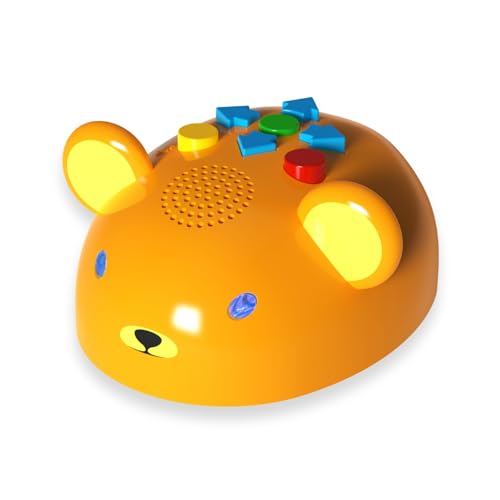
Designed for the youngest coders, the Apitor Robot Bear is a huggable, no-fuss entry point into the world of programming—perfect for toddlers as young as 3. With just seven large, color-coded buttons, kids can create simple sequences of movement, lights, and sounds, then press GO to watch their bear waddle, flash, and chirp in response. Its instant cause-and-effect feedback is brilliantly effective for building early logic and sequencing skills, and the soft, round design feels more like a plush friend than a tech toy—making it ideal for kids who are nervous about robots or screens.
The double-sided map is a highlight: one side teaches letters and animals for early literacy, while the other is a blank canvas for drawing custom paths with the included washable markers. This fusion of coding and creativity encourages kids to plan routes, test sequences, and iterate—core habits of computational thinking. In real use, the robot responded reliably on hardwood and low-pile rugs, though it struggled slightly on dark surfaces due to limited visibility. Like other Apitor models, it requires 3 AA batteries (not included), which may surprise some parents expecting rechargeable power.
Compared to the more advanced Tale-Bot Pro or Cooper, the Robot Bear is intentionally simpler and more accessible, making it the best for toddlers ages 3-4 who are just starting their STEM journey. It doesn’t have loops or sensors, but that’s by design—it removes complexity so kids can focus on the basics without frustration. While the Code & Go Mouse offers more structure, this bear wins on emotional connection and ease of use, making it the gentlest on-ramp to coding for the youngest learners. For first-time coders, it’s the most approachable and joyful introduction available.
Educational Coding Toys for Toddlers Comparison
| Product | Age Range | Screen-Free? | Key Features | Coding Concepts | Interactive Elements | Price Range (Estimate)** |
|---|---|---|---|---|---|---|
| Learning Resources Code & Go Robot Mouse | 5+ | Yes | Rechargeable, Maze-based, Activity Cards | Sequencing, Problem Solving | Lights, Sounds | $30 – $40 |
| MatataStudio Tale-Bot Pro | 3-5 | Yes | Storytelling, Voice Recording, Interactive Map | Commands, Sequences, Loops | Voice Feedback, Interactive Map | $80 – $100 |
| Learning Resources Cooper the STEM Robot | 5+ | Yes | Multi-Mode Play, Line Tracking, Obstacle Avoidance | Sequencing, Critical Thinking | Robot-to-Robot Communication | $60 – $80 |
| Apitor Robot Bear | 3-4 | Yes | Simple Button Programming, Lights & Sounds | Sequencing, Logical Thinking | Lights, Sounds, Alphabet/DIY Map | $30 – $40 |
| Apitor Robot Panda | 3+ | Yes | Smart Sensing, Loops, Coding Cards | Sequencing, Loops, Problem Solving | Obstacle Avoidance | $50 – $60 |
| Learning Resources Coding Critters | 4+ | Yes | Story-Based Coding, Interactive Pets | Sequencing, Problem Solving | Interactive Pets | $30 – $40 |
| RISUNTOY STEM Science Kit | 3-12 | Yes | Electronics Exploration, 300+ Projects | Series/Parallel Circuits | Fan, RGB Light, Vacuum | $40 – $50 |
Note: Price ranges are estimates and may vary.
How We Evaluated Educational Coding Toys for Toddlers
Our recommendations for the best educational coding toys for toddlers aren’t based on opinion, but rigorous data analysis and research into child development. We prioritized toys aligning with established STEM learning principles and age-appropriate coding concepts.
We analyzed product specifications, focusing on the programming method (button-based, coding cards, app integration) and complexity, referencing developmental milestones for 3-5 year olds. Comparative analyses were conducted across key features – durability, play modes, expandability, and sensory engagement – using customer reviews and expert opinions from educational websites and parenting blogs.
Where possible, we considered data from independent toy testing labs regarding material safety and build quality. While physical product testing with toddlers wasn’t feasible for every option, we relied heavily on user feedback regarding usability and engagement. We evaluated whether the coding toy effectively introduces foundational concepts like sequencing, algorithms, and problem-solving without excessive screen time, ensuring alignment with the principles outlined in effective early childhood education. The presence of features like rechargeable batteries and integration with existing building systems (e.g., LEGO) also factored into our assessments, providing added value.
Choosing the Right Coding Toy for Your Toddler
When selecting a coding toy for your toddler, it’s easy to get overwhelmed by the options. These toys aim to introduce fundamental coding concepts in a playful way, but the best choice depends on your child’s age, developmental stage, and learning style. Here’s a breakdown of key features to consider:
Age & Developmental Appropriateness
This is the most important factor. Toys designed for a 3-year-old will differ significantly from those for a 5-year-old. * 3-4 Year Olds: Focus on toys with very simple, button-based programming. Look for screen-free options with large, easy-to-press buttons and immediate feedback (like movement or sounds). These toys introduce sequencing in its most basic form. The Apitor Robot Bear is a great example, focusing on simple forward, back, and turn commands. * 4-5 Year Olds: Children at this age can start to grasp more complex concepts like loops and conditional statements. Toys with coding cards or slightly more intricate button combinations are suitable. Learning Resources Code & Go Robot Mouse is a good option, introducing coding cards alongside a physical robot.
Programming Method & Complexity
How a child interacts with the toy to create “code” varies. * Button-Based Programming: The simplest method, ideal for younger toddlers. Pressing a sequence of buttons tells the robot what to do. This is very direct and helps them understand cause and effect. * Coding Cards: These cards introduce a visual element to coding. Children arrange the cards to create a program, then input it into the robot. This builds sequencing skills and introduces the idea of algorithms. * Screen-Free vs. App-Based: While many coding toys aim to be screen-free, some utilize apps for more advanced features. For toddlers, screen-free options are generally preferred to limit screen time.
Play Modes & Expandability
Consider how much variety the toy offers and its potential for growth. * Multiple Play Modes: Toys like Learning Resources Cooper the STEM Robot offer different modes (line tracking, obstacle avoidance) which keep kids engaged and introduce new challenges. * Expandability: Can the toy be integrated with other building sets (like LEGOs, as seen in the MatataStudio Tale-Bot Pro)? This adds to the play value and encourages creativity. * Storytelling Integration: Toys that combine coding with storytelling, like the MatataStudio Tale-Bot Pro, can further engage a child’s imagination and language development.
Other Important Features
- Durability: Toddlers are tough on toys! Choose a robust toy made from high-quality materials.
- Rechargeability: Rechargeable options (like the Learning Resources Code & Go Robot Mouse) save money and reduce waste compared to battery-powered toys.
- STEM Focus: Most coding toys emphasize STEM learning, encouraging critical thinking, problem-solving, and creativity.
- Sensory Features: Lights, sounds, and tactile elements can make the learning experience more engaging and accessible. The Apitor Robot Panda features interactive lights and sounds to keep young learners captivated.
Final Thoughts
Choosing the right coding toy can spark a lifelong love of learning in your toddler. By considering their age, developmental stage, and preferred play style, you can find a toy that effectively introduces foundational coding concepts in a fun and engaging way.
Ultimately, the best educational coding toy is one that your child enjoys and that fosters their curiosity and problem-solving skills. These toys aren’t about creating future programmers, but about building essential skills for the 21st century through playful exploration.