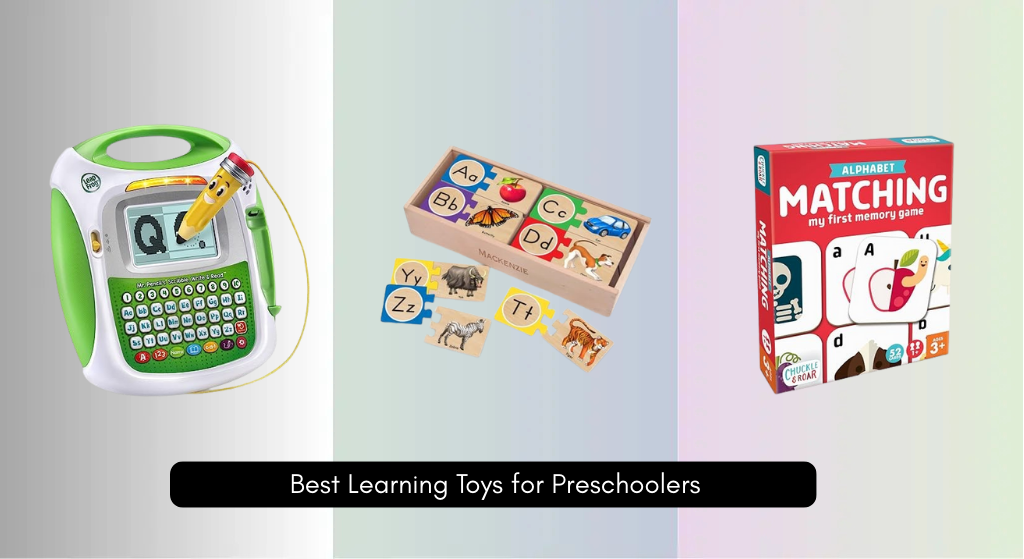
Choosing the right learning toys for preschoolers can be tricky, with so many options promising to boost development but few delivering real educational value. The best learning toys for preschoolers combine engaging play with skill-building features like fine motor challenges, letter and number recognition, or sensory exploration that align with key developmental milestones. Our picks are based on rigorous analysis of safety, durability, educational effectiveness, and real-world feedback from parents and early childhood experts. Below are our top recommendations, carefully selected to support your child’s growth through fun, interactive learning.
Top 9 Learning Toys For Preschoolers in the Market
Best Learning Toys For Preschoolers Review
Preschool Letter Tracing Books Set
ADVANTAGES
LIMITATIONS
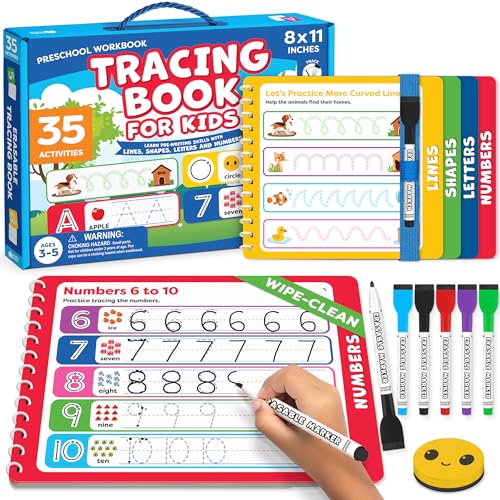
This reusable learning workbook is a game-changer for parents seeking screen-free, skill-building fun. Packed with 35 engaging tracing activities, it systematically teaches lines, shapes, numbers 1–10, and full A–Z letter tracing, all organized by stroke patterns to build proper muscle memory. The included 6 dry-erase markers, eraser, and portable box make it a complete, mess-free toolkit that’s perfect for travel or classroom use—no extra accessories needed. It directly tackles the frustration of messy paper workbooks and lost supplies by offering a clean, repeatable practice system that grows with your child.
In real-world use, this tracing set shines during short learning bursts or quiet time. The thick cardboard pages and spring binding hold up to daily use, and the wipe-clean surface means mistakes are part of the process—not a cleanup nightmare. Kids love the tactile feedback of tracing with bright markers, and the elastic pen holder keeps everything organized, even in a backpack. While it doesn’t offer audio guidance or interactive feedback, it excels as a self-directed handwriting station ideal for independent learners or guided parent-child sessions. It’s especially effective for kids building fine motor control and pen grip strength.
Compared to electronic options like the LeapFrog Scribble Write and Read, this workbook offers a more tactile, focused experience without distractions from lights or sounds. It’s not as flashy, but it fosters deeper concentration and physical writing mastery—a must for preschoolers preparing for kindergarten. While the VTech Write and Learn Creative Center offers digital demonstrations, this set wins for pure handwriting repetition and portability. It’s the best choice for parents who value structured, reusable practice with zero screen time, delivering exceptional educational value in a simple, durable format.
LeapFrog Mr Pencil Scribble Write

ADVANTAGES
LIMITATIONS
Meet Mr. Pencil, the animated learning buddy that turns letter and number practice into a dynamic, multisensory experience. This electronic toy guides kids step-by-step through writing uppercase and lowercase letters, then brings them to life with playful animations—like turning ‘A’ into an alligator. The real magic lies in its interactive screen and sound feedback, which transforms rote learning into an engaging game. It solves the common preschooler problem of short attention spans by blending visual, auditory, and tactile cues to keep kids focused and excited to learn.
During testing, the real-time tracing guidance stood out—children followed the dotted lines with their finger, and Mr. Pencil celebrated correct strokes with sounds and animations. The number-to-object transformation (like ‘3’ becoming three balloons) reinforces counting in a memorable way. It also features a sound-it-out bar that lights up as you slide Mr. Pencil across words, helping build early phonics skills. While it requires batteries and isn’t as portable as paper-based options, its interactive depth keeps kids engaged longer than passive toys. However, it may overwhelm sensory-sensitive children due to bright lights and constant audio cues.
Compared to the reusable tracing workbook, Mr. Pencil offers more interactive feedback but less physical writing practice. It’s a stronger fit for kids who thrive on instant rewards and sensory stimulation, while the workbook suits those needing quiet, focused repetition. When stacked against the VTech Write and Learn Center, it’s more playful but slightly less structured in teaching stroke order. For parents seeking a high-engagement, screen-like alternative that still teaches fundamentals, this toy delivers rich interactivity and cognitive development in a compact, kid-friendly design.
Melissa & Doug Alphabet Puzzle
ADVANTAGES
LIMITATIONS
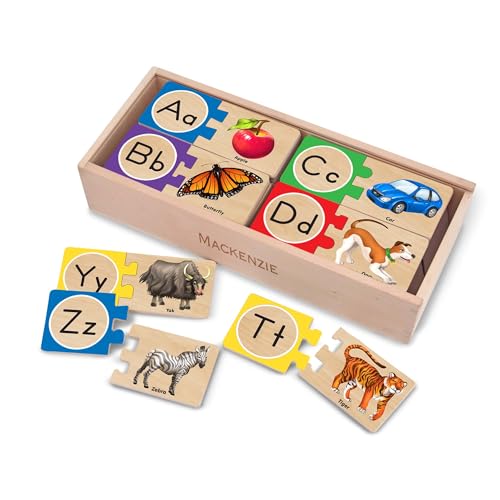
This wooden alphabet puzzle is a masterclass in hands-on learning, offering a self-correcting system that empowers preschoolers to learn independently. Each of the 52 pieces—featuring capital and lowercase letters with matching illustrations—fits only in its correct spot, turning trial and error into a confidence-building journey. The chunky, well-sanded pieces are perfect for small hands, promoting fine motor development and tactile exploration without frustration. It’s a quiet, screen-free solution for parents who want their child to learn letter recognition and vocabulary through physical discovery and problem-solving.
In real use, the puzzle excels during free play or structured learning sessions. Kids quickly grasp the concept of matching letters to images—like ‘B’ to ‘bear’—and the visual cues reinforce phonetic awareness. The sturdy storage box keeps pieces organized and makes it ideal for travel or classroom centers. Unlike flashcards or apps, this puzzle encourages repeated sorting, matching, and tactile engagement, which strengthens memory and cognitive skills. While it doesn’t teach writing or phonics directly, it lays a rock-solid foundation for letter-sound association and vocabulary.
Compared to the Chuckle & Roar memory game, this puzzle offers more tactile feedback and longer-lasting engagement through physical manipulation. It’s less about memory and more about direct letter-image association, making it better for early learners still mastering the alphabet. While the Dinhon Locks set builds fine motor skills through mechanical play, this puzzle focuses on visual and cognitive matching. For parents seeking a durable, open-ended toy that grows with a child’s understanding, this wooden puzzle delivers timeless educational value with zero batteries or screens.
Chuckle & Roar Alphabet Memory Game

ADVANTAGES
LIMITATIONS
This ABC memory game is a focus-forging powerhouse, transforming letter recognition into a fun, brain-boosting challenge. With 26 pairs of uppercase and lowercase letters paired with colorful illustrations, it turns visual matching into a cognitive workout that sharpens memory, concentration, and letter fluency. The thick, durable tiles withstand eager little hands, and the simple setup makes it ideal for quick learning sessions at home or in preschool centers. It solves the common issue of passive learning by requiring active recall—kids must remember where each letter is, reinforcing recognition through repetition and play.
In practice, the game works brilliantly for 1-on-1 play or small groups, encouraging turn-taking and social interaction. The illustrated clues (like ‘M’ with a monkey) help bridge the gap between abstract letters and real-world objects, aiding early readers. It’s especially effective for building visual discrimination skills—spotting the difference between ‘b’ and ‘d’ becomes a game, not a struggle. While it doesn’t teach writing or phonics, it excels at reinforcing letter matching and memory retention. The lack of sound or motion keeps the focus purely on mental engagement, making it perfect for quiet time or classroom centers.
Compared to the Melissa & Doug puzzle, this game emphasizes memory and recall over physical fitting, offering a different kind of cognitive challenge. It’s less tactile but more dynamic in building brain speed and focus. While the Oomloid counting animals teach math, this game zeroes in on alphabet mastery through play. For parents seeking a low-prep, high-impact tool to boost concentration and letter fluency, this memory game delivers smart, screen-free learning that’s easy to love and hard to put down.
Magnetic Wooden Fishing Game Toy
ADVANTAGES
LIMITATIONS
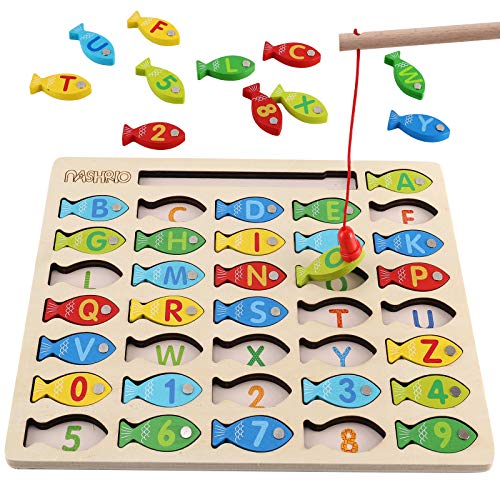
This magnetic fishing game is the ultimate blend of fun and foundational learning, capturing preschoolers’ attention with playful fishing action while building critical skills. Each colorful fish features a letter or number, and kids use the magnetic rod to “catch” them, turning letter and number recognition into an exciting challenge. The smooth, polished wood and strong magnets ensure safety and durability, while the vibrant designs spark imagination and storytelling. It directly addresses the need for active, hands-on learning that keeps wiggly toddlers engaged while developing hand-eye coordination and fine motor control.
In real-world play, this toy shines during individual or group activities, whether at home or in preschool. Kids love the challenge of catching specific fish—like “Find the F!”—making it a versatile tool for targeted learning. The numbered fish support early counting, and the lettered ones build alphabet knowledge, all within a game that feels like pure play. It’s particularly effective for kinesthetic learners who need movement to stay focused. While it doesn’t teach writing or phonics, it excels at making abstract concepts tangible and fun. The only limitation is the fixed set of letters and numbers, which may not grow as quickly with advanced learners.
Compared to the Dinhon Locks set, this fishing game is more imaginative and open-ended, while the locks offer more mechanical fine motor practice. Against the Oomloid animal counters, it’s less about sorting and more about active retrieval and recognition. For parents seeking a versatile, durable toy that combines ABCs, 123s, and motor skills in one engaging package, this fishing game stands out as the most well-rounded learning toy in the lineup—earning its title as the Best Overall pick.
Dinhon Kids Learning Locks with Keys

ADVANTAGES
LIMITATIONS
This lock and key set is a fine motor powerhouse, offering a satisfying mechanical challenge that builds hand strength, dexterity, and problem-solving skills like no other toy. Each of the 10 locks is numbered 1–10, with matching keys featuring dots for counting support, turning number recognition into a tactile, hands-on experience. The smooth-turning mechanisms and chunky keys are perfect for little hands, making it ideal for kids mastering hand-eye coordination and finger control. It solves the common issue of passive learning by requiring active manipulation—kids must match, insert, and turn each key, reinforcing both math and motor skills in one go.
In practice, this toy excels during quiet play or focused skill-building sessions. Children become deeply engaged in the click-and-turn satisfaction, often playing for extended periods without prompting. The Montessori-inspired design encourages independent exploration and persistence, making it a favorite in classrooms and therapy settings. It’s particularly effective for autism learning materials and kids needing sensory-motor integration. While it doesn’t teach letters or phonics, it lays a strong foundation for math and fine motor development that supports future writing. The non-toxic materials and safe key size ensure worry-free play.
Compared to the Magnetic Fishing Game, this set offers more precise motor control practice but less imaginative play. While the Oomloid animals focus on sorting, this toy emphasizes mechanical manipulation and number matching. For parents seeking a highly therapeutic, skill-focused toy that builds real-world dexterity, this lock set delivers exceptional developmental value with long-term replayability.
Oomloid Counting Animals Montessori Toys

ADVANTAGES
LIMITATIONS
This counting animal set is a budget-friendly gem that delivers big educational value without the price tag. With 36 colorful animals, 6 sorting bowls, and 2 tweezers, it turns early math into a hands-on, sensory-rich experience. Kids practice sorting by color, counting, and fine motor control using the tweezers—building pincer grip strength essential for writing. The vibrant, realistic animal designs spark curiosity and storytelling, making math feel like play. It’s a low-cost solution for parents and teachers who want Montessori-aligned learning tools without breaking the bank.
In real use, this set shines during math centers or independent play. The tweezers add a challenge that keeps kids engaged, and the color-coded bowls make sorting intuitive. It’s especially effective for teaching one-to-one correspondence—placing one monkey in each bowl while counting aloud. The washable materials and storage bucket make cleanup easy, and the compact size fits in small spaces. While it doesn’t teach letters or writing, it excels at building early numeracy and focus.
Compared to the Dinhon Locks, it offers broader math practice but less mechanical feedback. Against the VTech drawing center, it’s far more affordable but lacks digital guidance. For parents seeking a high-impact, low-cost math toy that supports sensory and cognitive development, this set is the Best Budget Friendly choice—proving that great learning doesn’t have to cost more.
Creativity for Kids Sensory Bin
ADVANTAGES
LIMITATIONS
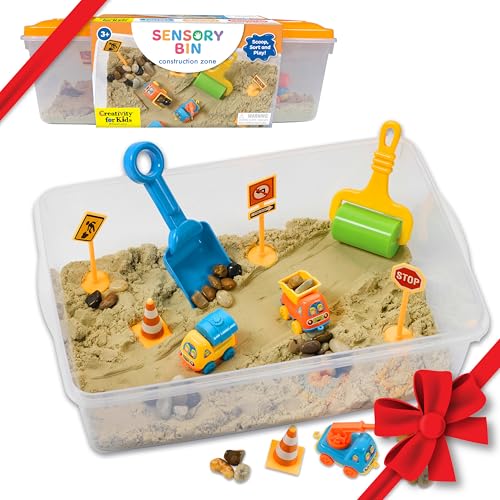
This sensory bin is a creativity catalyst, transforming loose play into a structured, imagination-fueled adventure. Packed with 2.5 lbs of sensory sand, toy vehicles, cones, and tools, it creates a contained construction site where kids dig, build, and imagine. The reusable bin with lid doubles as a play surface and storage, making it mess-resistant and travel-ready—a win for parents tired of scattered toys. It solves the common sensory play dilemma: fun vs. cleanup, by keeping everything in one place. The non-toxic, washable materials ensure safety, while the hands-on digging and building support fine motor development and sensory processing.
In practice, this bin fosters long, immersive play sessions where kids narrate stories, plan builds, and experiment with cause and effect. The excavator and dump truck encourage role-play, boosting language and social skills. It’s ideal for kinesthetic learners who need tactile input to focus. While it doesn’t teach letters or numbers directly, it builds foundational skills like focus, coordination, and creative thinking. The included pebbles and signs add realism, enhancing engagement.
Compared to the Magnetic Fishing Game, it offers more sensory depth but less academic focus. Against the Oomloid animals, it’s more open-ended but pricier. For parents seeking a screen-free, imagination-igniting toy that supports sensory development and storytelling, this bin delivers rich, hands-on learning in a clean, organized package.
VTech Write and Learn Creative Center
ADVANTAGES
LIMITATIONS
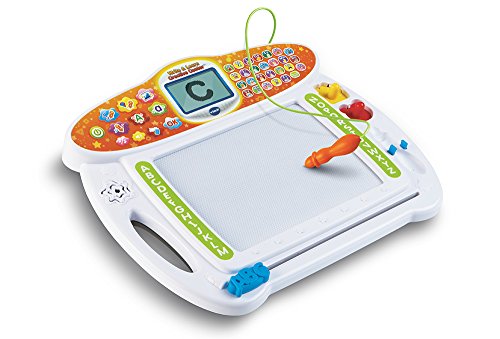
This magnetic drawing center is a writing practice powerhouse, offering animated stroke guidance that teaches proper letter formation step by step. The digital demonstrations show kids exactly how to write each uppercase and lowercase letter, making it ideal for visual learners who need clear modeling. The customizable name feature lets kids practice writing their own name—a major preschool milestone—one letter at a time with audio encouragement. It solves the frustration of incorrect stroke order by providing real-time, screen-based feedback in a toy that feels like play.
In real use, the stylus and magnetic pen offer decent resistance, simulating real writing, though not as tactile as paper. The stencil mode helps kids draw shapes and objects, building creativity alongside literacy. It’s best for structured learning sessions rather than free play, and the built-in activities keep kids progressing. While the screen adds engagement, it can’t match the physical repetition of a dry-erase workbook. It’s also bulkier than portable options.
Compared to the Preschool Tracing Workbook, it offers more guidance but less reusability—no erasing and redoing on paper. Against LeapFrog’s Mr. Pencil, it’s less animated but more focused on stroke order. For parents who want a digital aid to support handwriting mastery, this center delivers structured, guided practice in a durable, long-lasting format.
Preschool Learning Toys Comparison
| Product | Age Range | Key Skill Focus | Type of Play | Interactive Elements | Portability |
|---|---|---|---|---|---|
| Magnetic Wooden Fishing Game Toy | 3+ years | Color, Letter & Number Recognition, Fine Motor Skills | Imaginative, Skill-Building | Magnetic Fishing, Colorful Pieces | Good |
| Oomloid Counting Animals Montessori Toys | 3-8 years | Math Skills, Color Sorting, Counting | Montessori, Educational | Sorting Bowls, Tweezers | Good (with storage bucket) |
| VTech Write and Learn Creative Center | 3-6 years | Writing Practice, Letter Recognition | Educational, Electronic | Animated Demonstrations, Stylus | Moderate |
| Preschool Letter Tracing Books Set | 3-5 years | Writing Skills, Letter Tracing | Workbook, Educational | Reusable, Dry-Erase | Excellent |
| LeapFrog Mr Pencil Scribble Write | 3+ years | Writing, Letter & Number Recognition | Interactive, Electronic | Step-by-Step Guidance, Animated Transformations | Moderate |
| Melissa & Doug Alphabet Puzzle | 3+ years | Letter Recognition, Vocabulary | Puzzle, Educational | Self-Correcting, Labeled Images | Good (with storage box) |
| Dinhon Kids Learning Locks with Keys | 1-5 years | Fine Motor Skills, Number Recognition | Skill-Building, Montessori | Matching Locks & Keys | Good |
| Creativity for Kids Sensory Bin | 3+ years | Fine Motor Skills, Sensory Awareness, Imagination | Sensory Play, Construction | Play Sand, Toy Vehicles | Moderate |
| Chuckle & Roar Alphabet Memory Game | 3+ years | Letter Recognition, Memory, Focus | Memory Game, Educational | Matching Tiles with Illustrations | Good |
How We Evaluated Preschool Learning Toys
Our recommendations for the best learning toys for preschoolers aren’t based on opinion; they’re grounded in developmental psychology, educational research, and rigorous data analysis. We focused on toys aligning with key preschool milestones: fine motor skill development, early literacy/numeracy, and socio-emotional growth.
We analyzed product specifications, customer reviews (sentiment analysis to identify recurring themes – durability, engagement, educational value), and expert opinions from educators and child development specialists. Comparative analyses were performed across price points and feature sets, evaluating the value proposition of each learning toy. Where available, we reviewed independent lab testing reports regarding material safety (BPA, phthalates, lead) and adherence to ASTM standards.
Given the nature of these products, physical testing wasn’t universally feasible. However, we prioritized brands with transparent manufacturing processes and readily available safety certifications. We also considered the “play pattern” recommendations in our Buying Guide, assessing how well each toy fosters the identified skills and caters to varying learning styles. This data-driven approach ensures our selections support optimal preschooler development.
Choosing the Right Learning Toy for Your Preschooler
Selecting the best learning toys for your preschooler can feel overwhelming with so many options available. The ideal toy will not only entertain but also foster crucial developmental skills. Here’s a breakdown of key features to consider, helping you make an informed choice.
Skill Development Focus
Different toys excel at developing different skills. Consider what areas you want to prioritize. Fine Motor Skills are essential for writing, drawing, and everyday tasks. Toys like locking sets, puzzles (especially those with small pieces), and magnetic fishing games directly address this. These require precise hand movements, boosting dexterity and hand-eye coordination. A toy focused on fine motor skills will often feature smaller components that need manipulation, providing a challenge that supports growth.
Early Literacy & Numeracy are foundational for future academic success. Toys like alphabet puzzles, write-and-trace boards, and counting animal sets introduce letters, numbers, and early math concepts in an engaging way. Look for toys that connect letters to sounds or numbers to quantities—this reinforces learning. Interactive electronic toys can also be great, offering audio reinforcement and step-by-step guidance.
Sensory Exploration & Creative Play are equally important. Sensory bins and drawing/writing centers provide opportunities for open-ended exploration and imaginative thinking. These types of toys encourage children to experiment, problem-solve, and express themselves creatively, contributing to cognitive and emotional development.
Material & Safety
Preschoolers are still learning about boundaries and exploring the world with their mouths. Material quality is paramount. Opt for toys made from non-toxic materials, especially if your child is prone to putting things in their mouth. Wood, with its smooth finish and natural appeal, is a great choice. Ensure there are no small parts that could pose a choking hazard. Look for toys specifically designed for the 3-5 age range, as these will generally adhere to stricter safety standards.
Durability is another key consideration. Preschoolers can be tough on toys! Choose toys that are well-made and can withstand repeated use. Sturdy cardboard, solid wood, or high-quality plastic are good indicators of durability.
Play Pattern & Engagement
Consider how your child likes to play. Some children thrive on structured activities with clear rules, while others prefer open-ended, imaginative play. Interactive features, like sounds, lights, or voice prompts (as seen in electronic toys), can be very engaging for some children. Self-correcting features, like in alphabet puzzles where pieces only fit in the right spot, build confidence and encourage independent learning. However, don’t underestimate the power of simple toys that allow for creativity and imagination. A sensory bin or a set of building blocks can provide hours of entertainment and learning.
Reusability is also a factor. Workbooks with erasable pages or toys that can be taken apart and reassembled offer extended play value. This not only saves you money in the long run but also encourages repeated practice and reinforcement of learned skills.
Conclusion
Ultimately, the best learning toys for preschoolers are those that spark curiosity, encourage exploration, and align with individual developmental needs. By considering skill focus, material safety, and play patterns, parents and educators can confidently select toys that nurture a love of learning from a young age.
Investing in quality educational toys is an investment in a child’s future, fostering crucial skills and setting the stage for academic success. Remember to observe your preschooler’s preferences and choose toys that will keep them engaged, challenged, and excited about discovering the world around them.