


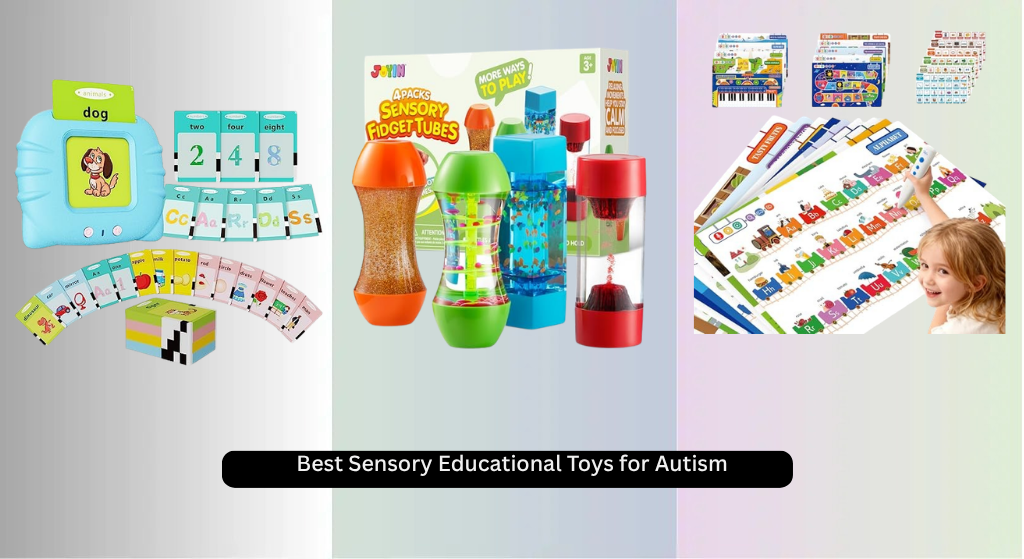
Many children with autism face challenges processing sensory input, which can impact learning, communication, and emotional regulation. The best sensory educational toys for autism address these needs by combining calming sensory features—like tactile textures, visual tracking, or auditory cues—with structured opportunities to build essential skills like language, fine motor control, and emotional recognition. Our expert picks are grounded in occupational therapy principles, evaluated for safety, durability, developmental value, and real-world feedback from parents and specialists. Below are our top-rated sensory educational toys for autism, chosen to support growth, engagement, and joyful learning.
Top 7 Sensory Educational Toys For Autism in the Market
Best Sensory Educational Toys For Autism Review
Talking Flash Cards for Speech Therapy

ADVANTAGES
LIMITATIONS
Bursting with interactive charm, the Aullsaty Talking Flash Cards are a game-changer for speech development in toddlers and children with autism. The standout feature is its cute cat-shaped card reader, which speaks 248 sight words in a clear American accent—each triggered by inserting a durable, double-copper card. With subjects ranging from animals and vehicles to emotions and daily routines, this Montessori-inspired tool delivers multi-sensory engagement through sound, visuals, and tactile interaction, making it ideal for nonverbal or late-talking children who thrive on repetition and auditory feedback.
In real-world use, the flash cards shine during speech therapy sessions and at-home learning, where children can independently insert cards and hear accurate pronunciations, animal sounds, or vehicle noises—like a roaring lion or honking truck. The five-level volume control and repeat function allow customization for sensory-sensitive kids, while the rechargeable battery ensures hassle-free play for up to five hours. However, it performs best in quiet environments; background noise can make it harder for the child to focus on the audio output, and the card slot requires precise alignment, which may challenge younger toddlers.
Compared to passive learning tools like standard flashcards or apps, the Aullsaty system offers tangible, screen-free interaction that bridges play and education. It’s a stronger choice than the TEKFUN Learning Posters for children who benefit from hands-on manipulation, though it lacks the poster’s musical component. While the Magnetic Tiles or Busy Books encourage open-ended or fine motor play, this set is uniquely tailored for language acquisition, especially for kids needing structured, auditory-based learning. It delivers exceptional value in speech support when compared to more generalized sensory toys.
JOYIN Fidget Tubes 4-Pack

ADVANTAGES
LIMITATIONS
Instantly captivating, the JOYIN Fidget Tubes are a calming powerhouse designed to soothe anxious minds and redirect restless energy in children with autism. Each tube is filled with colorful, slow-moving beads and liquid, creating a hypnotic visual effect that promotes focus and emotional regulation. The set of four uniquely themed tubes—featuring bubbles, swirls, and floating shapes—offers variety to match different moods, making them a must-have for calm down corners in classrooms or homes.
During real-world testing, these fidget tubes proved highly effective during transitions, meltdowns, or high-stress moments like school drop-offs or waiting rooms. Kids gravitate toward the tactile feedback and mesmerizing motion, using them to self-regulate without distraction. Their soft, squeezable silicone build withstands aggressive handling, and the compact size fits easily in small hands or pockets. However, they don’t offer structured learning or skill development, so their use is limited to sensory regulation rather than educational growth.
When stacked against the KidSquare Feelings Wheel or Grarain Busy Board, the JOYIN tubes lack cognitive or motor challenges—but that’s not their purpose. They outperform most fidgets in durability and visual appeal, and unlike digital calming tools, they’re completely screen-free. Ideal for teachers, therapists, or parents seeking nonverbal emotional tools, these tubes are a superior pick for children who need sensory grounding. They offer more consistent calming power than interactive toys that may overstimulate sensitive users.
Interactive ABCs & 123s Learning Posters
ADVANTAGES
LIMITATIONS
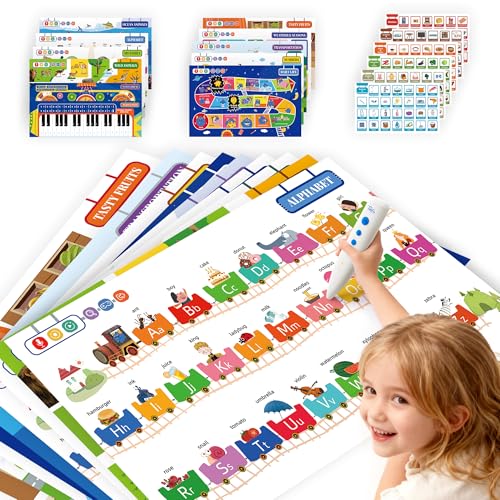
Bold, bright, and brilliantly interactive, the TEKFUN Learning Posters deliver immersive, screen-free education that turns any wall into a classroom. The talking pen and nine themed posters cover letters, numbers, animals, and shapes, responding with clear audio and cheerful songs like “Twinkle Twinkle Little Star” and “Wheels on the Bus.” This dual auditory-visual approach is perfect for children with autism who learn best through repetition and multi-sensory input, making it a top pick for interactive learning at home or in therapy settings.
In practice, the posters excel during daily routines—morning learning time, pre-bed songs, or language-building sessions. The pen is intuitive for toddlers, requiring just a tap to activate sounds, and the music cards add joyful variety that keeps kids engaged. At just a few inches thick, it’s space-saving and clutter-free, ideal for small apartments or classrooms. However, it requires two AAA batteries (not included), and the pen can be misplaced easily, which may disrupt consistent use.
Compared to the Aullsaty flashcards, the TEKFUN system offers broader musical engagement but less tactile interaction. While the flashcards encourage fine motor skills through card insertion, the posters rely on pointing and listening—better for kids who prefer minimal manipulation. It’s less portable than the Busy Book or KidSquare sorting toy, but surpasses them in auditory variety and singing content. For families prioritizing language, music, and early literacy, this set delivers richer interactive value than static learning tools.
Montessori Clocks Busy Board
ADVANTAGES
LIMITATIONS
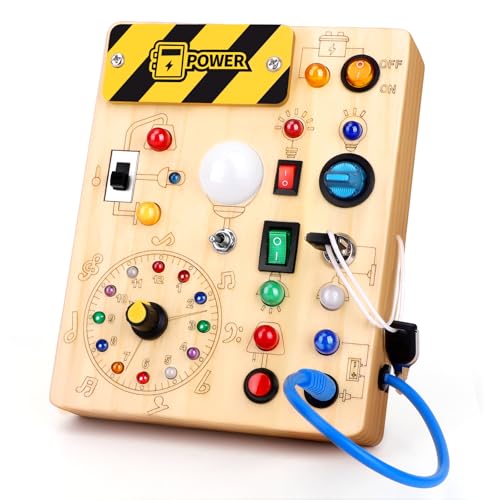
Cleverly engineered for tiny hands, the Grarain Busy Board is a masterclass in fine motor development, combining tactile switches, rotating gears, and 23 soft-glow LED lights into a compact wooden frame. The clock-themed front and alpha-numeric back offer dual learning surfaces, making it a highly stimulating sensory hub for toddlers and children with autism. Its Montessori-inspired design encourages independent exploration, helping kids build coordination, problem-solving, and cause-effect understanding—all critical for early brain development.
In real-world use, this board shines during travel or downtime—its 6.7-inch size fits perfectly in laps on planes, in cars, or at restaurants. The wooden construction feels premium and durable, surviving drops and constant twisting, while the low-brightness LEDs prevent sensory overload. Kids love flipping switches, spinning dials, and watching lights respond, which fosters concentration. However, the batteries are not included, and the learning curve for some functions may require adult guidance at first.
Compared to the Magnetic Tiles or Busy Book, the Grarain board offers more tactile variety in a smaller footprint, though it lacks the open-ended creativity of building blocks or the thematic depth of a binder. It’s a stronger choice than the TEKFUN posters for hands-on learners but doesn’t support speech development like the Aullsaty cards. Ideal for parents seeking a portable, screen-free focus tool, it delivers superior motor engagement in a travel-ready format.
Montessori Busy Book for Toddlers
ADVANTAGES
LIMITATIONS
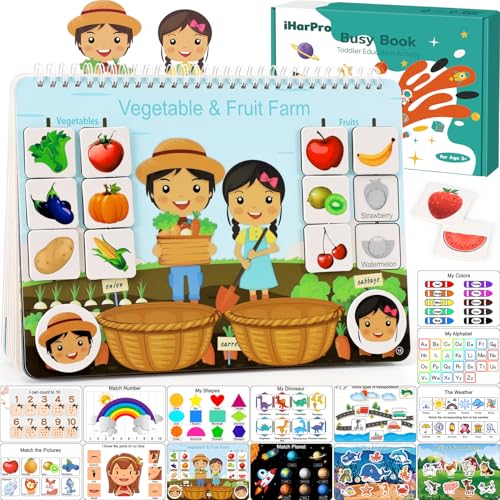
Thoughtfully crafted and bursting with learning potential, the Busy Book for Toddlers earns its title as the Best Overall sensory toy for autism and early development. With 14 double-laminated, 300% thicker pages, it covers everything from colors and shapes to weather and ocean animals, using hook-and-loop pieces that stick securely and resist tearing. Developed with child psychologists, this binder isn’t just durable—it’s scientifically designed to maximize engagement and skill growth in children aged 2–6.
In everyday use, the book excels during travel, quiet time, or homeschooling sessions. The pre-attached pieces mean zero setup, so kids can dive into sorting, matching, and problem-solving immediately. It strengthens fine motor skills, logic, and color recognition, while the variety of themes keeps curiosity alive over weeks of play. Unlike single-function toys, this book grows with the child—toddlers match shapes, while older preschoolers explore sequencing and storytelling.
Compared to the Grarain Busy Board or JOYIN Fidget Tubes, this book offers broader educational scope and longer play value. While the Magnetic Tiles encourage creativity, they lack structured learning paths. The Aullsaty flashcards support speech better, but this book integrates cognitive, emotional, and motor development in one portable package. For families wanting a comprehensive, no-fuss learning tool, it provides unmatched versatility and durability over simpler sensory toys.
Color Sorting Feelings Wheel
ADVANTAGES
LIMITATIONS
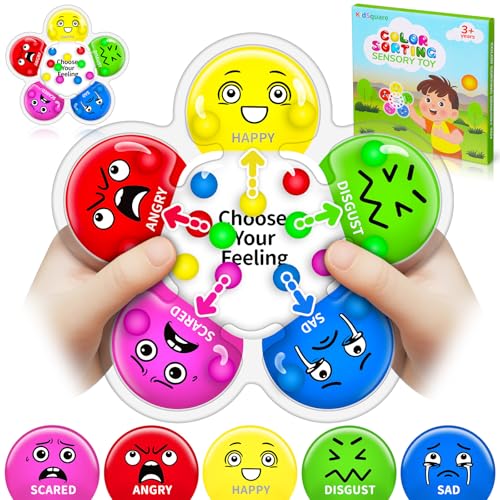
A breakthrough in emotional learning, the KidSquare Color Sorting Wheel is uniquely designed to bridge feelings and colors, helping autistic children express what they can’t always say. The five-petal wheel—each representing happy, sad, angry, scared, or disgusted—is paired with soft silicone beads that kids sort by matching color and emotion. This dual-purpose design makes it a powerful tool for social-emotional development, turning abstract feelings into tangible, interactive play.
In real-world use, therapists and parents report success using it during emotional check-ins or after tantrums, where children point to or place beads on the emotion they’re feeling. The 6.5-inch size is perfect for small hands, and the soft, scentless gel beads are safe to handle and chew-safe (though not intended for teething). It’s especially effective in classrooms or waiting areas, where kids use it to self-regulate and communicate nonverbally. However, the bead sorting can become repetitive over time, and advanced emotional discussions still require adult guidance.
Compared to the JOYIN Fidget Tubes, this toy offers deeper emotional learning, while the tubes focus only on calming. It’s less complex than the Busy Book but excels in targeted emotion recognition, a gap many sensory toys miss. While the Aullsaty flashcards support speech, this wheel supports emotional intelligence—a critical skill for autistic children. For families prioritizing mental health and communication, it delivers more meaningful interaction than purely motor-based toys.
Magnetic Tiles Building Blocks

ADVANTAGES
LIMITATIONS
Magnetic magic in every block, the Magnetic Tiles set is a STEM-powered wonder that sparks creativity, spatial reasoning, and sensory exploration in children with autism. With 32 brightly colored, translucent pieces that click together effortlessly, kids build 3D structures, explore symmetry, and experiment with light and color—making it a dynamic tool for open-ended, screen-free play. The magnetic connections provide satisfying tactile feedback, which is especially soothing for sensory-seeking children.
In real-world testing, these tiles shine during free play and structured learning—kids as young as 3 build simple shapes, while older ones create castles, animals, or geometric patterns. The standard sizing ensures compatibility with other major brands, expanding play possibilities. They’re ideal for developing spatial awareness and early math concepts, and their use in classrooms proves they hold attention during group activities. However, small parts pose a choking hazard for under-3s, and loose tiles can get lost without proper storage.
Compared to the Grarain Busy Board or TEKFUN posters, this set offers greater creative freedom and long-term replay value. While the Busy Book focuses on fine motor and cognition, these tiles build engineering and problem-solving skills. It’s less targeted for speech or emotion than the Aullsaty cards or KidSquare wheel, but unmatched in STEM development. For parents and educators wanting to nurture innovation and focus, it provides deeper cognitive engagement than most sensory toys.
Sensory Educational Toys for Autism Comparison
| Product | Best For | Key Features | Age Range | Focus/Skills | Portability |
|---|---|---|---|---|---|
| Montessori Busy Book for Toddlers | Best Overall | Thickened pages, 14 themes (animals, colors, numbers etc.), Ready-to-play, Secure materials | 2-4 years | Critical thinking, color recognition, logic, early knowledge | Good – Portable for trips |
| Talking Flash Cards for Speech Therapy | Best for Speech Development | 248 sight words, 14 subjects, Animal/vehicle sounds, Rechargeable, American accent | 1-6 years | Speech therapy, language development, sensory stimulation, recognition | Excellent – Reader & cards in a bag |
| Montessori Clocks Busy Board | Best for Fine Motor Skills | Interactive switches, LED lights, Clock design, Alpha-numeric chart | 1-3 years | Fine motor skills, recognition, coordination, Montessori learning | Good – Compact size |
| Magnetic Tiles Building Blocks | Best for STEM Learning | Color/number recognition, Shape puzzles, STEM-approved, Compatible with major brands | 3-8 years | STEM learning, math, science, spatial reasoning, tactile skills | Good – Boxed kit for storage |
| JOYIN Fidget Tubes 4-Pack | Best for Calm Down Corner | Visual & tactile stimulation, Stress relief, Anger management, Safe materials | 3+ years | Emotional regulation, focus, anxiety reduction, sensory input | Excellent – Small, individual tubes |
| Interactive ABCs & 123s Learning Posters | Best for Interactive Learning | Alphabet sounds, Numbers, Spelling, Music, Speech therapy aid | 2+ years | Language development, speech therapy, musical learning, cognitive skills | Good – Wall-mounted, saves space |
| Color Sorting Feelings Wheel | Best for Emotion Recognition | Color sorting, Emotion recognition (happy, sad, angry, etc.), Sensory texture, Portable | 18m+ | Emotion recognition, color sorting, fine motor skills, sensory exploration | Excellent – Compact and easy to carry |
How We Evaluated Sensory Educational Toys for Autism
Our recommendations for the best sensory educational toys for autism are based on a multi-faceted evaluation process prioritizing research-backed features and user feedback. We analyze toys based on their alignment with principles of sensory integration therapy and applied behavior analysis (ABA). This includes examining the types of sensory input offered (visual, tactile, auditory, proprioceptive, vestibular) and their potential to support self-regulation.
We conduct comparative analyses of product specifications, focusing on materials (non-toxic, durable construction), safety certifications, and age appropriateness. Data from occupational therapist recommendations, parent reviews, and autism-focused online communities are aggregated and analyzed for recurring themes related to effectiveness and child engagement.
While direct physical product testing is limited due to the diverse needs of individuals with autism, we leverage detailed product descriptions and imagery to assess potential sensory overload triggers (e.g., flashing lights, loud sounds). We prioritize toys demonstrating versatility, allowing for adjustable stimulation levels, and supporting a range of developmental skills – from fine motor skills to communication – as outlined in established learning frameworks. We cross-reference features with the core considerations detailed in our Buying Guide to ensure recommendations are comprehensive and align with expert advice.
Choosing the Right Sensory Educational Toy for Autism
Understanding Core Features
When selecting a sensory educational toy for a child with autism, focusing on a few key features will significantly impact its effectiveness and enjoyment. While many toys offer various benefits, prioritizing sensory input, skill development, and safety will guide you toward the best choice.
Sensory Input: Children with autism often experience sensory processing differences. Toys offering varied and controlled sensory input – visual, tactile, auditory – can be incredibly beneficial. Consider what kind of sensory input the toy provides. For example, a busy board with switches and lights (like the Montessori Clocks Busy Board) provides visual and tactile stimulation, while talking flashcards (Talking Flash Cards for Speech Therapy) offer auditory input paired with visual cues. Too little stimulation may not be engaging, while too much can be overwhelming. Pay attention to whether the toy allows for adjustable volume or brightness to tailor the experience.
Skill Development: Beyond sensory engagement, identify the skills the toy aims to develop. This might include fine motor skills (Montessori Clocks Busy Board, Color Sorting Feelings Wheel), language development (Talking Flash Cards for Speech Therapy, Interactive ABCs & 123s Learning Posters), or cognitive skills like problem-solving and spatial reasoning (Magnetic Tiles Building Blocks). Consider your child’s individual needs and areas where they could benefit from support. A toy that integrates learning with play, like the Montessori Busy Book, can be particularly effective.
Safety & Durability: Safety is paramount. Look for toys made from non-toxic materials, with smooth edges and no small parts that could pose a choking hazard. Durability is also essential, especially with repeated use and potential sensory seeking behaviors. Toys designed with robust construction, like the Montessori Busy Book’s thickened pages or the durable wood of the Montessori Clocks Busy Board, will withstand more wear and tear.
Other Important Considerations
- Age Appropriateness: Ensure the toy is designed for your child’s developmental age and skill level.
- Interests: Choose toys that align with your child’s existing interests to maximize engagement.
- Complexity: Start with simpler toys and gradually introduce more complex options as your child’s skills progress.
- Portability: If you want a toy for on-the-go use, consider its size and weight (JOYIN Fidget Tubes 4-Pack, Color Sorting Feelings Wheel).
- Ease of Cleaning: Toys used by children with sensory sensitivities may require frequent cleaning. Choose materials that are easy to wipe down or sanitize.
- Emotional Regulation: Some toys, like the JOYIN Fidget Tubes 4-Pack and Color Sorting Feelings Wheel, are specifically designed to help with emotional regulation and calming techniques.
The Bottom Line
Ultimately, the best sensory educational toys for autism are those that cater to an individual child’s unique needs and preferences. By carefully considering the type of sensory input, desired skill development, and safety features, you can find tools that foster learning, growth, and engagement in a supportive and enjoyable way.
Remember that experimentation is key; what works wonderfully for one child may not be as effective for another. Observing your child’s reactions and adapting your choices accordingly will ensure you’re providing them with the most beneficial and enriching sensory experiences possible.