

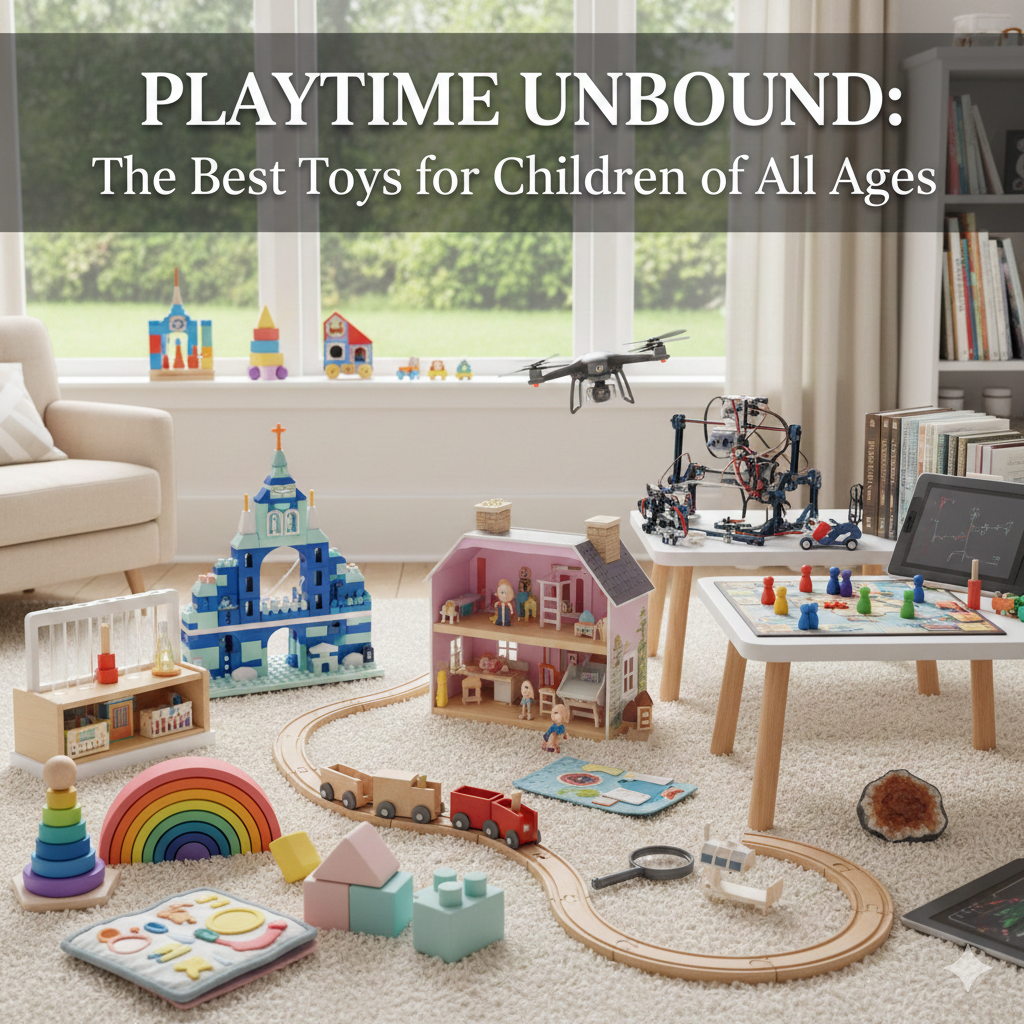
Finding toys for all ages that truly captivate children can feel like searching for hidden treasure. We’ve compiled a selection of really, really WILDLY good toys that stand out from the overwhelming sea of options. As parents ourselves, these are the toys we couldn’t wait to play with when our kids were young – the ones our children returned to time and again.
Certainly, we have strong opinions when it comes to selecting the best toys for all ages. We specifically look for open-ended options that spark creativity, develop critical thinking skills, and help children burn off excess energy. While we appreciate quality STEM and STEAM gifts, we’re not easily impressed by gimmicky robots or trendy playthings with limited appeal. Instead, we focus on toys that grow with your child and provide lasting value across developmental stages.
Throughout this guide, we’ll share our carefully curated recommendations, explain how different toys support various aspects of development, and help you make smarter choices for your child’s play collection. Whether you’re shopping for a toddler exploring their world or an older child refining specific skills, you’ll discover options that both you and your children will love.
How Do Toys Support Development at Every Age?

“Play is the highest form of research.” — Albert Einstein, Theoretical physicist, Nobel laureate, renowned thinker whose insights on play relate to cognitive development through toys
Toys serve as powerful tools for childhood development, offering more than just entertainment. Indeed, research shows that [approximately 90 percent of preschool children’s play] in the United States involves a toy.
Cognitive Growth Through Puzzles and Games
Puzzles and games significantly enhance cognitive abilities in children of various ages. During play, children naturally develop critical thinking skills, memory, and problem-solving abilities. For preschoolers, toys like shape sorters, counting games, and simple puzzles help establish fundamental cognitive concepts. Studies demonstrate that games involving puzzles increase language usage, including subjunctives, future tenses, and adjectives . Additionally, early cognitive play has been linked to increased creative performance years later.
Physical Development with Active Toys
Active toys fundamentally support both fine and gross motor development. Push-pull toys, ride-on vehicles, and sports equipment improve balance, coordination, and strengthen arms and legs. Meanwhile, art supplies, building blocks, and threading beads enhance precise hand movements and hand-eye coordination. Furthermore, research indicates that children who play outdoors engage in more physical activity, making playground equipment particularly valuable for physical development.
Social Skills from Cooperative Play
Through play with others, children acquire essential social abilities including recognizing feelings, showing affection, resolving conflicts, sharing, and following rules. Cooperative games teach turn-taking, negotiation, and problem-solving in social contexts. Collectible toys, moreover, encourage children to trade and negotiate with peers. Role-play with dolls and action figures allows children to practice different social scenarios, thereby developing communication and cooperation skills.
Emotional Expression via Pretend Play
Pretend play provides a safe space for children to express and explore various emotions. Imaginative scenarios help children process unfamiliar or challenging life experiences like doctor visits or family changes. During pretend play, children reveal not only feelings that make them happy but also fears, jealousy, and negative emotions they struggle to manage. Research demonstrates that children who engage in complex sociodramatic play develop better social skills, more empathy, greater imagination, less aggression, and higher levels of thinking.
The best toys for all ages often support multiple developmental areas simultaneously, adapting to a child’s growing capabilities throughout different stages.
What Are the Best Toys for All Ages?
“Toys should be like good books—once you’ve played with them, you’ll always remember them.” — Cas Holman, Toy designer and creator of Rigamajig, expert in open-ended play tools
The hunt for toys that endure through years of play represents an investment in both childhood joy and development. Considering American families [spend upward of $1000 a year on toys] choosing options with longevity makes financial sense.
Timeless Toys That Span Generations
Classic toys have earned their status through decades of engaging children’s imagination. Wooden blocks remain at the top of this category—they’re nothing fancy, yet offer endless creative potential. As one expert notes, “It’s worth the money to invest in wood blocks. Your grandchildren can play with them when they visit in 40 years”.
LEGO and its larger cousin DUPLO continue to captivate children from toddlerhood to tweendom. The connecting blocks start with simple stacking, then graduate to complex structures as children’s skills develop.
Board games like Monopoly and Scrabble have withstood the test of time, earning places in the National Toy Hall of Fame. These games teach following directions, turn-taking, and gracious winning and losing .
Multi-Use Toys That Adapt Over Time
The most versatile toys evolve alongside children’s developing abilities. Magna-Tiles consistently receive enthusiastic endorsements from parents, with one calling them “by far my favorite toy in the whole wide world”. Although expensive, these magnetic building tiles provide tremendous staying power as children use them from toddlerhood through elementary school.
Pretend play sets like kitchen toys and food collections grow through multiple stages. Melissa & Doug’s kitchen sets let “budding young chefs hone their craft” through increasingly complex scenarios. What starts as simple exploration for toddlers becomes elaborate restaurant play for older children.
Family Favorites That Encourage Group Play
Some toys excel at bringing multiple ages together. Card games like Uno appeal to both preschoolers and older children, making them perfect for family game nights. Connect 4 works especially well in households with significant age gaps, as “each round only takes a few minutes”.
Play couches such as the Nugget have become staples in many homes because they transform into forts, obstacle courses, reading nooks—even actual seating [9]. Their open-ended nature adapts to whatever phase children are experiencing, making them worthwhile investments for families with multiple children.
Which Toy Types Match Different Play Styles?
Identifying your child’s play preferences unlocks the secret to selecting toys that truly engage and educate. Different play styles require specific toy types to maximize both enjoyment and developmental benefits.
Creative Play: Art Kits and DIY Sets
Art supplies and craft kits foster self-expression while developing fine motor skills. Creativity for Kids offers activities that build confidence through problem-solving and independence. Research shows artistic expression is vital for development, as these activities engage children for hours while broadening their capacity for learning. Open-ended art kits without predetermined outcomes encourage original thinking.
Constructive Play: Blocks and Building Kits
Construction toys enhance spatial awareness and cognitive abilities. First and foremost, these toys promote hands-on learning of engineering principles. Magnetic building sets like Magformers allow children to create complex 3D structures, introducing basic concepts of geometry . Open-ended building toys encourage resilience as children experiment with multiple solutions.
Imaginative Play: Costumes and Role-Play Sets
Dress-up materials and pretend play sets develop language skills and emotional understanding. In essence, children process complex emotions by stepping into roles of power—like doctor, superhero, or parent. These activities help make unfamiliar situations less intimidating while developing creative thinking.
Competitive Play: Strategy and Board Games
Strategy games foster critical thinking and social skills. Games like Rush Hour and Three Little Piggies teach spatial awareness and pattern recognition. In contrast, family board games develop relationship skills, goal-directed behavior, and healthy competition.
Exploratory Play: STEM and Science Kits
STEM toys combine learning with experimentation. Consequently, children develop problem-solving abilities and logical thinking. Robotics kits like Sphero teach programming principles without screens, offering educational value through play.
How Can Parents Make Smart Toy Choices?

Making thoughtful toy selections ultimately benefits both children and parents. Choosing wisely reduces clutter, saves money, and enhances developmental outcomes.
Look for Durability and Safety First
Safety remains paramount when selecting toys. Always check for age-appropriate labels and ensure toys are free from small parts that pose choking hazards for younger children. Look for toys painted with non-toxic, lead-free paint and those labeled “UL Approved” for electronic items. Quality construction matters—invest in well-made toys that withstand rough play rather than those that break easily after minimal use.
Match Toys to Your Child’s Interests
Consider your child’s unique preferences rather than imposing your own. As one expert notes, “A big electric train set may excite Dad, but a young child is not going to get much fun out of it”. Versatile options that align with your child’s natural curiosities typically offer greater engagement and learning potential.
Avoid Overly Trendy or Disposable Toys
Resist the temptation of fleeting toy trends. Birthday parties often become “an exchange of garbage” with disposable plastic items that children quickly forget. Opt for open-ended materials like blocks, clay, and manipulatives that offer flexibility and creative possibilities .
Balance Screen Time with Hands-On Play
Traditional toys foster crucial developmental skills that screens cannot replace. Research shows increased screen time may contribute to attention deficit disorders . For digital play, select apps that encourage active thinking rather than passive consumption—look for programs that are engaging, meaningful, and iterative.
Conclusion
Thoughtful toy selection certainly shapes our children’s developmental journey beyond mere entertainment. Throughout this guide, we’ve explored how toys serve as powerful tools that support cognitive growth, physical abilities, social skills, and emotional expression. Quality toys essentially provide children with the means to learn about their world while having fun.
The best toys for children of all ages share several key characteristics. First, they offer open-ended play possibilities rather than limited, one-dimensional experiences. Additionally, they adapt to different developmental stages, growing alongside your child. Classic options like wooden blocks, LEGO sets, and board games have withstood the test of time precisely because they fulfill these requirements.
Parents should remember that matching toys to a child’s natural interests yields better results than imposing adult preferences. Similarly, focusing on quality over quantity prevents toy overload while ensuring greater engagement. Safety features and durability must take priority during the selection process, especially for younger children.
Finding balance between traditional hands-on play and modern digital experiences remains crucial for well-rounded development. Children benefit most from toys that actively engage them rather than those promoting passive entertainment. The real value of a toy lies not in its price tag or technological features but in how it sparks imagination, builds skills, and creates joyful memories.
We hope this guide helps you make wiser choices when navigating the vast world of children’s toys. After all, the right toys don’t just fill playrooms—they help shape curious, creative, and capable young minds ready to explore their world with confidence.
Key Takeaways
Choosing the right toys is an investment in your child’s development that goes far beyond entertainment, supporting cognitive growth, physical skills, and emotional expression across all ages.
• Prioritize open-ended toys like blocks and LEGO that adapt as children grow, offering lasting value and creative possibilities across developmental stages.
• Match toys to your child’s natural interests rather than imposing adult preferences – engaged children learn more effectively through play they genuinely enjoy.
• Focus on quality over quantity by selecting durable, safe toys that withstand years of play instead of trendy, disposable options.
• Balance screen time with hands-on play to develop crucial skills that digital experiences cannot replace, fostering active thinking and creativity.
• Look for toys that support multiple developmental areas simultaneously – the best options enhance cognitive abilities, physical coordination, and social skills through integrated play experiences.
The most valuable toys are those that spark imagination, build essential skills, and create lasting memories while growing alongside your child’s changing abilities and interests.
FAQs
Q1. What are some versatile toys that grow with children? Open-ended toys like building blocks, LEGO sets, and magnetic tiles are excellent choices that adapt to different developmental stages and offer creative possibilities for children of various ages.
Q2. How can parents choose toys that will engage children for a long time? Focus on quality over quantity by selecting durable, safe toys that align with your child’s interests. Look for options that support multiple developmental areas simultaneously and offer open-ended play possibilities.
Q3. What are some popular toys that appeal to a wide age range? Play kitchens, outdoor equipment like trampolines, board games, and construction sets like marble runs tend to be popular across different age groups and can provide lasting entertainment value.
Q4. How do toys support a child’s development? Well-chosen toys can enhance cognitive abilities, physical skills, social interaction, and emotional expression. For example, puzzles boost problem-solving skills, active toys improve motor development, and pretend play sets foster social and emotional growth.
Q5. Is it better to invest in traditional toys or electronic gadgets? While both have their place, it’s important to balance screen time with hands-on play. Traditional toys often provide crucial developmental benefits that screens can’t replace, fostering skills like spatial awareness, fine motor control, and face-to-face social interaction.