








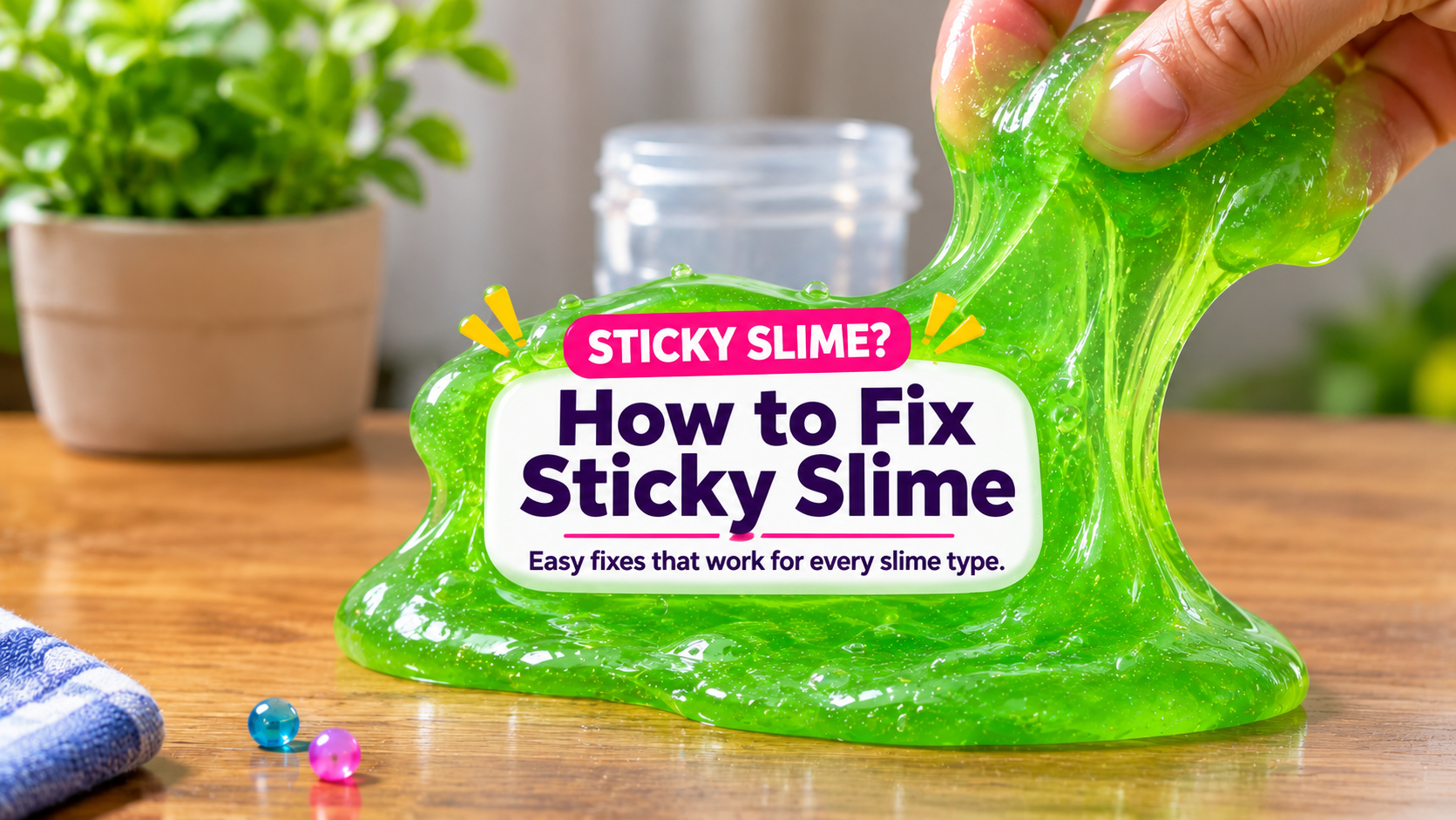
How to Fix Sticky Slime: Easy Methods That Actually Work
You mixed the glue, added the activator, kneaded for a few minutes, and your slime is still sticking to your fingers, the table, and everything else nearby. Sound familiar? Sticky slime is the most common slime problem, and the good news is that it is almost always easy to fix.
In this complete guide, you will learn why slime turns sticky, how to fix it step by step, which method works for each slime type, and how to keep your slime perfectly stretchy for longer.
Why Is My Slime Sticky?
Slime forms when an activator links the long polymer chains in glue together. If that linking is incomplete, the slime stays gooey and clings to your skin. Understanding the cause makes the fix much faster.

1. Not Enough Activator
This is the number one cause. If there is too little activator in the mix, the glue chains do not fully connect, and the slime stays wet and tacky.
2. Too Much Glue, Water, or Lotion
Extra liquid ingredients keep the slime soft and sticky. Adding too much lotion, water, or glue changes the balance of the recipe.
3. Warm Room or Warm Hands
Heat softens slime. On a hot day, or after playing with it for a long time, slime can become stickier than when you first made it.
4. Old or Poorly Stored Slime
Slime that has been left open or stored for a long time can change texture. Air exposure can make it dry out, turn stiff, or feel sticky on the surface.
Before You Start: What You Need
Most sticky slime fixes use simple items you probably already have at home:
- Slime activator (contact lens solution that contains boric acid and sodium borate, or saline solution)
- Baking soda
- Shaving foam (for fluffy slime)
- Soft clay (for butter slime)
- A small bowl or tray to work in
- An airtight container for storage
Important: Always add activator slowly. Slime is much easier to loosen than to rescue once it has become hard and rubbery.
How to Fix Sticky Slime: Step-by-Step

Step 1: Knead the Slime for 2 to 3 Minutes
Before adding anything, simply knead the slime. Stretch it, fold it, and press it together. Slime often feels stickier right after mixing, and kneading finishes the activation process. Many batches fix themselves with this one step.
Step 2: Add a Few Drops of Activator
If the slime is still sticky after kneading, add just a few drops of your activator. Do not pour it in. Slime reacts quickly, and a small amount goes a long way.
Step 3: Knead Again Thoroughly
Work the activator through the slime fully. Wait at least one to two minutes before judging the result. The texture keeps changing while you knead.
Step 4: Repeat Only If Needed
If the slime still sticks to your fingers, add a few more drops and knead again. Repeat this slowly until the slime stretches cleanly and no longer leaves residue on your hands.
Step 5: Let It Rest
Place the slime in an airtight container and let it rest for 10 to 15 minutes, or even overnight. Resting lets the slime settle into its final texture, and a slime that feels slightly sticky at first may feel perfect later.
Other Ways to Fix Sticky Slime
Use a Pinch of Baking Soda
Baking soda helps the activator work better. If your slime is sticky and you have already used some activator, sprinkle in a very small pinch of baking soda, knead well, and then add a few drops of activator if needed. Use this method carefully, because too much baking soda can make slime stiff.
Add a Little Lotion for Over-Activated Slime
If you added too much activator and the slime became hard instead of sticky, a small amount of lotion or a few drops of warm water can soften it. Knead slowly and add only a little at a time.
Cool It Down
If the slime is sticky only because it has warmed up, place it in its sealed container and keep it at room temperature or in a cool room for a short time. Avoid leaving it in direct sunlight or a hot car.
Try Cornstarch Dusting for Quick Handling
A very light dusting of cornstarch on your hands can make it easier to handle slime while you work. It does not permanently fix the slime, so treat it as a temporary helper and not a cure.
Fixing Sticky Slime by Type
Different slimes behave differently, so the best fix depends on what kind of slime you made.

Clear Slime
Clear slime often looks cloudy and sticky at first because of tiny air bubbles. Add a few drops of activator if needed, then leave it covered for 24 hours. The bubbles slowly rise out, and the slime becomes clearer and less sticky.
Fluffy Slime
Fluffy slime gets its texture from shaving foam, and it can feel sticky if the foam, glue, and activator are not balanced. Add a small amount of foam and a few drops of activator, kneading well between each addition.
Butter Slime
Butter slime has a soft, spreadable texture. If it becomes sticky, work in a small pinch of soft clay slowly. This helps restore the smooth, buttery feel without making it rubbery.
Basic Glue Slime
For standard glue slime, kneading plus a few drops of activator is usually all you need. Add the activator gradually and stop as soon as the slime stops sticking to your hands.
Common Mistakes to Avoid

- Pouring in too much activator at once. This makes slime rubbery and can cause it to tear instead of stretch.
- Not kneading enough. Slime needs time and movement to finish activating.
- Adding more activator too soon. Wait and knead before deciding more is needed.
- Leaving slime uncovered. Air dries slime out and changes its texture.
- Mixing different slime types together. Different recipes can behave unpredictably when combined.
Sticky Slime vs. Over-Activated Slime
It is easy to confuse these two problems, but they need opposite fixes.
| Problem | What It Feels Like | How to Fix It |
|---|---|---|
| Sticky slime (under-activated) | Gooey, clings to hands, leaves residue | Knead, then add a few drops of activator |
| Over-activated slime | Stiff, rubbery, breaks when stretched | Add a little lotion or warm water and knead slowly |
| Warm slime | Soft and tacky from heat | Let it rest in a cool place |
| Dried-out slime | Hard, crusty or stringy | Soften with a tiny amount of lotion or warm water |
How to Remove Sticky Slime From Hands, Clothes, and Surfaces
Sometimes the sticky mess ends up where it should not be. Here is how to clean it up.
- Hands: Wash with warm water and soap. Rub well until the residue lifts off.
- Clothes and fabric: Let the slime dry, pick off as much as you can, then soak the area in white vinegar for a few minutes and wash as usual.
- Hair: Work in a little conditioner or cooking oil, gently comb the slime out, and then shampoo.
- Hard surfaces: Wipe with a cloth dampened with warm soapy water or a little vinegar.
How to Keep Slime From Getting Sticky Again
- Store slime in a clean airtight container after every use.
- Keep it at room temperature, away from sunlight and heat.
- Wash and dry your hands before playing with it.
- Do not play with slime for hours at a time, because warm hands soften it.
- Measure your ingredients carefully when making a new batch.
Slime Safety Tips
Slime is fun, but a few safety rules matter, especially for children.
- Adults should supervise children while making and playing with slime.
- Never put slime in the mouth or eat it.
- Wash hands before and after playing.
- Activators that contain boric acid or sodium borate should be handled with care, so keep them out of reach of young children.
- Stop using any ingredient that causes skin irritation, and speak to a doctor if a reaction continues.
- Keep slime away from carpets, upholstery, and pets.
Frequently Asked Questions
Why is my slime still sticky after adding activator?
Slime needs time. Knead it for a few minutes and give it a short rest before adding more activator. Adding too much too fast usually causes new problems.
How much activator should I add to sticky slime?
Start with just a few drops, knead well, and repeat only if the slime is still sticky. Small, slow additions give you the most control.
Can I fix sticky slime without activator?
Mild stickiness can often be fixed by kneading, letting the slime rest, or cooling it down. For stronger stickiness, a small amount of activator is usually needed.
Can slime be saved if I added too much activator?
Often yes. Add a tiny amount of lotion or a few drops of warm water, then knead slowly until the slime softens. Go slowly so it does not become sticky again.
Why does my clear slime stay sticky?
Clear slime commonly looks sticky and cloudy because of trapped air bubbles. Cover it and rest it for about 24 hours for a clearer, smoother result.
How long does homemade slime last?
With airtight storage and clean hands, slime usually lasts from a few days to a couple of weeks. Throw it away if it develops an odor, mold, or discoloration.
Final Thoughts
Sticky slime is a normal part of slime making, and it is rarely a sign that the batch is ruined. In most cases, thorough kneading, a few drops of activator, and a little patience are all it takes. Add ingredients slowly, store your slime properly, and you will enjoy smooth, stretchy slime every time.