









How to Make Homemade Play Dough: Easy, Soft and Safe Recipe
Few things keep kids busy like a lump of soft, squishy play dough. The good news is that you do not need to buy expensive store-bought tubs. With a handful of ordinary kitchen ingredients and about 15 minutes, you can learn how to make homemade play dough that is softer, brighter, longer-lasting and far cheaper than what you find on the toy aisle shelf.
In this complete guide you will find a classic cooked recipe, a quick no-cook version, color and scent ideas, storage tips, troubleshooting fixes and answers to the most common questions parents and teachers ask.
Why Make Play Dough at Home?
- It is budget-friendly. A full batch costs only a fraction of commercial dough.
- You control the ingredients. No mystery additives, and you can choose colors and scents yourself.
- It is a fun activity on its own. Measuring, mixing and kneading are great sensory experiences for children.
- It lasts. Properly stored, a cooked batch stays soft for weeks, sometimes months.
- It builds skills. Squeezing, rolling and pinching strengthen small hand muscles and support fine motor development.
Ingredients for Classic Homemade Play Dough

| Ingredient | Amount | What It Does |
|---|---|---|
| All-purpose flour | 2 cups (250 g) | Forms the base and structure of the dough |
| Fine salt | 1/2 cup (140 g) | Preserves the dough and prevents mold |
| Cream of tartar | 2 tablespoons | Gives elasticity and a smooth, stretchy feel |
| Vegetable oil | 2 tablespoons | Keeps the dough soft and stops it sticking |
| Warm water | 1 1/2 cups (360 ml) | Binds everything together |
| Food coloring | 10 to 15 drops | Adds bright color |
Tools You Will Need
- A medium non-stick saucepan
- A sturdy wooden spoon or silicone spatula
- Measuring cups and spoons
- A clean countertop or silicone mat for kneading
- An airtight container or zip-top bag for storage
How to Make Homemade Play Dough (Step by Step)

Step 1: Mix the Dry Ingredients
Add the flour, salt and cream of tartar to the saucepan. Stir for a few seconds so the cream of tartar spreads evenly. Skipping this step is the most common reason for lumpy dough.
Step 2: Add the Wet Ingredients
Pour in the oil and warm water, then add your food coloring. Whisk or stir until the mixture looks like a smooth, thin batter with no dry pockets of flour.
Step 3: Cook Over Low to Medium Heat
Place the pan on the stove over low to medium heat and stir constantly. After 3 to 5 minutes the mixture will thicken quickly and begin to pull away from the sides of the pan, forming a single ball. Remove it from the heat as soon as it looks like a soft, slightly shiny dough. Overcooking makes the dough dry and crumbly.
Step 4: Cool and Knead
Turn the dough onto a clean, lightly floured surface. Let it cool for a few minutes until it is comfortable to touch, then knead for 2 to 3 minutes. The dough will turn from slightly sticky to silky smooth. If it still feels sticky, knead in a teaspoon of flour at a time.
Step 5: Store or Play
Your dough is ready to use straight away. Let it cool fully before giving it to young children, and keep it in an airtight container when playtime is over.
Quick No-Cook Play Dough Recipe
If you do not want to use the stove, this version is ready in about five minutes. It is a little less stretchy than the cooked dough, but it is great for a quick activity.
- 2 cups all-purpose flour
- 1/2 cup fine salt
- 2 tablespoons cream of tartar (or 2 tablespoons extra oil for a softer, slightly oilier feel)
- 2 tablespoons vegetable oil
- 1 cup boiling water
- Food coloring
- Combine the flour, salt and cream of tartar in a large bowl.
- Add the oil and food coloring to the boiling water, then pour it carefully into the bowl. An adult should always handle the boiling water.
- Stir with a spoon until the dough comes together and has cooled enough to touch.
- Knead on a floured surface until smooth. Add a little flour if sticky or a little water if dry.
Fun Ways to Color and Scent Your Dough

Coloring Ideas
- Classic bright colors: Add liquid or gel food coloring to the water before cooking for even, vivid color.
- Mixing new shades: Blue plus yellow makes green, red plus yellow makes orange and red plus blue makes purple.
- Natural options: Turmeric gives yellow, beet powder gives pink, spirulina gives green and cocoa powder gives brown.
- Marbled dough: Knead two colors together only briefly for a swirled, rainbow look.
Scent Ideas
- A few drops of vanilla extract for a sweet bakery smell
- A teaspoon of cinnamon or pumpkin spice for autumn dough
- Lavender essential oil for a calming, sensory-friendly dough (use only a drop or two and keep it adult-supervised)
- Unsweetened drink powder for fruity scent and color in one step
Texture Add-Ins
- Fine glitter for sparkle
- A spoonful of baby oil or coconut oil for extra silkiness
- Dry oats or coarse sand-style craft material for a sensory texture
How to Store Homemade Play Dough
Air is the enemy of play dough. Once the dough is cool, press out the air and seal it in a zip-top bag or an airtight container. Store each color separately so they do not blend together.
- Room temperature: Stays soft for about 2 to 4 weeks.
- Refrigerator: Can last 2 to 3 months. Let it warm up for a few minutes before using.
- Freezer: Not recommended, as it can change the texture.
Throw the dough away if you notice mold, a sour smell or a slimy texture.
Troubleshooting: Fixing Common Play Dough Problems
| Problem | Cause | Fix |
|---|---|---|
| Dough is too sticky | Too much water or undercooked | Knead in flour a teaspoon at a time, or cook for another minute |
| Dough is crumbly or dry | Overcooked or too much flour | Knead in a few drops of warm water or oil |
| Dough is lumpy | Dry ingredients not mixed well | Knead longer while warm, or whisk dry ingredients first next time |
| Color stains hands | Too much food coloring | Use gel coloring and fewer drops, then knead well |
| Dough feels too salty or gritty | Coarse salt was used | Use fine table salt so it dissolves fully |
Safety Tips for Parents and Teachers
- Homemade play dough is not food. It contains a lot of salt, so it should not be eaten. Supervise young children closely.
- Check for allergies. Regular flour contains wheat and gluten. Use a gluten-free flour blend if a child has an allergy or sensitivity.
- Handle heat carefully. Adults should do all the cooking and let the dough cool before play.
- Wash hands before and after playing, and clean tables after use.
Creative Play Dough Activity Ideas
- Roll snakes and shape them into letters or numbers
- Press leaves, buttons or small toys into flat dough to make patterns and prints
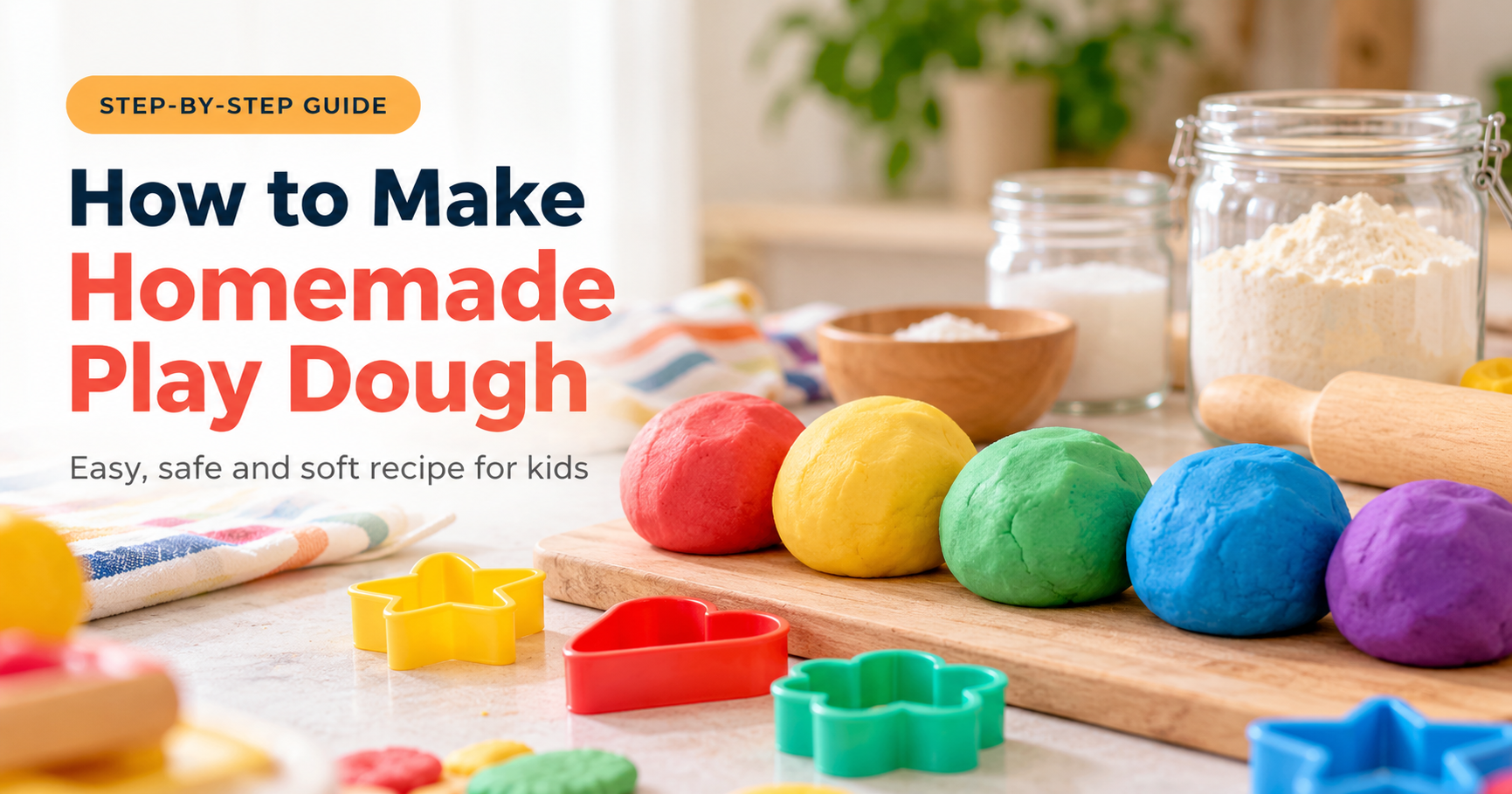
- Use cookie cutters to make shapes and animals
- Build a tiny pretend kitchen, pizza or birthday cake
- Set up a play dough “bakery” with rolling pins and plastic knives
- Create a small sensory tray with dough, beads and craft sticks
Frequently Asked Questions
Can I make play dough without cream of tartar?
Yes. Replace it with extra oil for a softer dough, or use the no-cook recipe with boiling water. The dough will be slightly less stretchy and may not last as long, but it works well.
How long does homemade play dough last?
When stored in an airtight container, it generally lasts 2 to 4 weeks at room temperature and up to 2 to 3 months in the fridge.
Is homemade play dough safe for toddlers?
It is made from kitchen ingredients, but it is very salty and not meant to be eaten. Toddlers should always play under direct adult supervision.
Why is my play dough sticky?
Usually there was too much water or the dough was not cooked long enough. Knead in a little flour or return it to low heat for a minute.
Can I make gluten-free play dough?
Yes. Use a gluten-free all-purpose flour blend or a mix of rice flour and cornstarch. You may need to adjust the water slightly until the dough feels right.
Can I use the microwave?
Yes, but stove-top cooking gives the most reliable results. If you use a microwave, heat in short bursts and stir well in between, with an adult handling the hot bowl.
Final Thoughts
Learning how to make homemade play dough is easy, inexpensive and rewarding. With flour, salt, oil, water and a little cream of tartar, you can create a soft, colorful, long-lasting dough that is perfect for rainy afternoons, classroom activities, birthday party favors and sensory play. Experiment with colors, scents and textures, store the dough properly, and you will always have a ready-made, creative activity on hand.