





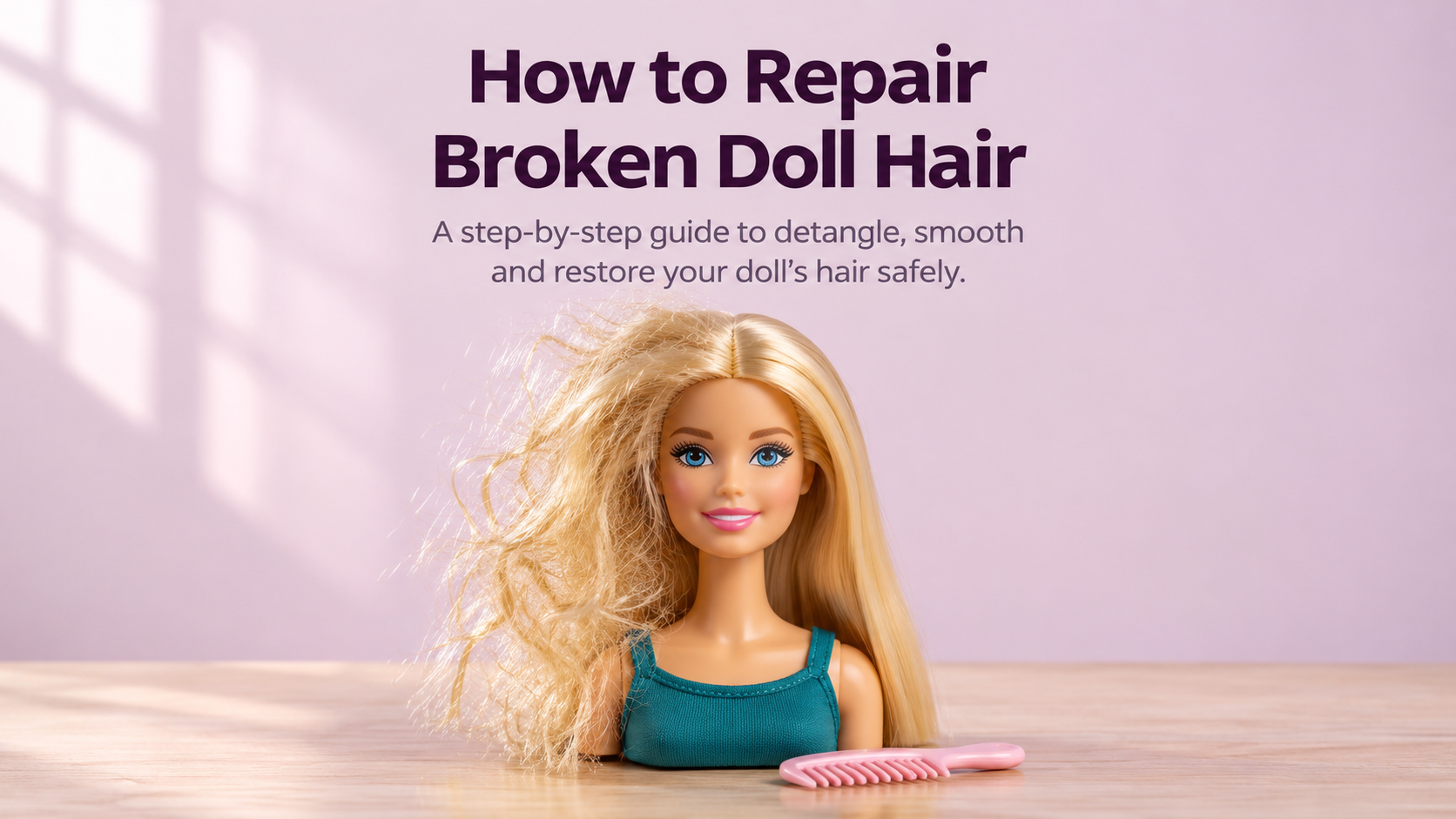

A doll with matted, frizzy or broken hair can look beyond saving, but in most cases it is not. Whether the hair is tangled from years in storage, dried out by sunlight, or ruined by a rough brushing session, the right method can bring back a surprising amount of softness and shine. This guide explains how to repair broken doll hair step by step, which tools and products actually help, and which common shortcuts quietly make the damage worse.
You will learn how to identify your doll’s hair type, how to detangle without breaking strands, how to fix frizz with the hot water method, what to do about bald patches and loose wigs, and how to keep the hair healthy afterward.
Why Doll Hair Gets Damaged in the First Place
Knowing the cause helps you choose the right repair and avoid repeating the problem. The most common reasons are:
- Friction and rough brushing. Doll hair has no natural oils, so dry brushing creates static, knots and snapped strands.
- Dust and dirt. Dirt acts like tiny grit between fibers and makes tangles tighter.
- Heat and sunlight. Synthetic fibers can frizz, kink or melt, and sunlight fades and dries the hair.
- Tight ties and rubber bands. These leave dents and snap hair at the pressure point.
- Poor storage. Dolls packed in boxes or bags with their hair pressed against something will develop tangles and flat spots.
- Product buildup. Hairspray, gel and heavy oils turn sticky and attract lint.
- Play, pets and children. Chewing, pulling and sleeping with a doll all add up over time.
Step One: Identify Your Doll’s Hair Type
This is the most important step, because the safe repair method depends on what the hair is made of. If you use the hot water method on mohair, for example, you can ruin it. Check the box, the maker’s information, or touch a hidden strand under the hair to judge the material.
| Hair type | Commonly found on | Heat tolerance | Best repair approach |
|---|---|---|---|
| Nylon or saran (synthetic, rooted) | Fashion dolls, play dolls, many vinyl dolls | Handles hot water; dislikes dry heat | Fabric softener soak, gentle detangling, hot water method for frizz |
| Acrylic or Kanekalon (wig fiber) | Wigs, ball-jointed and collector dolls | Varies; many are heat sensitive | Test a hidden strand first, use softener mist, avoid hot water unless the wig is heat-friendly |
| Mohair | Antique, porcelain and reborn dolls | No hot water, no heat | Very gentle brushing with a soft brush, minimal moisture, light conditioner only |
| Human hair | Premium wigs and some collector dolls | Low heat only | Mild shampoo and conditioner, then air-dry; brush gently from the ends |
Tools and Materials You Will Need

You do not need expensive gear. Gather these before you begin so you never have to stop halfway:
- Wide-tooth comb. Choose smooth, rounded teeth so they do not snag. A fine comb is only for the final step.
- Wire doll brush or soft pet-style slicker brush. The wire type with ball-tipped pins glides through doll hair far better than a standard hair brush.
- Spray bottle. Handy for a light, even mist.
- Fabric softener or hair conditioner. Unscented is best. Dilute the fabric softener to about one part softener to three parts water.
- A cup for hot water. A tall, heat-safe mug works well for the hot water method.
- Towels, hair clips and plastic wrap. Towels protect the doll, clips divide the hair into sections, and plastic wrap shields cloth bodies and painted faces from moisture.
- Small scissors and a rat-tail comb or pin (optional). These help with trimming and loosening stubborn knots.
Before You Start: Prepare the Doll
- Take a quick photo. It helps you see your progress and remember the original style.
- Protect the face and body. Wrap a cloth or soft-bodied doll in plastic wrap and cover the painted face with a dry towel so no water or product touches it.
- Remove ties, clips, headbands and accessories that are tangled into the hair.
- Do a hidden test. Apply your softener mix to a small strand at the nape of the neck and wait ten minutes to confirm there is no color transfer or damage.
- Set up a clean workspace with good light and a towel under the doll’s head.
How to Repair Broken Doll Hair: Step-by-Step Method

Step 1: Assess and Clean the Hair
Look closely at the damage. Is it mostly tangles, or is the hair also frizzy, sticky or snapped off? Pick out lint, dust and loose debris with your fingers. If the hair is dirty or sticky from product, wash it first by swishing the hair in lukewarm water with a few drops of mild dish soap or gentle shampoo, then rinse thoroughly. Keep the face dry and avoid soaking the body.
Step 2: Soften the Hair
Mist the whole head of hair with a mixture of one part fabric softener to three parts water, or with a light conditioner mixed with water. Work it into the hair with your fingers, then leave it to soak in for ten to twenty minutes. For very matted hair, you can wrap the hair in a damp towel for a little longer. The softener smooths the fiber surface so knots can slip apart instead of tearing.
Step 3: Detangle from the Ends Up
This is where patience pays off. Always start at the very ends of the hair and work upward, never from the roots downward. Hold the hair above the section you are working on so the root is not pulled, which protects the plugs from loosening.
- Divide the hair into small sections with clips.
- Use your fingers to loosen the biggest knots first.
- Use the wide-tooth comb on the last few centimeters, then work gradually higher.
- For a stubborn knot, add a little more softener and tease it open with the tip of a pin or rat-tail comb.
- Finish each section with the wire doll brush, using short, light strokes.
If the hair feels like it is stretching or you hear tiny snapping sounds, stop, add more softener and slow down.
Step 4: Rinse and Dry
Rinse the hair under gentle, cool to lukewarm running water or dip it in a bowl of clean water until the softener is gone. Pat it with a towel, then comb through once more. Let it air-dry, ideally with the doll’s head hanging upside down or the hair laid flat on a towel. A hair dryer on a cool setting, held well away, is acceptable if you are in a hurry, but never use a hot setting on synthetic hair.
Step 5: Style and Set
Once the hair is fully dry, brush it smooth, trim any split or broken ends, and restyle. For a neat finish, spend a minute combing it into place and let it set before you pose the doll or put it back on display.

Fixing Specific Doll Hair Problems
Severely Matted Hair (the “Bird’s Nest”)
Do not try to pull it apart dry. Soak the matted area with the softener mix, wait longer than usual, and work on one knot at a time from the outer edges toward the middle of the mat. If a section is felted beyond rescue, trimming it into a shorter style is better than snapping strands out at the root. Many dolls look charming with a bob or fringe.
Frizzy, Kinky or “Fried” Synthetic Hair
Frizz on nylon or saran hair can often be relaxed with hot water. Always keep adults in charge of this step and handle hot water carefully.

- Heat water until it is very hot but not boiling, about 70 to 80 degrees Celsius (160 to 175 degrees Fahrenheit), and pour it into a tall cup.
- Dip only the hair into the water, keeping the face, the painted hairline and the body out of it.
- While the hair is still warm, comb it straight with a wide-tooth comb.
- Rinse with cool water to set the smooth shape, then air-dry.
Sticky or Gummy Hair
This is usually product residue or old styling gel. Wash the hair with lukewarm water and a drop of mild soap, rinse thoroughly, then follow with the softener mix before detangling.
Hair Falling Out of a Rooted Head
If a few plugs are loose, stop brushing that area and avoid pulling on it. Small bald patches can be re-rooted with a doll re-rooting tool and matching hair, which is a rewarding project once you learn the technique. For large bald areas, the easiest fixes are a well-fitted wig or a professional re-root. Avoid putting strong adhesives such as super glue straight onto vinyl, as it can damage the material.
Loose or Shifting Wig
Gently lift the wig and clean the inside edge. Reattach it using a water-based wig glue or a thin layer of PVA craft glue along the cap edge, press it into place and let it dry fully. Avoid strong solvent glues that can melt the wig cap or vinyl head.
Cut or Chewed Hair
Hair that has been cut cannot regrow. You can even out the length into a new style, add a wig, or re-root fresh hair. Small flyaway ends can be trimmed with sharp scissors.
Mohair and Human Hair Dolls
Be extra gentle. Use a soft brush with natural bristles, brush in tiny sections from the tips, and apply only a small amount of light conditioner mixed with water. Skip hot water completely and air-dry the hair slowly.
How to Keep Doll Hair Healthy After Repair

- Brush gently once a week from the ends upward to prevent knots from forming.
- Store the doll upright or lying flat with the hair smoothed, ideally under a hair net or a loose cover.
- Keep dolls out of direct sunlight and away from radiators and hot windows.
- Use soft, wide ties and remove them before storing.
- Refresh the hair every few months with a light mist of diluted fabric softener, then a gentle brush-through.
- Keep dolls away from pets and small children who might chew or tug the hair.
Common Mistakes to Avoid
- Brushing dry hair from the roots instead of the ends.
- Using a regular hair brush that snags the fibers.
- Applying strong heat to synthetic hair.
- Soaking a painted face or a stuffed body.
- Skipping the hidden strand test.
- Cutting too much too early, before trying to detangle properly.
- Using too much product, which leaves hair greasy or sticky and attracts dust.
A Simple Care Routine
| How often | What to do |
|---|---|
| Weekly | Gentle brush-through from the ends up; check for new tangles |
| Monthly | Wipe away dust, check the storage position and re-smooth the style |
| Every 3 to 6 months | Light softener mist, detangle, rinse and air-dry |
| As needed | Trim split ends and fix any loose plugs or wig edges early |
Frequently Asked Questions
Can broken doll hair really be repaired?
Often, yes. Tangled, frizzy and dry hair usually responds well to softening, patient detangling and gentle drying. Hair that has been cut off or has fallen out cannot be regrown, but it can be replaced with a wig or re-rooted.
Is fabric softener safe for doll hair?
It is widely used on synthetic doll hair when diluted and rinsed out. Test a hidden strand first, and use a conditioner instead if you prefer. Do not use it on valuable antique dolls without expert advice.
Can I use a hair dryer on a doll’s hair?
Only on a cool setting from a distance, and only on synthetic hair. Hot air can frizz or melt the fibers, so air-drying is safer.
Should I use shampoo on doll hair?
A small amount of mild shampoo or dish soap is fine for dirty synthetic hair. Rinse it out completely and follow up with a softening mist.
Will hot water damage the doll’s head?
Used carefully, the hot water method is commonly done on vinyl dolls with nylon hair, but keep the water below boiling, dip only the hair, and avoid the painted face. If you are unsure, test on a hidden section.
How do I stop doll hair from tangling again?
Brush it gently each week, store it smoothed under a hair net, keep it out of the sun, and avoid rubber bands and heavy products.
Final Thoughts
Repairing broken doll hair is mostly about patience and choosing the right method for the right hair type. Soften first, detangle from the ends up, rinse, air-dry, and style only when the hair is fully dry. Add a few simple habits, such as gentle weekly brushing and smart storage, and your doll’s hair will stay soft, smooth and beautiful for years to come.