







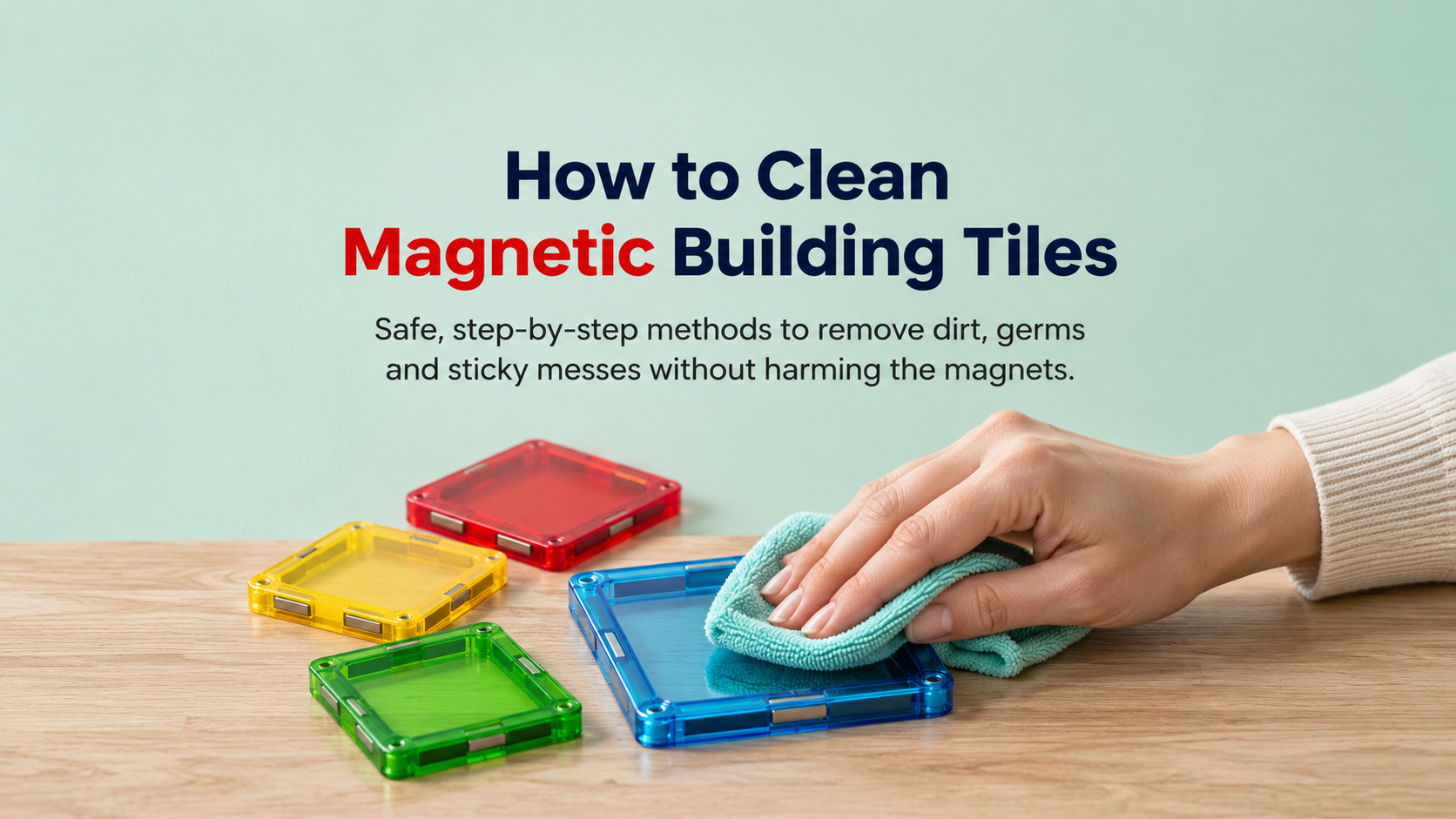

Magnetic building tiles spend their lives in small hands. They get dropped on floors, covered in sticky fingerprints, chewed on by toddlers, passed between siblings and carried to the table during snack time. It is no surprise that a set of tiles that looked bright and shiny on the first day can look grubby after a few months.
Knowing how to clean magnetic building tiles the right way keeps them hygienic, keeps the colors vibrant and, just as importantly, protects the magnets and seals inside. The wrong cleaning method, such as soaking the tiles, using harsh chemicals or putting them in a dishwasher, can cause damage that cannot be undone.
This guide walks you through everything: the supplies you need, a simple step-by-step method, fixes for common stains, safe sanitizing, how often to clean, how to handle special tiles, and what to avoid. It is written for parents, teachers, childcare providers and collectors who want a clean set without risking the toy.
Quick Answer: How to Clean Magnetic Building Tiles
- Sort the tiles and set aside any that are cracked or warped.
- Dust each tile with a dry microfiber cloth.
- Wipe with a soapy cloth wrung out until it is damp, not dripping.
- Clean the edges and corners with a soft brush or cotton swab.
- Wipe again with a clean damp cloth to remove soap, then dry completely with a towel and let the tiles air dry before storing them.
Always check the care instructions that came with your set. Manufacturers differ, and their guidance takes priority over general advice.
Why Cleaning Magnetic Tiles Matters
Cleaning is not only about appearance. There are several practical reasons to make it a regular habit.
- Hygiene. Shared toys collect germs, especially in homes with several children, in classrooms and in play areas. Regular cleaning reduces what spreads from child to child.
- Stronger connections. Dust, crumbs and sticky residue on the edges create tiny gaps between tiles. Even a small gap weakens the pull between magnets, so dirty tiles often feel weaker than they really are.
- Better looks. The translucent panels are the best feature of these tiles. Fingerprints, smudges and film dull the colors and reduce the light effect.
- Longer life. Dirt that is left in place can harden, stain the plastic or work into seams. Gentle, regular cleaning prevents buildup.
- Early damage detection. Handling every tile gives you a chance to spot cracks, warping or loose seams before they become a safety issue.
What You Need to Clean Magnetic Tiles
You do not need special products. A small kit of simple supplies is enough, and most households already have everything.

- Microfiber cloths. They trap dust and polish plastic without scratching it. Keep a few so you can use clean ones for each stage.
- Mild dish soap. A gentle, fragrance-light soap cuts through grease and fingerprints without leaving harsh residue.
- A soft toothbrush. It reaches the edges and corners where grime collects.
- Cotton swabs. They clean tight seams and small sticky spots.
- A bowl of lukewarm water. It is used for wringing cloths out. It is not for soaking tiles.
- A dry towel. Every tile must be dried before it goes back into storage.
Step-by-Step: How to Clean Magnetic Building Tiles
This method suits everyday cleaning and works for nearly every kind of tile. Work in small batches of ten to fifteen tiles so nothing sits wet while you clean the rest.

Step 1: Sort and Inspect
Lay your tiles out on a clean towel or tray. Check each one for cracks, warped edges, gaps in the seam or any sign that a magnet has shifted. Set damaged tiles aside. Do not clean them with the others, and do not return them to play. A cracked tile can let water reach the magnet, and a loose magnet is a safety hazard.
Step 2: Dust Every Tile
Wipe both faces and all four edges with a dry microfiber cloth. This removes loose dust, hair and crumbs before water is added. Skipping this step turns dust into muddy streaks when the tile is wiped with a damp cloth.
Step 3: Wipe With a Soapy Cloth
Add a few drops of mild dish soap to a bowl of lukewarm water. Dip a clean cloth in the mixture and wring it out thoroughly until it is damp but not dripping. Wipe each tile on both sides. The most important rule is to keep water away from the seams. A barely damp cloth is far safer than a wet one.
Step 4: Detail the Edges and Corners
The edges are where tiles touch, so they collect the most grime. Use a soft toothbrush or cotton swab with a tiny amount of soapy water to clean the edges, corners and any texture. Work gently and avoid pushing water into the seam. A dry brush also works well for loose debris in tight corners.
Step 5: Rinse Wipe and Dry
Wipe each tile with a clean cloth dampened only with plain water to remove soap residue. This matters because children often put toys in their mouths. Then dry each tile with a towel and let the tiles air dry flat for a while before packing them away. Storing tiles that are still damp can trap moisture in the container.
How to Remove Common Stains and Messes
Everyday dirt comes off easily with the method above, but some messes need a little extra care. Always start gently and test any new technique on a single edge or an inconspicuous spot.

| Mess | Best Fix | Extra Tip |
|---|---|---|
| Dust and crumbs | Dry microfiber cloth, then a soft brush on the edges | Do this before using any water |
| Sticky juice or sugar | Soapy damp cloth, then a clean damp wipe and dry | Act quickly before it hardens |
| Greasy fingerprints | A drop of dish soap on a damp cloth, then dry | Buff with a dry cloth for shine |
| Crayon or wax | Lift gently with a plastic card, then a soapy cloth | Do not use a metal blade |
| Marker or ink | Spot-test, then dab with a soapy cotton swab | Some ink may leave a faint mark |
| Play dough | Let it dry, peel it off, then wipe the edges | Wet dough smears and spreads |
| Sticker residue | Dab a little cooking oil, wait, then wipe with soap | Remove all oil afterward |
A Note About Scrubbing
Resist the urge to scrub hard. Rough sponges, scouring pads and abrasive powders scratch the translucent panels, and scratches collect dirt faster. Patience and a few repeated gentle wipes work better than force.
Lifting Metal Dust and Debris
Because the edges contain magnets, they can attract tiny metal particles such as dust from tools or craft materials. A piece of tape pressed gently against the edge will lift these particles without any water.
Safe Cleaners vs. Things to Avoid
The most common cause of damage during cleaning is the wrong product or method. Plastic frames can cloud, crack or warp, and seals can fail when exposed to harsh treatments.

Safe Choices
- Mild dish soap diluted in lukewarm water
- Microfiber cloths and soft cotton cloths
- A soft toothbrush or cotton swabs for detail work
- Towel drying followed by air drying
What to Avoid
- Bleach and ammonia. These harsh chemicals can discolor and weaken plastic and leave residue that is not safe for children who mouth toys.
- Acetone and nail polish remover. Solvents can cloud or crack plastic.
- Abrasive scrubbers and powders. They scratch the panels permanently.
- The dishwasher. Heat and water together can warp frames and break seals.
- Soaking or submerging. Water can enter the seams and corrode the magnets.
- Steam cleaners and hot water. Heat can warp the plastic and may weaken the magnets.
How to Sanitize Magnetic Tiles
Cleaning removes dirt and many germs, while sanitizing or disinfecting goes a step further. This is useful in classrooms, childcare settings and homes where someone has been ill.
- Clean first. Dirt reduces the effectiveness of sanitizers, so wash away visible grime with the soapy-cloth method.
- Check the manufacturer’s advice. Some makers approve certain wipes or solutions and warn against others.
- Use a product labeled safe for toys. If you use a disinfectant wipe or spray, follow the label for contact time, and make sure it is suitable for children’s items.
- Rinse residue away. Wipe the tiles with a clean cloth dampened with plain water, especially if they may go into mouths.
- Dry fully. Dry each tile with a towel and let it air dry before storing it.
Test any new product on one edge first and watch for clouding, stickiness or color change. For everyday homes, regular soap-and-water cleaning is usually enough. Use stronger sanitizing steps when there has been illness or in shared settings.
How Often Should You Clean Magnetic Tiles?
The right schedule depends on how much your tiles are used, who uses them and where they are stored. This table works as a starting point.

| When | What to Do | Time Needed |
|---|---|---|
| After every play session | Dry wipe and count tiles back into the tub | About 2 minutes |
| Weekly | Dust the set and wipe the edges | About 5–10 minutes |
| Monthly | Full soapy-cloth wipe and damage check | About 20–30 minutes |
| After illness or in shared settings | Clean and sanitize all handled tiles | As needed |
Classrooms and daycare rooms may need to clean more often, for example at the end of each day or week, depending on local guidelines. Tiles that touch food, drinks or outdoor dirt need cleaning right away.
Cleaning Special Tiles and Assembled Builds
Not every tile can be treated the same way. Some need extra care.

Assembled Builds
If you display a finished model, dust it with a soft brush, or use a vacuum with a brush attachment on low power. Then wipe the exposed surfaces with a barely damp cloth. Take large models apart before a deep clean so you can reach every edge.
Light-Up Tiles
Some sets include tiles with lights or other electronics. Remove the batteries first, wipe only with a barely damp cloth and keep water away from ports, switches and battery doors. Never submerge these tiles. Check the manufacturer’s instructions for the specific product.
Printed or Stickered Tiles
Decorated tiles can lose their graphics when scrubbed. Pat and wipe gently, and avoid soaking them or applying oils to printed areas. If a sticker begins to peel, replace the tile rather than risk loose pieces.
Cleaning a Large Collection
For classrooms or families with hundreds of tiles, use an assembly line. Set up three trays: one for dirty tiles, one for tiles being wiped and one for clean, dry tiles. Wipe in small batches, dry as you go and return finished tiles to a clean, dry container. Involving older children turns cleaning into a team activity.
Drying and Storing Tiles After Cleaning
Careful drying is as important as careful washing. Moisture trapped in a container can lead to musty smells and, over time, corrosion near seams.
- Towel dry every tile, paying attention to the edges.
- Leave tiles flat on a clean towel in a dry, room-temperature spot until fully dry.
- Keep tiles out of direct sunlight and away from heaters. Do not use a hair dryer on a hot setting or a tumble dryer.
- Store the tiles in a clean, dry, lidded container.
- Wipe out the container itself with a damp cloth and dry it before refilling.
Common Cleaning Mistakes to Avoid
- Soaking the tiles. Water enters seams and can reach the magnets.
- Using too much water. A cloth should be damp, never dripping.
- Using harsh chemicals. Bleach, solvents and strong sprays can damage plastic and leave unsafe residue.
- Scrubbing hard. Abrasives scratch the translucent surface.
- Skipping the rinse wipe. Soap or disinfectant residue is unpleasant for children and can attract dirt.
- Not drying fully. Damp tiles in a closed bin cause problems.
- Using heat. Hot water, dishwashers and dryers can warp tiles and weaken magnets.
- Ignoring damaged tiles. Cleaning a cracked tile does not make it safe.
How Cleaning Protects Magnet Strength
Clean tiles connect better. Grit and sticky film on the edges keep tiles slightly apart, and magnetic pull drops quickly as distance increases. After cleaning, many tiles that felt weak snap together with a satisfying click again. Cleaning gently also protects the seals that keep moisture away from the magnets, which helps the tiles keep their strength for years.
Safety: Cleaning Around Children
- Inspect tiles while cleaning. Remove any that are cracked, warped or have an exposed or loose magnet, and keep them out of reach of young children and pets.
- Never try to open a tile or remove the magnets.
- Store cleaning products out of children’s reach and rinse tiles thoroughly after using any soap or sanitizer.
- Follow the age recommendation on the packaging and supervise young children during play.
- Count the tiles after cleaning so none are left behind on the floor or in the sink.
What to Look for in Easy-to-Clean Magnetic Tiles
If you are buying a new set, a few design details make cleaning much easier and help the tiles last longer.
- Sealed, tightly fused edges. Fewer gaps mean less dirt and less risk of water entering.
- Smooth, non-porous plastic. Glossy, smooth surfaces wipe clean quickly and resist staining.
- Printed or molded details rather than stickers. Stickers can peel and trap grime.
- Durable, colorfast materials. Quality plastic stays clear and bright after repeated cleaning.
- Clear care instructions. Reputable brands explain how to clean their tiles and what to avoid.
- Safety testing. Look for products that state compliance with recognized toy safety standards such as ASTM F963 in the United States or EN 71 in Europe.
- A good storage tub or bag. A container with a secure lid keeps clean tiles clean.
- Consistent quality across the set. Evenly made tiles clean and connect the same way every time.
Frequently Asked Questions
Can I wash magnetic tiles with water?
Most manufacturers recommend surface cleaning with a damp cloth rather than washing the tiles. Use a cloth wrung out in soapy water, keep water away from the seams and dry the tiles right away. Do not soak or submerge them unless the manufacturer’s instructions clearly allow it.
Can I put magnetic tiles in the dishwasher?
No. The combination of heat, water and detergent can warp the plastic, break seals and damage the magnets.
What is the best cleaner for magnetic tiles?
Mild dish soap in lukewarm water, applied with a damp microfiber cloth, is the safest and most effective choice for everyday cleaning. Rinse with a cloth dampened with plain water and dry completely.
How do I disinfect magnetic tiles?
Clean the tiles first, then use a disinfecting product that is labeled safe for toys and follow its contact-time instructions. Rinse residue with a damp cloth and dry the tiles fully. Always check the manufacturer’s advice before using disinfectants.
Can I use vinegar or alcohol on magnetic tiles?
Some people use diluted solutions, but not every plastic reacts the same way, and strong or undiluted products can cloud the panels. If you want to try one, check the manufacturer’s guidance first and test on a single edge. Mild soap and water are safer for routine cleaning.
How do I clean the edges of magnetic tiles?
Use a soft toothbrush or cotton swab with a little soapy water, then wipe with a clean damp cloth and dry. Take care not to push water into the seam.
Why do my tiles feel weaker after getting dirty?
Dirt and sticky residue on the edges keep the magnets slightly apart, which reduces the pull. Cleaning usually restores the connection.
How do I clean tiles after a sick day?
Wash every handled tile with the soapy-cloth method, sanitize with a toy-safe product if you wish, rinse residue with a plain damp cloth, then dry fully. Wash your hands afterward and clean the storage bin as well.
Final Thoughts
Learning how to clean magnetic building tiles is simple once you have a routine. Dust first, wipe with a barely damp soapy cloth, detail the edges, rinse wipe and dry completely. Keep harsh chemicals, heat, soaking and the dishwasher away from your tiles, and inspect each one as you go.
A few minutes of gentle care each week keeps tiles hygienic, bright and strongly connected. Pair regular cleaning with good storage and careful play, and a quality set can serve your children, students and creative builders for many years.