







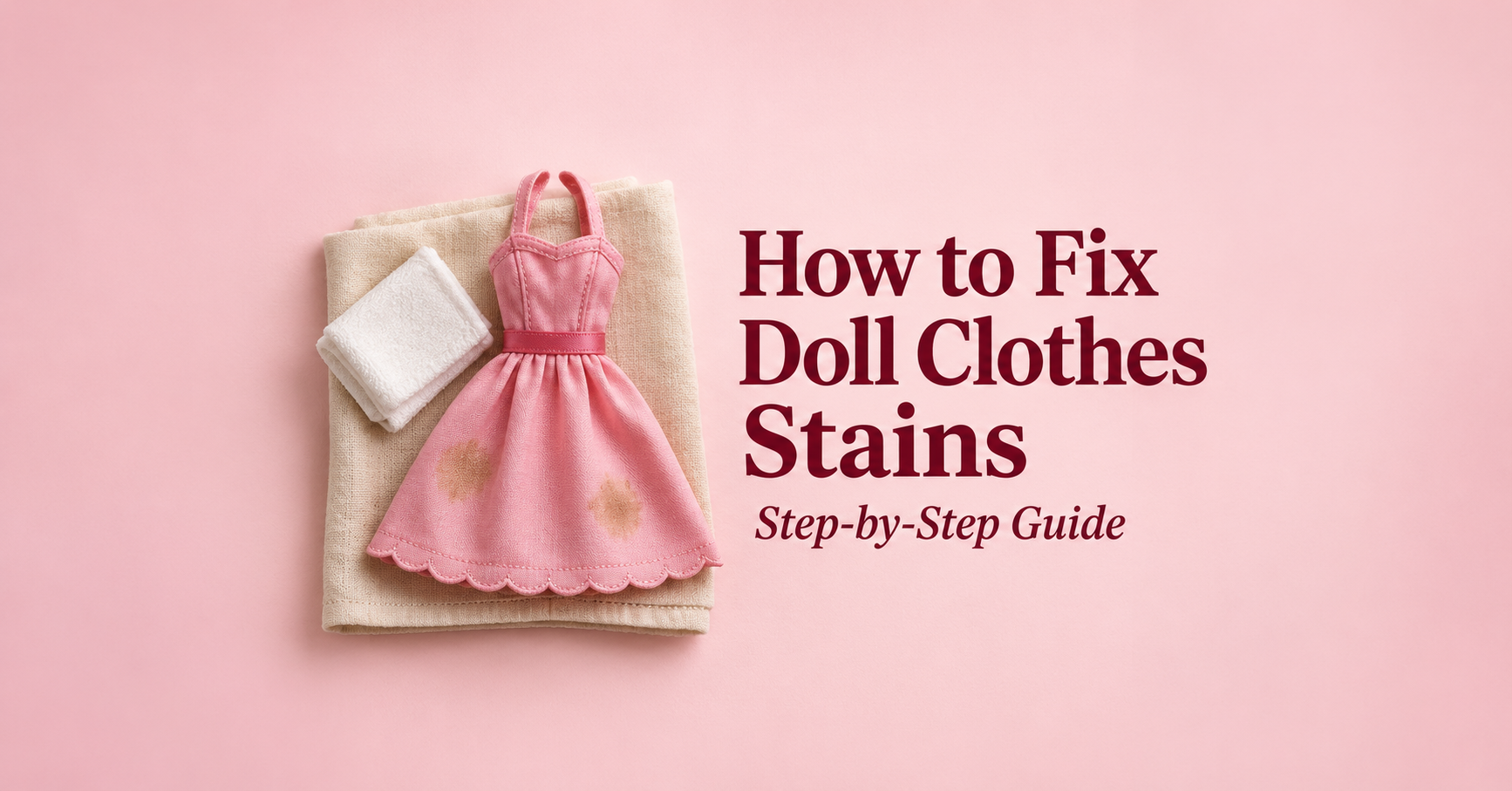
A tiny splash of juice, a smudge of marker, or a streak of playground mud can turn a favorite doll outfit into something nobody wants to dress up. The good news is that most doll clothes stains can be fixed at home with gentle, inexpensive supplies. You do not need harsh chemicals, and you do not need to throw the outfit away.
This guide walks you through exactly how to fix doll clothes stains safely, whether you are caring for a child’s toy dolls, a fashion doll wardrobe, a baby doll’s outfits, or a treasured collector doll. You will learn what to gather, how to test fabrics, how to treat each common stain type, how to wash and dry tiny garments, and how to prevent new stains.
In this guide
- Why doll clothes stain so easily
- What you need before you start
- The golden rules of stain removal
- Step-by-step method for any stain
- How to remove specific stains
- Fabric-by-fabric care guide
- How to wash and dry doll clothes
- Mistakes that make stains permanent
- How to prevent future stains
- Frequently asked questions
Why Doll Clothes Stain So Easily
Doll clothes are small, thin, and often made from delicate or loosely woven fabrics such as satin, tulle, felt, lace, and light cotton. With so little material, a stain quickly takes over a large part of the garment. Many outfits are also dyed with bright colors that can bleed when they get wet, which makes careless cleaning risky.
Dolls also live a busy life. They go to tea parties, picnics, bath time, and the garden. Food, drink, crayon, paint, slime, dirt, and even sticky fingers all end up on their clothes. Understanding what caused the stain is the first step to removing it, because different stains need different treatments.
What You Need Before You Start
Most of the supplies are already in your home. Gather them before you begin so you can treat the stain quickly, because fresh stains come out far more easily than old ones.
- Mild liquid detergent or baby detergent for gentle, everyday cleaning.
- Clear dish soap for grease and oil.
- White vinegar for juice, mildew smell, and water marks.
- Baking soda for odors and lifting dirt.
- Oxygen-based bleach (color-safe) for tough stains on white or colorfast fabric.
- Rubbing alcohol for ink and marker on sturdy fabrics.
- Cornstarch or talcum-free baby powder to absorb fresh grease.
- A soft toothbrush or cotton swabs for working on small areas.
- White cloths or paper towels for blotting.
- Two clean bowls for soaking and rinsing.
- A clean towel for drying.
The Golden Rules of Stain Removal
Before you treat any stain, keep these rules in mind. They protect the fabric and give the stain the best chance of coming out completely.
- Act fast. The sooner you treat a stain, the easier it is to remove.
- Blot, never rub. Rubbing pushes the stain deeper and can damage the tiny fibers.
- Start with the mildest method. Cold water and a drop of detergent solve many stains. Move to stronger options only if needed.
- Use cold water first. Hot water can set protein and dye stains such as milk, blood, and juice.
- Always test first. Try any cleaner on a hidden seam or inside hem before treating the visible stain.
- Do not use a dryer or heat until the stain is gone. Heat locks stains into the fabric permanently.
Step-by-Step Method for Fixing Any Doll Clothes Stain
Use this basic routine as your starting point. It works on most everyday stains, and the stain-specific sections below add extra steps where needed.
Step 1: Check the fabric and test for colorfastness
Look for a care tag. Many doll outfits have none, so identify the material by touch: cotton feels soft and matte, satin feels smooth and shiny, felt is thick and fuzzy, and tulle is light and netted. Dab a little water mixed with detergent on a hidden seam, press it with a white cloth for a few seconds, and check whether any color transfers. If it does, the dye may bleed, so use only cool water and very gentle cleaners.
Step 2: Remove surface residue
Lift off any solid bits such as crumbs, dried mud, or wax with a dull butter knife or an old card. Do not scrub. For wet stains, press a clean white cloth on top to soak up as much liquid as possible.
Step 3: Treat the stain
Apply a few drops of mild detergent mixed with cool water directly to the stain. Tap it gently with a soft toothbrush or cotton swab, working from the outside edge of the stain toward the center so it does not spread. Let it sit for 10 to 15 minutes.
Step 4: Rinse thoroughly
Rinse under cool running water or dip the garment in a clean bowl of cool water, changing the water until it runs clear. Leftover soap can attract dirt and leave a stiff patch on the fabric.
Step 5: Check, repeat, then air dry
While the fabric is still damp, check whether any trace of the stain remains. If it does, repeat the treatment or move on to a stronger option from the sections below. Only dry the garment once the stain is completely gone.
How to Remove Specific Doll Clothes Stains
Food and drink stains (juice, sauce, jam, and milk)
Blot up any excess, then rinse the back of the stain under cold running water so the stain is pushed out rather than deeper in. Mix one teaspoon of mild detergent with one cup of cool water and dab it on. For colored juice or berry stains, add one teaspoon of white vinegar to the solution. Soak for 15 to 30 minutes and rinse. For milk or other dairy, use only cold water, because hot water sets the proteins.
Chocolate stains
Scrape off any hardened chocolate gently. Soak the area in cool water for 10 minutes, then work in a drop of dish soap to break down the fat. Rinse and repeat if a brown shadow remains. A short soak in a diluted oxygen-based cleaner can help on white or colorfast fabrics.
Grease and oil stains (butter, lotion, and cooking oil)
Sprinkle cornstarch or baby powder over a fresh grease stain and let it sit for 30 minutes to absorb the oil. Brush it off, then dab on a drop of clear dish soap, work it in softly with your finger, and rinse in warm water. Dish soap is made to cut grease, so it is usually the most effective option.
Ink, marker, and pen stains
Place a clean white cloth under the stain. Dab rubbing alcohol onto the mark with a cotton swab, switching to a clean part of the swab as it picks up ink. Replace the cloth underneath as it absorbs color so ink does not transfer back. Rinse with cool water and wash gently. Test alcohol on a hidden area first, since it can affect some dyes and delicate synthetics. Washable markers usually come out with soap and cold water alone.
Crayon and wax
Place the garment between paper towels and press with a warm (not hot) iron on a low setting to melt the wax into the paper. Replace the paper until no more wax transfers. Treat any leftover color with dish soap. Skip the iron on synthetic fabrics such as satin or tulle, which can melt, and use a cold, gentle scrape and soap instead.
Mud, dirt, and grass stains
Let mud dry completely, then brush it off with a soft brush. Soak the garment in cool water with a little detergent for 30 minutes. For grass, add a teaspoon of white vinegar to the soak, because grass stains contain plant pigments that respond well to mild acid. Rinse and repeat if needed.
Slime, glue, and play-dough
Let sticky residue dry slightly, then peel or pick off as much as possible. Soak the area in warm water with a few drops of dish soap and work gently with a soft brush. For stubborn slime, dab a little white vinegar and wait 5 minutes before rinsing. Avoid rubbing, which presses sticky material deeper into the weave.
Makeup and lipstick (face paint and lip gloss)
Blot, then apply a drop of dish soap directly to the mark and let it sit for a few minutes. Dab with a damp cloth, rinse, and repeat. Oily makeup responds to the same method as grease stains.
Rust marks and yellowing
Dab a little lemon juice or white vinegar on a rust mark, let it sit for 10 minutes away from direct heat, and rinse well. Yellowing on white doll clothes from age or storage often improves with a soak in cool water with color-safe oxygen bleach for 1 to 3 hours. Check every 30 minutes and stop when the fabric looks brighter.
Mildew and musty smells
Brush off dry mildew outdoors. Soak the item for 30 minutes in a bowl of cool water with two tablespoons of white vinegar, then wash gently. For lingering odor, sprinkle baking soda on the dry garment, leave it overnight in a sealed bag, and shake it out. Let the clothes dry fully in fresh air before storing.
| Stain Type | Best First Treatment | Avoid |
|---|---|---|
| Juice or food | Cold water, mild detergent, a little vinegar | Hot water |
| Milk or dairy | Cold water soak, then gentle detergent | Heat or ironing |
| Grease or oil | Cornstarch, then dish soap | Rubbing hard |
| Ink or marker | Rubbing alcohol on a swab over a white cloth | Water first (it can spread ink) |
| Mud or dirt | Dry, brush off, then cool soak | Rubbing wet mud in |
| Grass | Detergent and diluted vinegar soak | Hot water |
| Wax or crayon | Absorb with paper, then dish soap | Hot iron on synthetics |
| Rust or yellowing | Lemon juice or oxygen bleach (white fabric) | Chlorine bleach |
Fabric-by-Fabric Care Guide
The fabric matters as much as the stain. Using the wrong method on a delicate material can leave you with a ruined outfit and a stain that is still there. Here is how to treat the most common doll clothes materials.
Cotton and cotton blends
Cotton is the easiest to clean. It tolerates gentle soaking, light scrubbing with a soft brush, and mild oxygen bleach if the color is stable. Always rinse well so no soap is left behind.
Satin, silk, and polyester satin
These fabrics snag and water-mark easily. Use cool water and a tiny drop of mild soap, dab instead of scrubbing, and rinse by dipping rather than wringing. Dry flat on a towel. Avoid vinegar on real silk and avoid high heat on all satin.
Felt
Felt can shrink and lose its shape when soaked. Spot clean with a damp cloth and a drop of detergent, blotting gently. Do not submerge the garment, and press it flat between towels to dry.
Lace, tulle, and netting
These fabrics tear and tangle easily. Place the garment in a small mesh bag or hand wash it in a bowl of cool water with a touch of mild soap. Move it gently through the water, do not twist it, and let it air dry on a towel.
Velvet and velveteen
Blot stains with a lightly damp cloth and a drop of mild soap, then lift the pile with a soft brush once dry. Avoid soaking and avoid pressing the fabric flat with heat.
Knitted and crocheted outfits
Wool and acrylic knits stretch when wet. Soak briefly in cool water with gentle soap, press out the water in a towel without wringing, and dry flat in its original shape.
Vintage and collector dolls
Older outfits can have fragile fibers and unstable dyes, and some may be valuable. Stick to spot cleaning with distilled water and a cotton swab, avoid soaking, and consider asking a doll restoration specialist before using any stain remover on a rare piece.
How to Wash and Dry Doll Clothes After Stain Treatment
Once the stain is gone, a full wash freshens the whole outfit and removes any leftover cleaner. For most doll clothes, hand washing is the safest choice.
Hand washing method
- Fill a clean bowl with cool water and add a small amount of mild detergent.
- Submerge the garment and gently squeeze the water through the fabric for about a minute.
- Drain and refill the bowl with clean cool water, then rinse until no suds remain.
- Press the water out between your palms or inside a towel. Do not twist or wring.
Machine washing small outfits
Sturdy cotton outfits can go in the washing machine if you place them inside a zipped mesh laundry bag. Use the delicate cycle, cold water, and a mild detergent. Keep delicate items such as lace, satin, tulle, and glued trim out of the machine.
Drying doll clothes safely
Lay the clothes flat on a clean towel and reshape them while damp. Let them air dry away from direct sun and heaters, which can fade colors and warp fabric. Avoid the dryer, because high heat can shrink, melt, or loosen glue and sequins. Make sure every garment is completely dry before storing it to prevent mildew.
Mistakes That Make Doll Clothes Stains Permanent
- Using hot water first on protein and dye stains, which sets them in the fabric.
- Rubbing or scrubbing hard, which spreads the stain and roughens the surface.
- Skipping the patch test, which risks color bleeding or fabric damage.
- Using chlorine bleach, which can weaken fibers and cause yellow patches.
- Drying before the stain is gone, which bakes it into the fabric.
- Waiting too long, because old stains can bond tightly with fibers.
- Soaking glued, beaded, or sequined outfits, which can loosen decorations.
When a Stain Will Not Come Out
Some stains are very old or have been heat-set. If gentle methods have not worked after two or three tries, do not escalate to harsh products. Instead, consider these options:
- Cover it creatively. Sew or iron on a small patch, ribbon, lace trim, or an embroidered flower.
- Dye the garment. A fabric dye in a slightly darker shade can hide leftover marks on cotton outfits.
- Re-purpose the fabric. Use the clean parts for a doll blanket, a headband, or a scarf.
- Seek professional help. For a valuable collector doll, a restoration specialist can advise on safe options.
How to Prevent Doll Clothes Stains
A little prevention saves a lot of scrubbing. These simple habits keep outfits looking fresh for years.
- Keep food, drinks, markers, and paint away from doll playtime areas, or use washable versions.
- Wash doll clothes before the first play session to remove dye residue and finishing chemicals.
- Spot clean small marks right away, before they have time to set.
- Store clean, completely dry outfits in breathable cotton bags or acid-free tissue.
- Avoid plastic bags for long-term storage, which can trap moisture and cause yellowing.
- Keep stored clothes away from direct sunlight, damp basements, and hot attics.
- Do not store clothes on the doll for long periods, especially red, blue, or black fabrics that can transfer dye onto light vinyl skin.
Frequently Asked Questions
Can I use bleach on doll clothes stains?
Avoid chlorine bleach, as it can weaken tiny fibers and damage colors. For white or colorfast fabric, a diluted oxygen-based bleach is a safer choice. Always test on a hidden area first.
How do I remove old, set-in stains from doll clothes?
Soak the garment in cool water with a little detergent for several hours, then treat the stain with dish soap or a diluted oxygen-based cleaner. Repeat gently over a few days rather than using a harsh product all at once.
Is it safe to put doll clothes in the washing machine?
Sturdy cotton outfits can be machine washed on a delicate, cold cycle inside a mesh bag. Delicate, glued, beaded, or vintage outfits should always be hand washed or spot cleaned.
How do I get ink out of white doll clothes?
Place a white cloth under the stain and dab rubbing alcohol on the ink with a cotton swab, changing the cloth as it absorbs color. Rinse with cool water and wash gently. Test the alcohol on a hidden spot first.
Can I use a dryer for doll clothes?
It is best not to. Heat can shrink fabric, melt synthetics, and loosen glue or sequins. Air drying flat on a towel is the safest way to dry doll clothes.
How do I stop colors from bleeding onto other doll clothes?
Wash bright or dark outfits separately in cool water. If a garment keeps bleeding, soak it in cool water with a splash of white vinegar, rinse until the water runs clear, and always dry it away from light-colored clothing.
What is the best way to clean stains from a vintage doll’s dress?
Use spot cleaning only, with distilled water and a cotton swab, and avoid soaking. For rare or valuable pieces, ask a doll restoration specialist before attempting any stain treatment.
Final Thoughts
Knowing how to fix doll clothes stains means a spilled drink or muddy playdate is no longer a disaster. Act quickly, blot gently, use cool water and mild cleaners first, and match your method to both the stain and the fabric. When you take it slowly and avoid heat until the stain is completely gone, most outfits come back clean, soft, and ready for their next adventure.
With a few simple supplies and the techniques in this guide, you can keep every doll in the collection looking its best, whether the wardrobe belongs to a toddler’s favorite baby doll or a carefully displayed collection.