







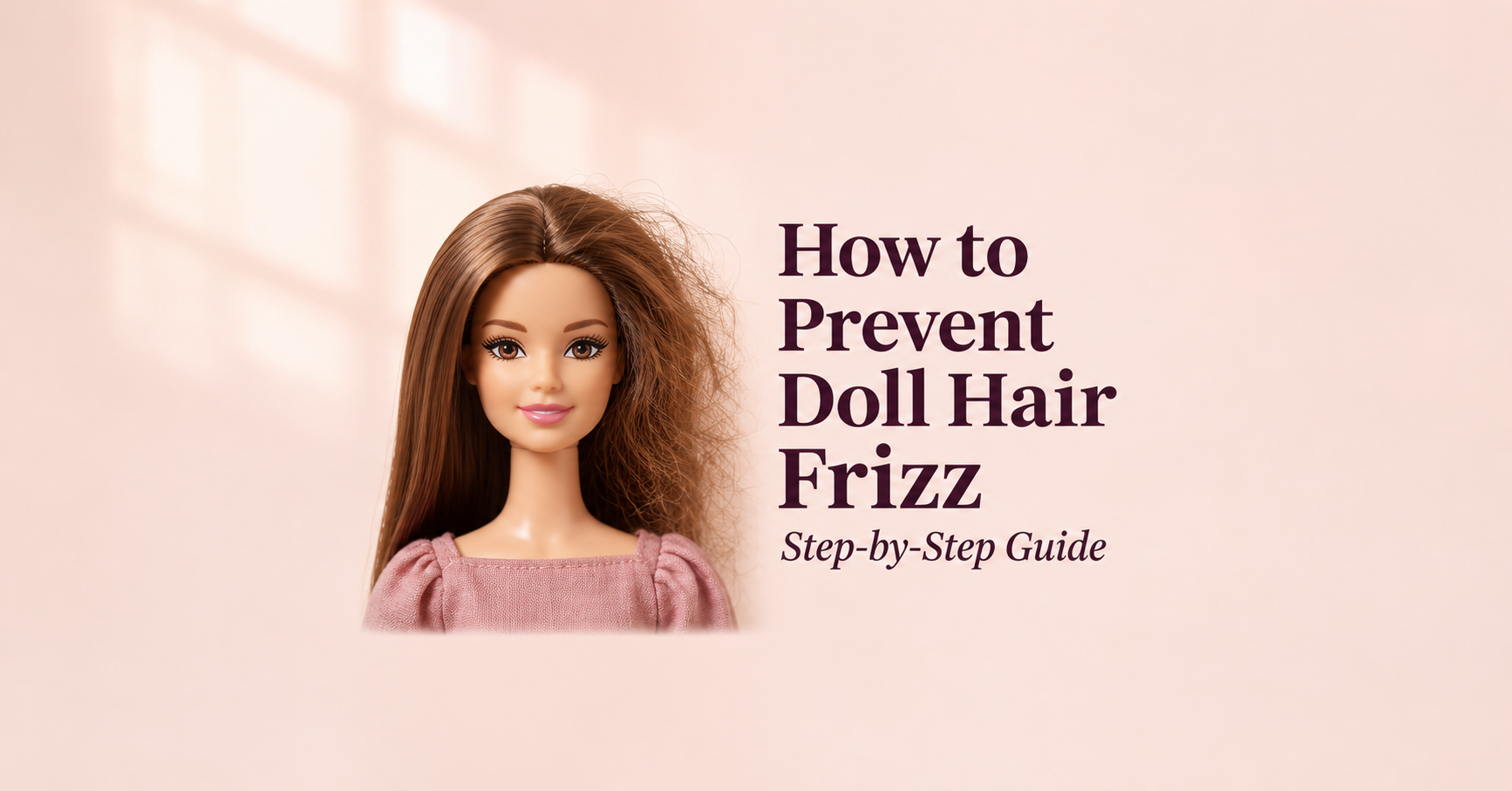
Few things spoil the look of a beautiful doll faster than frizzy, puffy, or tangled hair. A doll that once had smooth, silky locks can end up with a fuzzy halo after a few weeks of play, a humid summer, or a rough brushing session. The good news is that doll hair frizz is far easier to prevent than to repair, and the habits that prevent it are simple, cheap, and quick.
This guide explains why doll hair frizzes, which types of doll hair are most at risk, and exactly how to prevent frizz through brushing, washing, storing, and everyday handling. It works for fashion dolls, play dolls, baby dolls, and collector dolls with synthetic hair.
In this guide
- What causes doll hair frizz
- Know your doll’s hair type
- Supplies that help prevent frizz
- How to brush doll hair without causing frizz
- Washing and conditioning routine
- Storage and display habits
- Play-time habits that protect hair
- What to do if frizz has already started
- Common mistakes to avoid
- Frequently asked questions
What Causes Doll Hair Frizz?
Frizz happens when the individual fibers of the hair lift away from each other instead of lying smoothly together. In doll hair, which is usually made of plastic-based fibers, this is almost always caused by one of a handful of everyday problems.
- Friction. Hair rubbing against clothes, a toy box, a pillow, or other dolls roughens the surface of the fibers and makes them fuzzy.
- Dryness and static. Dry, uncoated fibers build up static electricity and fly away from each other, especially in winter or in air-conditioned rooms.
- Humidity. Moist air can make some fibers swell and curl, which produces a puffy look.
- Rough brushing. Pulling a brush through tangles from the scalp downward snaps and splits fibers.
- Heat. Hot hair tools, direct sun, and hot cars can warp and fray synthetic fibers.
- Product buildup. Too much spray, oil, or leftover soap can make hair sticky, which attracts dust and causes tangles.
- Poor storage. Squashed, bent, or loosely stored hair tangles and frizzes quickly.
Know Your Doll’s Hair Type
Different dolls have different hair, and each type behaves differently. Check which type your doll has before choosing a care routine, because a method that works well for one fiber can ruin another.
| Hair Type | Where You Find It | Frizz Risk | Care Notes |
|---|---|---|---|
| Nylon | Most fashion dolls and play dolls | High | Tangles and frizzes with friction. Responds well to conditioning and gentle brushing. |
| Saran | Some collector and reborn-style dolls | Medium | Smoother and more durable. Sensitive to high heat. |
| Kanekalon and TLC fibers | Doll wigs and some fashion dolls | Medium to high | Soft and silky when cared for. Prone to static. |
| Mohair | Vintage and artist dolls | Medium | Natural fiber. Handle very gently and avoid heat and soaking. |
| Human hair | Rare, high-end dolls and wigs | Medium | Care like real hair, but avoid wetting glued wigs. |
| Rooted vinyl hair | Baby dolls and many play dolls | High | Rooted in the head, so avoid pulling. Detangle gently from the ends. |
Supplies That Help Prevent Doll Hair Frizz
You do not need professional tools. A small, inexpensive kit covers almost every situation.
- A wide-tooth comb or doll wire brush to detangle without snapping fibers.
- A soft-bristle brush for finishing and smoothing.
- Mild shampoo or baby shampoo for occasional washing.
- Fabric softener or hair conditioner to coat fibers and cut static.
- A spray bottle for a light water and softener mist.
- A clean towel for gentle drying.
- A silk or satin scrunchie, ribbon, or hair tie for wrapping long hair during storage.
- Tissue paper or a soft cloth bag to protect hair in storage.
- Silica gel packets to control moisture in a storage box.
How to Brush Doll Hair Without Causing Frizz
Brushing is the single most important habit for frizz prevention, and also the most common cause of frizz when done wrong. The secret is to treat doll hair the way you would treat fragile, fine human hair: slowly, gently, and from the bottom up.
The correct brushing method
- Hold the hair near the roots with one hand so you do not pull on the scalp.
- Start at the very ends. Use a wide-tooth comb or wire brush on a small section at the bottom and work out tangles.
- Move up in small steps. Once the ends are smooth, work a little higher each time until you reach the roots.
- Use short, light strokes. Long, forceful pulls stretch and break fibers.
- Add a light mist if needed. A tiny spritz of water mixed with a little fabric softener helps tangles slide apart.
- Finish with a smoothing stroke. Run a soft brush gently from root to tip to lay the fibers flat.
How often should you brush?
For a display doll, a gentle brush once a week or every other week is enough. For a doll that is played with daily, a quick smoothing at the end of each play session prevents tangles from building up. Over-brushing can cause as much frizz as neglect, so brush only when needed.
A Washing and Conditioning Routine That Prevents Frizz
Clean, softly coated hair is much less likely to frizz. Wash doll hair only when it looks dull, dusty, or sticky, usually every few months for play dolls and rarely for display dolls.
Step-by-step wash
- Gently brush out all tangles before wetting the hair.
- Fill a bowl or sink with lukewarm water and add a few drops of mild shampoo.
- Dip the hair in the water and swish softly. Do not rub or scrub.
- Rinse in clean lukewarm water until no suds remain.
- Press out water with a towel. Never wring or twist the hair.
Conditioning for smoothness
Mix a small amount of fabric softener or hair conditioner into a bowl of lukewarm water, using about one teaspoon per cup of water. Dip the hair, let it sit for 10 to 15 minutes, then rinse lightly. Some collectors leave a trace of softener in for extra smoothness. This coats the fibers, reduces static, and makes brushing easier.
Drying without frizz
Dry the hair by gently pressing it with a towel. Then let the doll air dry in an upright position or lying flat, with the hair combed straight so the fibers set smoothly. Keep it away from heaters, hair dryers, and direct sunlight. Do not brush the hair while it is soaking wet, because wet synthetic fibers stretch and snap easily. Wait until it is damp, then comb gently from the ends.
Storage and Display Habits That Prevent Frizz
How you store a doll affects its hair as much as how you brush it. Most frizz starts when hair is squashed, bent, or rubbed during storage.
- Keep hair away from friction. Do not store dolls piled together in a toy box where hair rubs against rough surfaces or other dolls.
- Wrap long hair loosely. Use a silk or satin scrunchie, soft ribbon, or a small piece of tissue paper around the ends. Avoid rubber bands, which snag and leave kinks.
- Store upright or lying flat. Make sure the hair is not folded or pressed under the doll’s body.
- Control humidity. Keep dolls in a dry room and add silica gel packets to closed storage boxes.
- Avoid sunlight and heat. Direct sun and hot rooms dry out and fade synthetic fibers, which makes them frizz.
- Use breathable covers. A soft cotton bag or an acid-free tissue wrap protects hair without trapping moisture the way plastic does.
- Keep dust off. Display dolls in a case or cover them with a light cloth to prevent dust from collecting in the hair.
Play-Time Habits That Protect Doll Hair
Dolls that are played with are the most likely to develop frizz, but a few small rules from the grown-ups can make a big difference.
- Teach children to brush from the ends of the hair, never from the top.
- Keep a special doll brush in the toy box so the family hairbrush is not used.
- Tie long hair into a loose ponytail or braid before active play.
- Keep dolls away from sticky foods, glue, slime, and sunscreen, which stick to hair and cause matting.
- Avoid hot water, curling irons, and hair dryers. Doll hair is not made to handle styling heat.
- Remove clothing carefully over the head so sleeves and collars do not rub or catch the hair.
- Skip cutting doll hair unless you are experienced, because it cannot grow back.
What to Do If Frizz Has Already Started
If the hair already looks fuzzy, do not panic. Mild frizz often improves with the same steps used for prevention: a gentle detangle, a conditioning soak, and careful drying. Use the conditioning method above and brush gently from the ends.
For stubborn frizz on nylon or saran hair, some collectors use a hot water dip. This works only on certain synthetic fibers and carries some risk, so apply it with care:
- Confirm the hair is a heat-tolerant synthetic and the doll’s head is safe for water. Skip this for mohair, human hair, glued wigs, and anything you are unsure about.
- Comb the hair smooth and straight.
- Dip only the hair into very hot (not boiling) water for a few seconds, keeping the face and body dry.
- Gently comb it straight again while holding it above the water, then let it air dry.
If the hair is badly damaged, matted, or snapped off, conditioning will not bring it back. A wig replacement or a restoration specialist is a better choice for valuable dolls.
Common Mistakes That Make Doll Hair Frizzier
- Brushing from the roots down, which pulls tangles tighter and snaps fibers.
- Using a regular human hairbrush, whose stiff bristles can rip fine doll fibers.
- Brushing dry, very tangled hair without any slip.
- Brushing soaking wet hair, which stretches and breaks it.
- Using heat tools such as a blow dryer or curling iron.
- Over-washing, which strips the coating and dries the fibers.
- Using rubber bands that snag and leave dents.
- Storing dolls in plastic bags or damp spaces that trap moisture.
- Using too much product, which causes sticky buildup and tangles.
Quick Doll Hair Frizz Prevention Checklist
| Habit | How Often |
|---|---|
| Gentle brushing from the ends upward | When tangled, or weekly for display dolls |
| Light conditioning mist | Every few brushing sessions |
| Full wash and conditioning soak | Every few months, or when dull or dusty |
| Check storage for friction and dampness | Monthly |
| Replace silica gel packets | Every few months |
| Wrap long hair in silk or satin before storing | Every time |
Frequently Asked Questions
Why does my doll’s hair get frizzy so quickly?
Most doll hair is made of fine plastic-based fibers that roughen easily with friction, static, humidity, and rough brushing. Without a protective coating from conditioning, they lift apart and look fuzzy.
Can I use fabric softener on doll hair?
Yes. A small amount of fabric softener diluted in water is a popular, gentle way to cut static and smooth synthetic doll hair. Rinse lightly, keep it away from the doll’s body and face, and avoid using it on vintage or natural-fiber hair unless you test a hidden strand first.
What is the best brush for doll hair?
A wide-tooth comb or a doll wire brush is best for detangling, and a soft-bristle brush works well for finishing. Avoid stiff, dense brushes designed for human hair.
How do I stop doll hair from getting static?
Lightly mist the hair with water mixed with a drop of fabric softener, and keep dolls away from very dry air. Storing hair wrapped in silk or satin also reduces static.
Is it safe to use a hair dryer on doll hair?
It is best not to. Heat can warp, melt, or fray synthetic fibers and loosen glue on wigs. Air drying is the safest way to dry doll hair.
How do I keep doll hair smooth when storing the doll?
Brush it smooth, wrap long hair loosely in a silk or satin scrunchie or tissue, keep the doll in a dry, cool place, and make sure the hair is not folded under the body.
Can frizzy doll hair be fully repaired?
Light frizz usually improves a lot with conditioning and gentle brushing. Badly damaged or snapped hair cannot be fully repaired, so prevention is always the best approach. A wig swap or professional restoration may be needed for severe cases.
Final Thoughts
Preventing doll hair frizz does not take special skills or expensive products. The most important habits are brushing gently from the ends upward, conditioning the hair now and then, washing only when needed, avoiding heat, and storing dolls in a dry, friction-free place with long hair wrapped in a soft fabric.
By building these small habits into your doll care routine, you can keep every doll’s hair soft, smooth, and shiny for years, whether it belongs to a well-loved play doll or a prized collector’s piece.