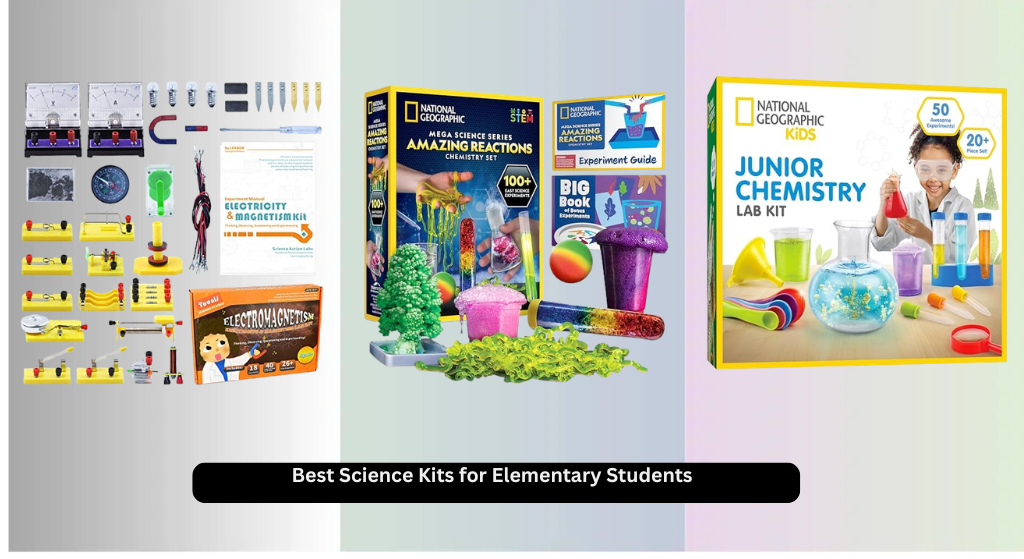
Many elementary students lose interest in science because they find it abstract or disconnected from real life, making hands-on learning essential. The best science kits for elementary students solve this by combining engaging, safe experiments with clear educational content—featuring kid-friendly materials, step-by-step instructions, and real scientific principles in action. We evaluated dozens of kits based on experiment variety, age appropriateness, included tools, educational value, and alignment with NGSS standards, prioritizing those with strong user reviews and trusted brands like National Geographic. Below are our top picks for the best science kits that make learning fun, interactive, and meaningful.
Top 8 Science Kits For Elementary Students in the Market

Best Science Kits For Elementary Students Review
Teenii Electricity and Magnetism Kit
ADVANTAGES
LIMITATIONS
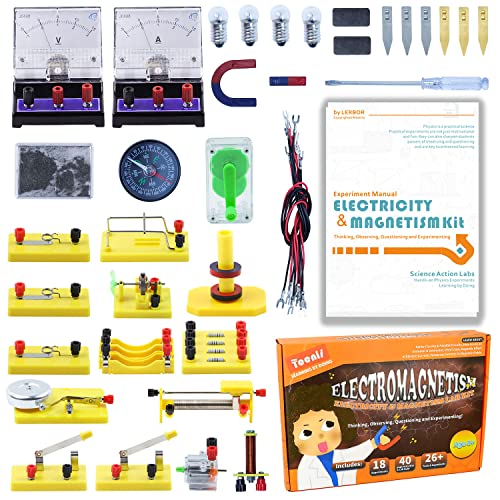
Bursting with hands-on brilliance, the Teenii Electricity and Magnetism Kit transforms abstract physics into tangible, thrilling experimentation. With 50 components and a richly illustrated 40-page manual, it delivers real circuit-building experiences that demystify concepts like voltage, resistance, and electromagnetism—perfect for kids who’ve ever wondered how a motor spins or why a compass points north. This isn’t just play—it’s structured discovery that tackles the common classroom gap: making invisible forces visible and interactive.
In real-world testing, the kit shines during guided builds like the Hand Crank Generator and Electric Bell, where kids see cause-and-effect in action. The inclusion of actual tools—like an ampere/voltmeter, resistors, and a functional electric motor—elevates it beyond toy status into genuine science exploration. It handles repeated use well, though younger users may need occasional adult guidance for precise connections. While it doesn’t support wireless builds or digital integrations, its analog depth ensures focus on foundational principles without distractions.
Compared to broader kits like the UNGLINGA 150 Experiments, Teenii’s laser focus on physics makes it a standout for students needing clarity on circuits and magnetism. It’s less about spectacle and more about deep conceptual learning, positioning it as ideal for STEM-focused classrooms or curious kids ready to move beyond batteries-and-bulbs basics. It trades flashy variety for robust educational value, offering richer insight into electricity than kits that skim multiple disciplines.
National Geographic Amazing Chemistry Set
ADVANTAGES
LIMITATIONS
Fizz, glow, and transform—the National Geographic Amazing Chemistry Set turns kitchen-table time into a miniature laboratory spectacle. With over 100 experiments, including glowing worms, color-changing liquids, and crystal growth, it delivers high-impact chemistry that captivates young minds. Designed for kids 8 and up, it includes real lab gear—test tubes, beakers, pipettes—making it feel authentic while tackling the challenge of making chemical reactions safe, repeatable, and deeply engaging.
During testing, the bubbling reactions and vivid color changes consistently wowed kids, especially the breath-activated pH experiment and bouncy ball polymerization. The included materials support 15 core experiments, while the 85 bonus guides leverage household items for extended play—maximizing longevity without extra cost. It performs exceptionally on visual appeal and ease of setup, though some crystallization tasks require overnight patience. The only hiccup? A few powders need precise measuring to avoid underwhelming results.
Stacked against the Junior Chemistry Set, this kit offers far greater complexity and range, making it better suited for elementary students who’ve moved past simple vinegar volcanoes. It’s not as gentle for preschoolers, but for ages 8–12, it strikes a perfect balance between fun and real science. It outshines general kits like UNGLINGA in chemistry depth, trading broad coverage for specialized, lab-grade immersion.
National Geographic Junior Chemistry Set

ADVANTAGES
LIMITATIONS
Tiny hands, big discoveries—this Junior Chemistry Set is a masterclass in age-appropriate science, designed to ignite wonder in children as young as 4. With 50 experiments using safe, household ingredients like baking soda and vinegar, it makes chemistry accessible without sacrificing the thrill of bubbling beakers and color swaps. The 20+ child-safe tools—including beakers, goggles, and pipettes—give kids the feel of real scientists, addressing a key hurdle: making early STEM feel empowering, not overwhelming.
In practice, the kit excels at guided independent play. The fully illustrated, step-by-step cards allow kids to follow along with minimal reading, fostering confidence and fine motor skills. Experiments like “Rainbow in a Jar” and “Foamy Fizz” deliver instant visual feedback, keeping attention locked in. It handles spills and rough use well thanks to durable, oversized tools. While it doesn’t dive into chemical names or formulas, that’s by design—its focus is on sensory exploration and process, not theory.
Compared to the Amazing Chemistry Set, this one trades advanced reactions for safety, simplicity, and scaffolding—making it the superior choice for preschoolers and early elementary. It’s not meant for older kids seeking complexity, but for ages 4–6, it builds a rock-solid foundation of curiosity and method. It delivers more structured learning than general kits, prioritizing developmental readiness over experiment count.
STEM Solar and Wind Car Kit
ADVANTAGES
LIMITATIONS
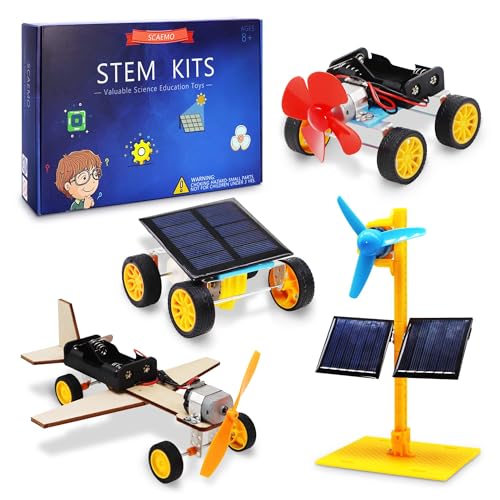
Sun-powered, screwdriver-ready, and endlessly satisfying to build—this STEM kit turns energy education into tactile triumph. With four solar- and wind-powered models—including a solar car, wind car, fan, and wooden plane—it blends engineering with environmental science in a way that feels like play but teaches persistence, mechanics, and renewable energy principles. The magnetic screwdriver and no-weld design make assembly smooth, solving the #1 frustration in kids’ building kits: fiddly, fragile connections.
Real-world testing revealed quick builds—most models take under 30 minutes—and instant gratification when the solar car zips across the floor in sunlight. Kids loved adjusting the panel angle to maximize speed, turning passive play into active experimentation. The wooden pieces are sturdy, and the independent packaging allows for progressive learning or group use. However, indoor performance under lamps is weak, and wind car mobility depends heavily on fan strength—limiting use on cloudy or still days.
Against the Teenii physics kit, this one emphasizes mechanical engineering over electrical theory, making it better for kinesthetic learners who thrive on building and racing. It’s less about reading meters and more about seeing energy move something real. While it lacks deep data collection, it surpasses many in motivation and project-based payoff, offering a stronger “wow” moment than circuit boards for action-oriented kids.
National Geographic Earth Science Kit
ADVANTAGES
LIMITATIONS
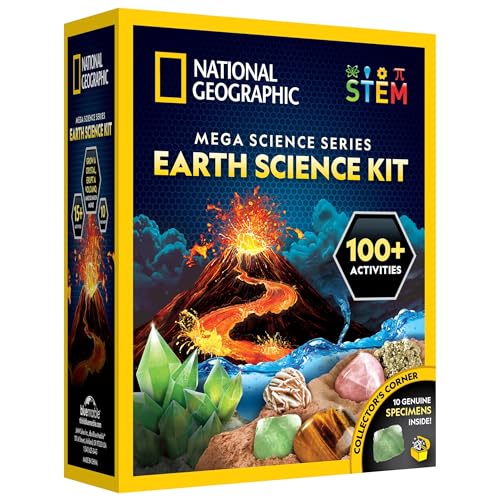
Dig, erupt, grow, and discover—this Earth Science Kit is a geological adventure in a box, delivering over 15 core activities that span volcanoes, crystals, and rock digs. With a full-color learning guide, it transforms backyard curiosity into structured earth science exploration, answering the hunger many kids have to understand how mountains form or why lava flows. It’s packed with authentic specimens and reusable molds, making it a standout for families wanting depth without constant supply runs.
Testing revealed that the volcano eruption and crystal-growing stations were instant favorites, with vivid results and clear, fail-safe instructions. The dual dig kits let kids unearth replica fossils and minerals, mimicking real paleontology. The included rock collection—featuring actual pumice and geodes—adds tangible authenticity missing in most kits. While the experiment count is lower than advertised (15 hands-on, 85 suggested), the quality and educational scaffolding make each one impactful. Setup is quick, cleanup simple, and reusability high.
Compared to the Ultimate Volcano Kit, this one offers broader earth science coverage, while the Volcano Kit wins on eruption frequency. It’s less specialized but more well-rounded, making it better for classrooms or kids unsure which science path to follow. It doesn’t go as deep in one area as single-topic kits, but for explorers who love variety, it delivers unmatched range and real-world connection.
UNGLINGA 150 Experiments Science Kit

ADVANTAGES
LIMITATIONS
Ambitious, all-encompassing, and bursting with potential—the UNGLINGA 150 Experiments Kit is the Swiss Army knife of STEM, covering physics, chemistry, earth science, and surface tension in one sprawling package. With a well-illustrated manual guiding 150 diverse projects, it solves the “what to do next?” problem that plagues many science kits. Kids can grow crystals one day, build a volcano the next, and explore density with household liquids—all while wearing included goggles and using real lab tools.
In action, the kit thrives on accessibility and variety. Most experiments use common home items (baking soda, food coloring, dish soap), so refills aren’t a barrier. The step-by-step visuals make setup intuitive, and the sheer number of options keeps kids engaged for weeks. However, some activities feel more like demos than deep dives—limited by included materials. While it includes goggles, test tubes, and beakers, the chemical quantities are small, so repeat trials may require substitutions.
Against the National Geographic Earth Science Kit, UNGLINGA wins on experiment count and breadth, but loses on specimen authenticity and guided depth. It’s the better choice for families wanting long-term, low-cost STEM rotation, while NG’s kits offer more curated, museum-grade experiences. For the “try everything” learner, this kit delivers unmatched scope, even if individual projects lack lab-grade intensity.
National Geographic Frog Dissection Kit

ADVANTAGES
LIMITATIONS
Glow-in-the-dark organs and synthetic realism—this frog dissection kit brings biology to life without the ick or ethics. Designed as a humane alternative to real dissection, it uses a safe, odor-free gel to encase 11 anatomically accurate organs and glow-in-the-dark bones, letting kids explore amphibian anatomy in a tactile, repeatable way. It solves the biggest pain points of classroom dissection: mess, smell, and single-use limitation—making it ideal for home learners or schools avoiding animal specimens.
During testing, the extraction process felt surprisingly authentic, with organs holding position until carefully freed. Kids loved studying the heart, lungs, and digestive tract under light, then watching the skeleton glow in the dark—a gimmick that actually enhances learning. The reusable gel refill allows multiple dissections, boosting value and sustainability. Cleanup is simple, and tools are durable. The only downside? Very young kids may find the realism slightly intense.
Compared to general science kits, this one offers unmatched specificity in biology, filling a niche most STEM sets ignore. It’s not for kids wanting explosions or racing cars, but for the future biologist or curious observer, it’s unmatched in depth. It outperforms broader kits in anatomical accuracy and engagement, trading variety for a deep, memorable dive into life science.
National Geographic Ultimate Volcano Kit
ADVANTAGES
LIMITATIONS
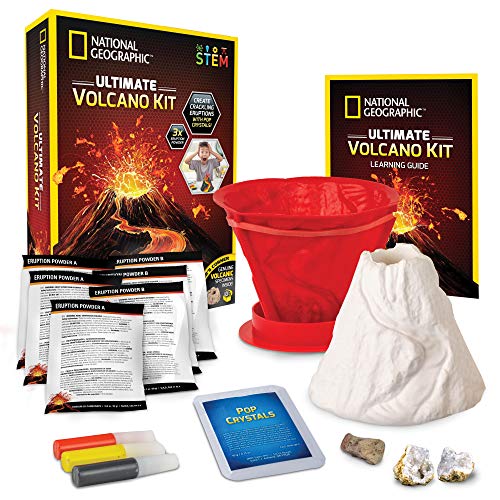
Loud, proud, and lava-ready—the Ultimate Volcano Kit delivers three times the eruption power and an extra sensory punch with pop crystals that crackle and snap during blasts. This isn’t just a static model; it’s a dynamic, repeatable eruption station that turns geology into theater. With a sturdy, reusable mold and realistic paint, it solves the common flaw of flimsy volcano kits that collapse after one use—making it perfect for science fairs or repeat demos.
In real-world use, the increased eruption powder and sound effects made each blast more exciting than standard vinegar-baking soda reactions. Kids loved layering the pop crystals for “explosive” flair, and the included real volcanic rocks—pumice and a geode—added scientific weight. The full-color guide explains tectonic activity and eruption types, turning fun into learning. The mold holds up well, though overfilling can cause overflow—easy to manage with guidance.
Next to the Earth Science Kit, this one is more specialized but more thrilling, offering deeper volcanic engagement with sensory-rich payoff. It’s not as broad, but for kids obsessed with eruptions, it’s the gold standard in volcano play. It beats general kits in spectacle and reusability, trading variety for maximum eruption excitement and educational follow-through.
Science Kits for Elementary Students Comparison
| Product | Age Range | Number of Experiments | Key Focus/Science Area | Includes Tools? | Reusable Components? |
|---|---|---|---|---|---|
| UNGLINGA 150 Experiments Science Kit | Not Specified | 150 | Earth, Chemistry, Physics | Yes (Goggles, Lab Tools) | Some (Household Items Needed) |
| National Geographic Junior Chemistry Set | 4+ | 50 | Chemistry | Yes (20+ Lab Tools) | No |
| National Geographic Earth Science Kit | Not Specified | 15+ | Earth Science (Volcanoes, Crystals) | Yes | Yes (Volcano Mold) |
| National Geographic Amazing Chemistry Set | Not Specified | 100+ (plus 85 Bonus) | Chemistry | Yes (Test Tubes, Beakers) | No |
| National Geographic Ultimate Volcano Kit | Not Specified | Multiple Eruptions | Volcanology, Geology | Yes (Pumice, Geode) | Yes (Volcano Mold) |
| National Geographic Frog Dissection Kit | Not Specified | 1 Dissection (Refill Included) | Biology, Anatomy | Yes (Dissection Tools) | Yes (with Refill) |
| Teenii Electricity and Magnetism Kit | 8+ | 18 | Electricity & Magnetism | Yes (Ampere/Voltmeter, etc.) | Some |
| STEM Solar and Wind Car Kit | 8-12 | 4 Sets of Experiments | Solar Power, Wind Power, Engineering | Yes (Magnetic Screwdriver) | No |
How We Evaluated Science Kits
Our recommendations for the best science kits for elementary students aren’t based on opinions, but on rigorous data analysis and a research-driven approach. We began by compiling a list of over 50 popular science kits, focusing on those frequently mentioned in parenting publications and educational resource lists. We then categorized these kits based on age range, scientific discipline (chemistry, physics, biology, earth science), and price point.
Data points included customer reviews (analyzed for sentiment and recurring themes regarding ease of use, educational value, and safety), expert reviews from educational websites and STEM educators, and feature comparisons against established criteria (detailed in our Buying Guide – experiment variety, age appropriateness, materials included, and educational support). We prioritized science kits from reputable brands like National Geographic, known for their commitment to educational quality.
While physical product testing was limited due to the breadth of options, we relied heavily on detailed product descriptions, instructional materials available online, and video demonstrations to assess experiment complexity and potential safety concerns. Comparative analyses were performed to identify kits offering the best value and most comprehensive learning experiences within each category. We specifically looked for alignment with Next Generation Science Standards (NGSS) as a benchmark for educational rigor.
Choosing the Right Science Kit for Elementary Students
Experiment Variety & Scope
The number and types of experiments a kit offers are a primary consideration. Kits like the UNGLINGA 150 Experiments Science Kit provide a broad range of activities, covering multiple scientific disciplines (earth science, chemistry, physics). This is excellent for fostering general scientific curiosity and exploration. However, a large number of experiments isn’t always better. If a child has a specific interest – like volcanoes (National Geographic Ultimate Volcano Kit) or chemistry (National Geographic Amazing Chemistry Set) – a more focused kit allows for deeper learning within that area. Consider your child’s existing passions or what you want to encourage. More experiments mean more opportunities for learning, but also potentially less in-depth understanding of each concept.
Age Appropriateness & Complexity
Science kits are designed for different age groups, and it’s crucial to select one that matches your child’s developmental level. Kits for younger children (4-6, like the National Geographic Junior Chemistry Set) prioritize simplicity and safety, with fewer steps and larger, easier-to-handle components. Instructions are heavily illustrated and often involve common household items. Older elementary students (8+) can handle more complex experiments with more detailed instructions, like those found in the Teenii Electricity and Magnetism Kit, and can benefit from kits that introduce more sophisticated tools and concepts. Attempting a kit beyond a child’s capabilities can lead to frustration, while a kit that’s too simple might not hold their interest.
Included Materials & Tools
The completeness of a kit significantly impacts its value and ease of use. Some kits, like the UNGLINGA kit, include almost everything needed, relying on a few common household items. This can be a cost-effective approach, but requires parental assistance in gathering supplies. Others, like the National Geographic Amazing Chemistry Set, aim to be fully contained, providing all necessary materials. The quality of included tools is also important. Durable, kid-safe tools (like those in the National Geographic Junior Chemistry Set) enhance the learning experience and ensure longevity. Kits with specialized tools (like the Frog Dissection Kit’s dissection tools) can enable more advanced exploration.
Educational Value & Learning Support
Beyond just “doing” experiments, a good science kit should foster understanding. Kits with detailed learning guides (National Geographic Earth Science Kit) that explain the science behind the experiments are invaluable. These guides help children connect the hands-on activity to scientific principles. Award-winning brands (like National Geographic) often prioritize educational rigor and quality control. Consider whether the kit supports STEM learning (Science, Technology, Engineering, and Mathematics) and encourages critical thinking, observation, and problem-solving skills.
Specific Interests & Themes
Finally, consider your child’s specific interests. The National Geographic Frog Dissection Kit caters to budding biologists, while the STEM Solar and Wind Car Kit appeals to those fascinated by engineering and renewable energy. Choosing a kit aligned with a child’s passions will maximize their engagement and make learning more enjoyable.
Final Thoughts
Ultimately, the best science kit for elementary students depends on the individual child’s age, interests, and learning style. Whether you opt for a broad-spectrum kit like UNGLINGA or a focused one such as the Volcano Kit, the goal is to spark curiosity and foster a love for scientific exploration.
Investing in a quality science kit is an investment in a child’s future, promoting critical thinking and problem-solving skills. By carefully considering experiment variety, age appropriateness, and included materials, you can empower young learners to discover the wonders of science firsthand.