



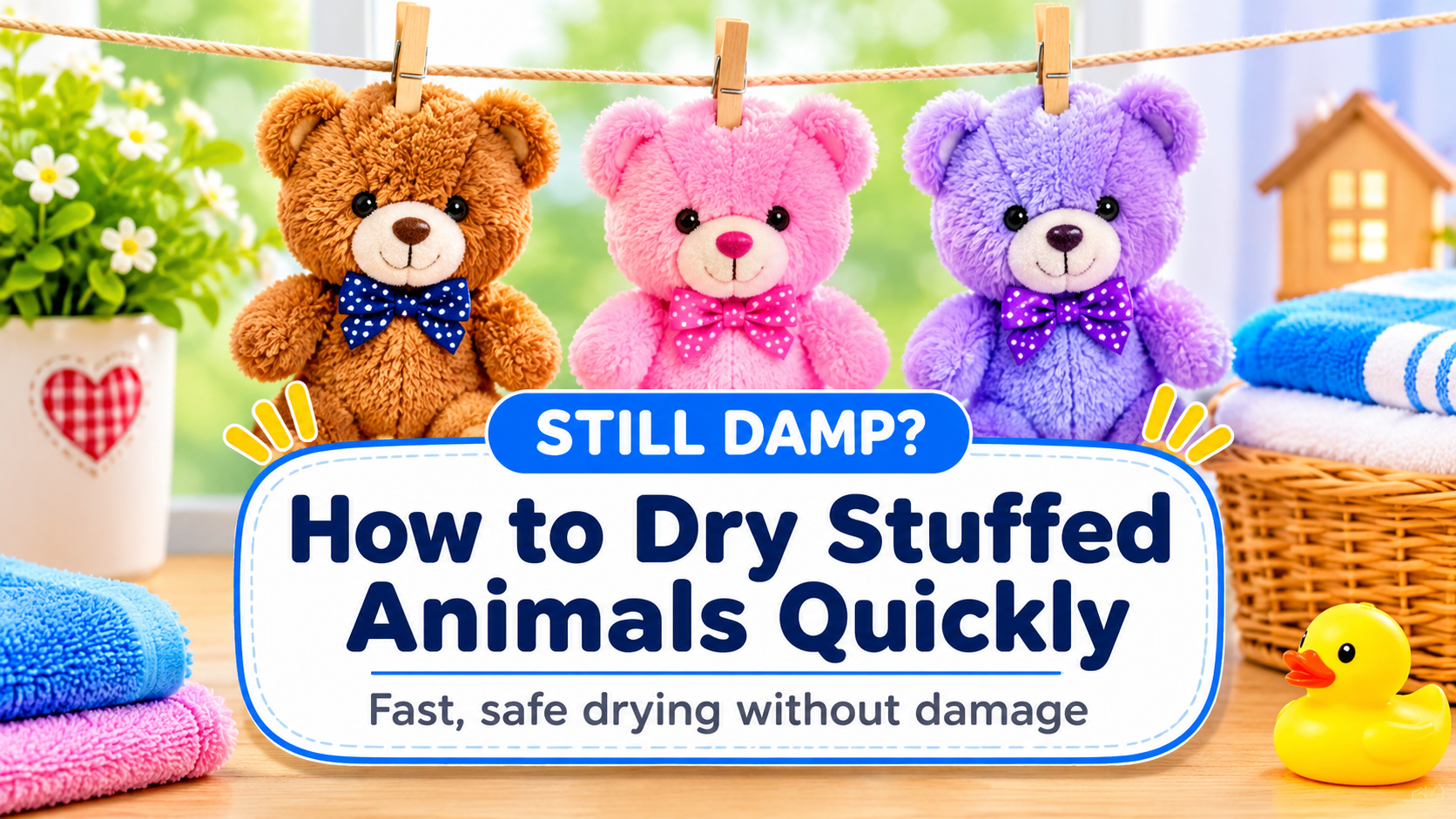
How to Dry Stuffed Animals Quickly: Fast and Safe Methods
Washing a stuffed animal is easy. Waiting for it to dry is the hard part. Thick stuffing holds water for a long time, and a toy that stays damp inside can quickly develop a musty smell or even mold. If your child is waiting for a favorite bedtime friend to come back, you need a method that is fast and also safe for the toy.
In this complete guide, you will learn why stuffed animals take so long to dry, the best ways to speed up drying without damaging the toy, how to use a dryer safely, how to check that a toy is completely dry, and what to avoid.
Why Do Stuffed Animals Take So Long to Dry?
The fabric on the outside dries fast, but the stuffing inside is a different story. Understanding the reasons helps you pick the right drying method.

1. Thick, Dense Stuffing
Polyester fill and similar stuffing soak up water and release it slowly from the center. Large toys take the longest.
2. Too Much Water Left In
A toy that is dripping wet after washing can take more than a day to dry. Removing as much water as possible in the first few minutes makes the biggest difference.
3. Poor Airflow
Still air traps moisture around the toy. Moving air carries moisture away much faster.
4. Cool, Damp Rooms
Humid or cold spaces slow down evaporation, so drying in a bathroom or a damp basement is not a good idea.
Before You Start Drying
- Check the care label. It tells you whether the toy can go in a dryer.
- Check for electronics. Toys with music boxes or batteries should never be heated.
- Look for glued parts. Glued eyes, noses and trims can loosen with heat.
- Reshape the toy. Gently pat it into shape before drying so it does not dry flat or lumpy.
How to Dry Stuffed Animals Quickly: Step-by-Step

Step 1: Press Out Extra Water
Lay the toy on a thick, clean towel, roll it up, and press or stand on the rolled towel to squeeze out water. Never twist or wring the toy, because this can break stitches and lump the stuffing. If the toy was washed in a machine, run an extra spin cycle if the care label allows it.
Step 2: Swap in a Dry Towel
Repeat the towel press with a fresh dry towel. Keep going until the towel no longer soaks up water. This step alone can cut drying time dramatically.
Step 3: Add Airflow
Place the toy in a well-ventilated room near a fan, an open window or a dehumidifier. Moving air is the safest way to speed up drying for any toy.
Step 4: Use Cool Air From a Hair Dryer
Set a hair dryer on the cool or low-heat setting, hold it several inches from the toy, and keep it moving. Focus on thick areas like the body, arms and legs. Never hold it still in one spot.
Step 5: Turn, Reshape and Fluff
Every 30 to 60 minutes, flip the toy, squeeze and reshape the stuffing and fluff the fur with your fingers or a soft brush. This lets air reach all sides and breaks up damp clumps.
Quick Drying Methods Compared

| Method | Speed | Safety for Toy | Best For |
|---|---|---|---|
| Towel pressing | Fast first step | Very safe | Every toy, always first |
| Fan or open air | Moderate | Very safe | All toys, including delicate ones |
| Cool hair dryer | Fast | Safe if kept moving | Small and medium toys |
| Low-heat dryer | Fastest | Only if the label allows | Machine washable toys |
| Air drying outdoors in shade | Moderate | Safe | Large toys on breezy days |
How to Dry a Stuffed Animal in the Dryer Safely
If the care label says the toy can be tumble dried, a dryer is the fastest option. Follow these steps to protect the toy:
- Press out as much water as possible with towels first.
- Place the toy in a pillowcase or mesh bag and close it.
- Add a couple of dry towels to absorb moisture and cushion the toy.
- Use the lowest heat or an air-only setting.
- Run short cycles of about 10 to 15 minutes and check the toy between cycles.
- Finish with air drying until the center feels completely dry.
Important: Never use high heat. It can melt glue, damage plastic eyes and noses, and flatten or melt fur.
Other Ways to Speed Up Drying
Use a Dehumidifier
A dehumidifier pulls moisture from the air in a room, which helps toys dry faster, especially in humid weather.
Dry Outdoors in the Shade
On a dry, breezy day, hang or lay the toy outside in the shade. Wind helps moisture evaporate. Avoid long direct sun, which can fade colors.
Use a Drying Rack for Airflow
Placing the toy on a mesh drying rack lets air reach the underside. Standing small toys up with their heads upward also helps water drain out of the body.
Open a Seam for Very Thick Toys
For large toys that stay damp inside, some people carefully open a small seam, take out part of the stuffing to dry it separately, and sew the seam back up. Only try this if you are comfortable sewing.
How to Tell If a Stuffed Animal Is Completely Dry
- Squeeze the thickest part of the toy. It should not feel cool or damp.
- Press it against your cheek or wrist to feel for hidden dampness.
- Smell the toy. A musty smell means moisture is still inside.
- Check that the toy feels light and fluffy, not heavy.
- Press a clean white paper towel against the toy. It should stay dry.
If you are not sure, give the toy more time. It is always better to dry a little longer than to store a damp toy.
Things You Should Never Do

- Do not use a microwave or an oven. This is a fire and melting risk, and it can damage the toy and any electronics inside.
- Do not place toys on radiators or heaters. Direct heat can warp and melt materials.
- Do not use high heat in a dryer. It can ruin fur and melt glue.
- Do not wring the toy. This breaks stitches and lumps stuffing.
- Do not seal a damp toy in a bag or container. Trapped moisture causes odors and mold.
- Do not give the toy back while it is damp. Damp toys can grow mold quickly, especially in bed.
What If the Toy Still Smells Musty?
A musty smell after drying usually means moisture is still inside the stuffing. Dry the toy longer with airflow, then place it in a bag with a few tablespoons of baking soda for several hours to absorb odor. Shake and brush off the powder. If the smell remains or you see mold, it is safest to throw the toy away.
How to Fluff the Toy After Drying
- Brush the fur gently with a soft brush or wide-tooth comb.
- Use a cool hair dryer while brushing to lift flattened fur.
- Massage the toy to break up any lumps in the stuffing.
- Check eyes, noses and seams before returning it to a child.
Safety Tips
- Never leave a dryer or hair dryer running unattended.
- Keep electrical items away from water and wet toys.
- Remove batteries or electronic parts when possible before washing and drying.
- Keep toys away from children until they are fully dry.
- Discard toys with mold or exposed stuffing.
Frequently Asked Questions
How long does it take for stuffed animals to dry?
It depends on size, stuffing and airflow. Small toys may dry in several hours, while large or thick toys can take a day or more. Pressing out water and adding airflow shortens the time.
Can you put stuffed animals in the dryer?
Only if the care label allows it. Use low heat or an air-only setting, place the toy in a pillowcase, and check it every 10 to 15 minutes.
Can I use a hair dryer to dry a stuffed animal?
Yes, on a cool or low-heat setting. Keep it moving and hold it a few inches away from the toy.
Is it safe to dry a stuffed animal in the sun?
A short time in the shade or in indirect sun is fine. Long direct sun can fade colors, so shade is better.
What happens if a stuffed animal does not dry completely?
Damp stuffing can develop a musty smell and mold. Always make sure the center is completely dry before storing the toy.
How do I dry a stuffed animal with a music box?
Spot clean instead of soaking. If the toy does get wet, remove the electronics if possible and air dry with a fan, and avoid heat.
Final Thoughts
You can dry stuffed animals quickly without damaging them. Remove as much water as possible with towels, add airflow with a fan, use cool air from a hair dryer, and use a dryer only when the label allows it. Check the center carefully before returning the toy, and your favorite plush friend will be soft, fresh and ready for cuddles again.