






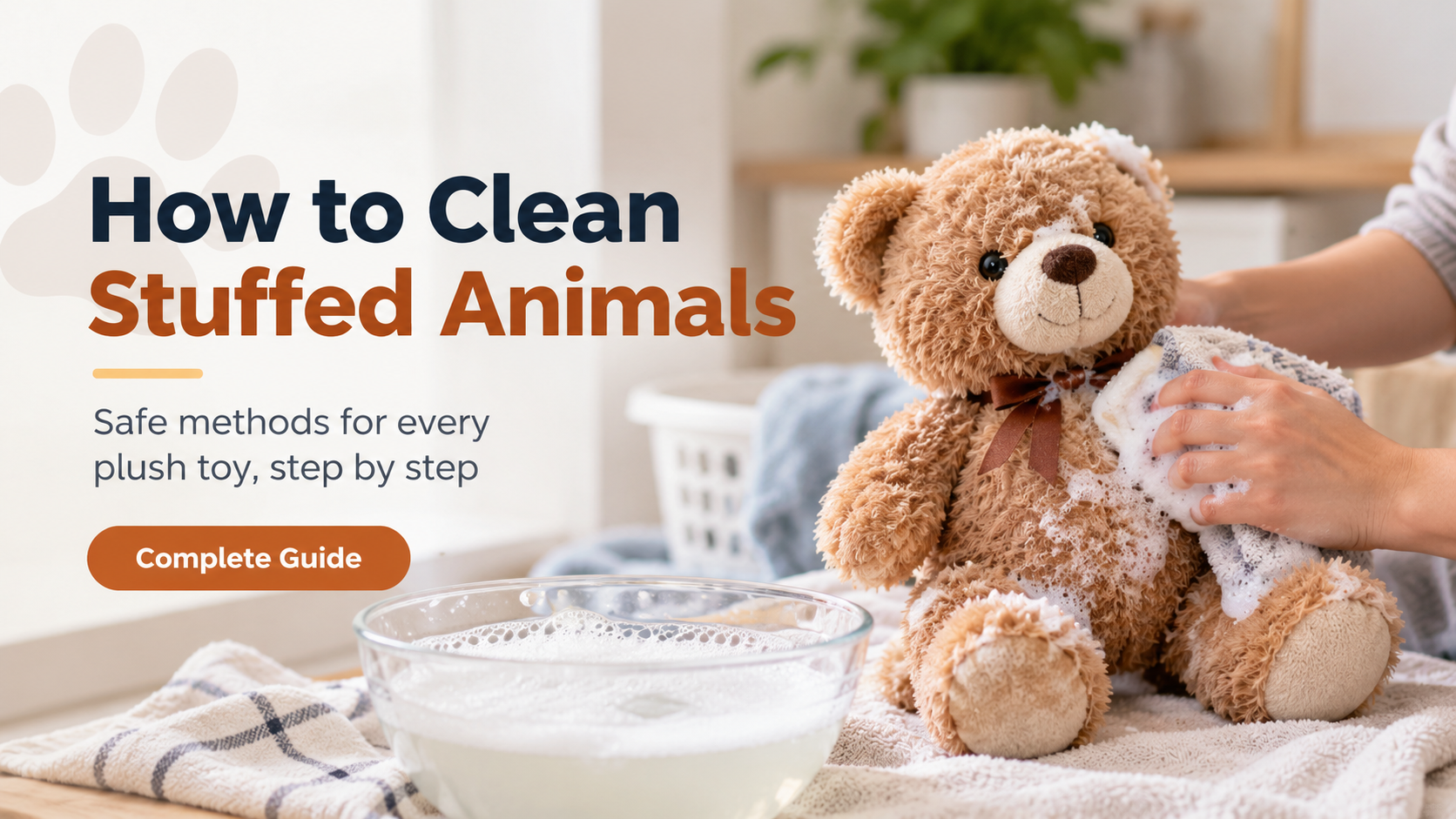

That well-loved teddy bear has been dragged through the park, dropped under the couch, drooled on and hugged through every cold and tummy bug. It is also probably due for a wash. The challenge is that no two stuffed animals are quite alike, and the wrong method can leave you with a lumpy, faded or ruined favorite.
This guide shows you exactly how to clean stuffed animals safely, whether yours is a modern machine-washable plush, a delicate vintage bear or a toy with a music box inside. You will learn how to read the care tag, which method suits which toy, how to dry a plush properly, and how to fix odors, stains, dust mites and even mildew.
Quick answer: how to clean stuffed animals
- Check the care tag first. It tells you if the toy can be machine washed, hand washed or only surface cleaned.
- For machine-washable toys, use a mesh bag, the gentle cycle, cold or lukewarm water and a small amount of mild detergent.
- For delicate toys or toys with electronics, hand wash or spot clean with a barely damp cloth and mild soap.
- Air dry fully, or tumble on no heat or low heat. A toy that stays damp inside can grow mildew.
- Never use bleach, and never submerge a toy with batteries or a music box.
Why You Should Clean Stuffed Animals Regularly
Stuffed animals pick up everything their owners do. They collect dust, skin flakes, food, saliva, sweat and outdoor dirt, and the soft fabric makes a comfortable home for dust mites. For most children this is harmless, but for kids and adults with allergies or asthma, a never-washed plush can contribute to sneezing, itchy eyes and stuffy noses.
Toys that go in a child’s mouth or share a bed also pick up germs, particularly after an illness. Regular cleaning keeps toys fresh, safer to hug and longer lasting, because built-up dirt wears down fibers over time.
How often should you clean them?
| Situation | Suggested frequency |
|---|---|
| Daily-use comfort toy or bed companion | Every 1 to 2 weeks |
| Toy used often but not slept with | Every 1 to 3 months |
| Display or occasional-use plush | Every 6 months, or when dusty |
| After illness, vomiting or a spill | As soon as possible |
| For people with allergies or asthma | Every 1 to 2 weeks for toys in the bedroom |
Before You Start: 6 Quick Checks
A little preparation prevents nearly every stuffed-animal laundry disaster. Run through these checks before any water touches the toy.

1. Read the care tag
The tag is your best guide. It may say machine washable, hand wash only, surface wash only, or spot clean. If the tag is missing or unreadable, treat the toy as delicate and use the gentlest method, surface cleaning or hand washing.
2. Check for electronics
Music boxes, voice recorders, light-up eyes and battery packs are damaged by water. If the battery pack or sound unit is removable, take it out. If it is sewn in, clean the toy by surface cleaning only.
3. Inspect the seams, eyes and ears
Washing puts stress on stitching. Mend loose seams and tighten loose eyes or noses first, so stuffing or small parts do not come out. A toy with damaged seams is also a safety concern for young children.
4. Test for color bleed
Dab a hidden spot with a damp white cloth. If color transfers, wash the toy on its own and use cold water, or stick with surface cleaning.
5. Know the stuffing
Polyester fiberfill handles water well. Foam pieces, polystyrene beads, straw, sawdust, wool and weighted pellets need extra care, and some should not be soaked at all.
6. Gather your supplies
You will need a mild, fragrance-free detergent, a mesh laundry bag or pillowcase, a soft-bristle brush, clean towels, a soft cloth and baking soda. A handheld vacuum is useful for dust.
Machine Washable or Surface Clean Only?
The most important decision is which group your toy belongs to. If you are unsure, choose the gentler method. You can always wash more later, but you cannot undo damage.

| Type of toy | Recommended method |
|---|---|
| Modern polyester plush with a machine-wash tag | Machine wash in a mesh bag on a gentle cycle |
| Plush with a music box or battery pack | Surface clean only |
| Vintage, antique or collector toys | Surface clean, or consult a professional |
| Bean-filled or bead-filled toys | Hand wash gently or surface clean; avoid long soaking |
| Toys with glued eyes or decorations | Hand wash or surface clean |
| Large or oversized plush | Surface clean, vacuum and baking soda; use a large commercial washer only if the tag allows |
| Weighted or heat-pack plush | Follow the manufacturer’s instructions exactly |
5 Ways to Clean a Stuffed Animal

Method 1: How to Machine Wash a Stuffed Animal
This is the quickest way to clean a sturdy, tag-approved plush. Done correctly it is also safe for the toy.

- Prepare the toy. Remove clothes, ribbons and detachable accessories. Mend loose seams. Tie long ribbons or loose threads so they do not snag.
- Pre-treat stains. Mix a drop of mild detergent with water and dab it onto stains with a soft cloth. Do not scrub hard, which can fray the fur.
- Protect the toy. Place it in a mesh laundry bag or a pillowcase knotted shut. This protects eyes, noses and fur from rubbing on the drum.
- Choose the cycle. Select the gentle or delicate cycle with cold or lukewarm water, unless the tag says otherwise. Use a small amount of mild, fragrance-free detergent. Add a couple of towels to balance the load and cushion the toy.
- Skip the extras. Do not use bleach. Fabric softener can leave residue that irritates sensitive skin and coats the fibers, so it is best avoided, especially for babies and toddlers.
- Run an extra rinse if possible, so no detergent remains in the stuffing.
Washing for dust mites
Washing in hot water, about 130°F (54°C), kills dust mites, but most plush toys cannot handle that heat. If your toy’s tag allows only cool water, you can wash it as directed and then dry it fully. Freezing a toy in a sealed bag for 24 hours also kills mites, but it does not remove the allergens they leave behind, so wash or vacuum afterward.
Method 2: How to Hand Wash a Stuffed Animal
Hand washing is gentler than a machine and suits older toys, toys with glued parts, and any toy without a tag.
- Fill a basin or sink with cool or lukewarm water and add a small amount of mild detergent. Swirl to mix.
- Submerge the toy and gently squeeze the water through it. Work on stains with a soft cloth or a soft toothbrush.
- Soak briefly, for about 10 minutes at most. Long soaking can loosen glue and leave stuffing waterlogged.
- Drain and rinse in clean water, squeezing until the water runs clear and the suds are gone.
- Press out water by pressing the toy between clean towels. Never wring or twist, which can distort the shape and tear seams.
Method 3: How to Surface Clean a Stuffed Animal
Surface cleaning is the safest approach for toys with electronics, unknown stuffing, antique toys and extra-large plush.
- Vacuum or brush off loose dust using a soft brush attachment on low suction.
- Mix a gentle solution of lukewarm water with a few drops of mild detergent and work it into foam.
- Dip a cloth or soft toothbrush into the foam only, not the water, so the toy stays barely damp.
- Wipe the fur in small circles. Keep any electronics, tags and glued areas as dry as possible.
- Wipe again with a cloth dampened in plain water to remove soap residue.
- Blot with a dry towel and let the toy air dry completely.
Method 4: How to Dry Clean With Baking Soda
Baking soda absorbs odors and lifts light dust without wetting the toy, which makes it ideal for fragile or sentimental plush.
- Place the toy in a large zip-top bag or pillowcase.
- Add a few tablespoons of baking soda, enough to dust the whole toy, and seal the bag.
- Shake gently so the powder reaches all surfaces.
- Leave it for several hours or overnight.
- Take the toy outside or over a sink and brush off the powder, then go over it with a vacuum brush attachment to remove every trace.
Method 5: Professional Cleaning
For heirloom, antique or highly valuable toys, a professional restorer or a cleaner experienced with plush is the safest choice. Ask whether they have worked with stuffed toys before and what method they will use. Be aware that standard dry cleaning is not suitable for most plush, as the chemicals and heat may damage fur and glue.
How to Dry a Stuffed Animal Properly
Drying is where many cleaning attempts go wrong. Damp stuffing that stays wet for days develops a musty smell and can grow mold, so the toy must be dried all the way through.
- Air drying (safest). Lay the toy on a clean, dry towel in a well-ventilated spot, and turn it every few hours. Placing it near, but not on, a fan speeds things up.
- Tumble drying. If the tag allows, use the no-heat or low-heat setting, in a mesh bag or pillowcase. Add a clean dry towel or a couple of clean tennis balls to help fluff the stuffing. High heat can melt glue, warp plastic eyes and damage synthetic fur.
- Hair dryer. Use the cool setting on the fur while brushing gently, to speed up drying and restore fluffiness.
- Sunlight. A bit of fresh air and indirect sunlight helps freshen a toy, but long periods in strong sun can fade colors and weaken fibers.
Squeeze the thickest part of the toy. If it feels cool or damp inside, keep drying. Large toys can take 24 to 48 hours to dry completely.
Restoring fluffiness
Once dry, brush the fur gently with a soft brush or wide-tooth comb. Fluff the stuffing by squeezing and reshaping the toy with your hands, and trim any stray loose threads with small scissors.
How to Fix Common Stuffed Animal Problems

Odors
The baking soda method above removes most smells. For persistent odors, let the toy air out in fresh air for a day after cleaning. Avoid heavy perfumes or sprays, which can irritate skin and mask rather than solve the problem.
Sticky spots and food stains
Dab with a soft cloth and mild soapy water, working from the outside of the stain inward so it does not spread. Rinse with a clean damp cloth and blot dry.
Grease or oil
Sprinkle cornstarch or baking soda over the stain, wait about 30 minutes to absorb the oil, then brush it away. Repeat if needed before washing.
Vomit, urine and other bodily fluids
Act quickly. Remove any solids, rinse the area with cold water and wash the toy according to its tag. An enzyme-based cleaner designed for fabrics helps break down protein stains and odors. After illness, washing at the warmest temperature the tag allows helps reduce germs.
Mold and mildew
Light mildew spots may be wiped with a cloth dampened with a diluted white vinegar solution, then dried completely in fresh air. If a toy is heavily moldy, has a strong musty smell or has mold inside the stuffing, it is safest to throw it away, especially if the owner has allergies, asthma or a weak immune system.
Matted fur
Once the toy is fully dry, gently brush the fur with a soft brush or wide-tooth comb. Hold the fur near the base to avoid pulling it out.
Cleaning Special Types of Stuffed Animals
Stuffed animals with electronics
Remove batteries or sound units if you can, and clean only the outer fabric with a barely damp cloth. Make sure the toy is completely dry before reinstalling the electronics.
Vintage and antique toys
Old toys may have fragile fabrics, brittle stuffing such as straw or sawdust, and glued parts. Vacuum gently through a piece of mesh, spot clean only where needed and avoid soaking. For valuable pieces, ask a professional.
Bean bag and bead-filled toys
Wash these by hand using minimal water, and avoid tumble drying, since some beads may melt. Check seams carefully, because tiny beads are a choking hazard if they escape.
Weighted and microwavable plush
These contain pellets, grains or heat inserts. Follow the manufacturer’s instructions, and do not submerge them unless the tag clearly allows it.
Large and giant plush
These rarely fit in a home washer. Vacuum them with a brush attachment, spot clean with foam, and use the baking soda method for odors. Make sure the toy dries completely.
Mistakes to Avoid When Cleaning Stuffed Animals
- Ignoring the care tag. It exists for a reason.
- Using bleach or harsh cleaners. They damage fabric and can irritate skin.
- Using too much detergent. Residue stays in the stuffing and can irritate sensitive skin.
- Putting a toy with electronics in water.
- Drying on high heat. It can melt glue and ruin fur.
- Not drying the inside completely. This leads to mildew and smells.
- Wringing or twisting. It distorts shape and strains seams.
- Washing without a mesh bag. Eyes and noses can scratch the drum or pull loose.
Tips to Keep Stuffed Animals Cleaner for Longer
- Rotate toys so that not every plush is handled every day.
- Keep toys off the floor and away from pets when possible.
- Wash hands before handling toys, especially after outdoor play and meals.
- Vacuum shelf-displayed toys with a brush attachment once a month.
- Store clean toys in a breathable bin or on open shelves, not in sealed plastic where moisture can collect.
- Choose machine-washable toys when buying for babies and toddlers.
- Have a spare matching toy for bedtime favorites so one can be washed while the other is used.
Supplies That Make Cleaning Easier
| Item | Why it helps | What to look for |
|---|---|---|
| Mesh laundry bag | Protects eyes, noses and fur during washing | Fine mesh, sturdy zipper, size to suit your largest toy |
| Mild, fragrance-free detergent | Cleans without irritating skin | Labeled gentle, hypoallergenic or baby-safe |
| Soft-bristle brush or toothbrush | Lifts stains and restores fur | Soft bristles, comfortable grip |
| Handheld vacuum | Removes dust and allergens from fur | Brush attachment, adjustable suction |
| Enzyme-based fabric cleaner | Breaks down vomit, urine and food stains | Safe for fabrics and suitable for children’s items |
| Baking soda | Absorbs odors and light dust | Plain baking soda, no added fragrance |
| Microfiber cloths | Gentle for spot cleaning and drying | Soft, lint-free, machine washable |
When to Replace a Stuffed Animal
Cleaning cannot fix every toy. Consider replacing it if it has persistent mold or a musty smell after cleaning, seams that keep splitting, exposed stuffing or loose eyes and noses on a toy for a baby or toddler, or if it has been heavily soiled by something you cannot completely clean. If the toy is a beloved comfort item, consider buying a duplicate early so that your child always has a backup.
Frequently Asked Questions
Can you put stuffed animals in the washing machine?
Many can. If the tag says machine washable and the toy has no electronics or delicate parts, wash it in a mesh bag on a gentle cycle with cold or lukewarm water and a mild detergent. If there is no tag or you are unsure, hand wash or surface clean instead.
How do you wash a stuffed animal that cannot get wet?
Use the baking soda method and surface cleaning with a barely damp cloth and mild soap. Keep all electronics and glued areas dry.
Can I put a stuffed animal in the dryer?
Only if the tag allows it. Use the no-heat or low-heat setting in a mesh bag or pillowcase. Air drying is the safest choice for delicate toys.
How do you clean a stuffed animal without ruining it?
Read the care tag, choose the gentlest method that works, avoid bleach and heat, and dry the toy completely. Always test cleaners on a hidden spot first.
How do you get the smell out of a stuffed animal?
Seal the toy in a bag with baking soda overnight, then brush and vacuum it off. If the smell is mildew, wipe the area with diluted white vinegar and dry it fully. A strong musty smell inside the toy may mean it needs to be replaced.
How do you clean a stuffed animal that cannot be washed?
Vacuum it with a brush attachment, spot clean the surface with foam from mild soapy water, and use baking soda to freshen it.
Does freezing kill germs on stuffed animals?
Freezing can kill dust mites, but it does not remove allergens or reliably remove germs. It is best used before washing or vacuuming, not as a replacement for them.
Final Thoughts
Cleaning stuffed animals does not need to be complicated. Check the tag, choose the right method for the toy, use gentle products and, above all, dry the toy thoroughly. With a little regular care, your favorite plush will stay fresh, soft and safe to hug for many more years.
Save this guide for the next time a muddy bear, a sticky bunny or a well-loved blanket buddy needs a spa day.
Disclaimer: This article is for general information only. Always follow the manufacturer’s care instructions for your specific toy, and test any cleaning product on a hidden area first. If a person in your household has allergies, asthma or a weakened immune system, consult a healthcare provider about hygiene measures.