







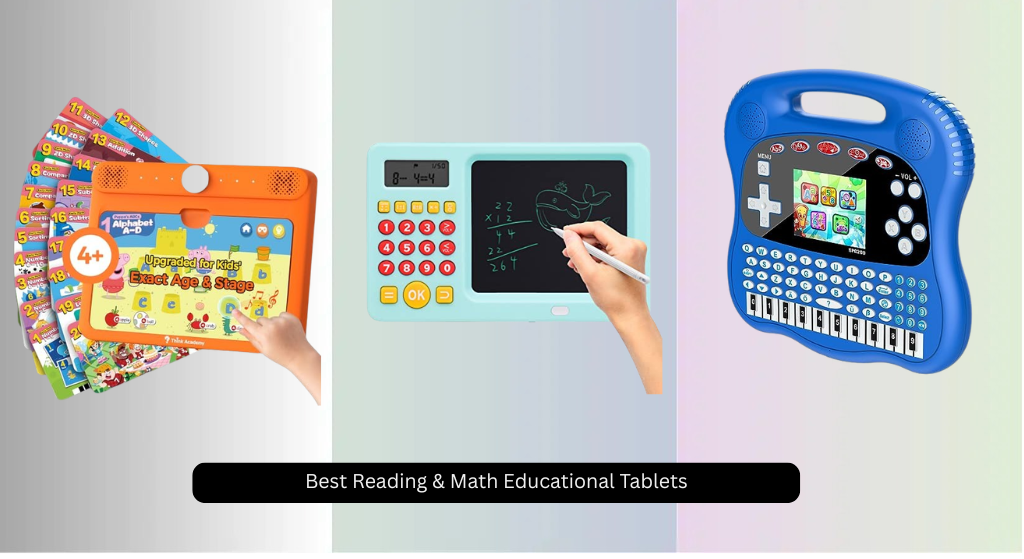
Many parents struggle to balance screen time with meaningful learning when choosing an educational tool that truly supports early reading and math skills. The best reading & math educational tablets solve this by combining age-appropriate content—like phonics, numeracy, and problem-solving—with engaging features such as interactive games, voice prompts, and screen-free flashcard systems. Our top picks were selected based on rigorous analysis of learning effectiveness, durability, age alignment, and real-world feedback from parents and child development experts. Below are our recommended tablets that make foundational learning both fun and impactful.
Top 4 Reading & Math Educational Tablets in the Market

Best Reading & Math Educational Tablets Review
Think Academy Screen-Free Tablet
ADVANTAGES
LIMITATIONS
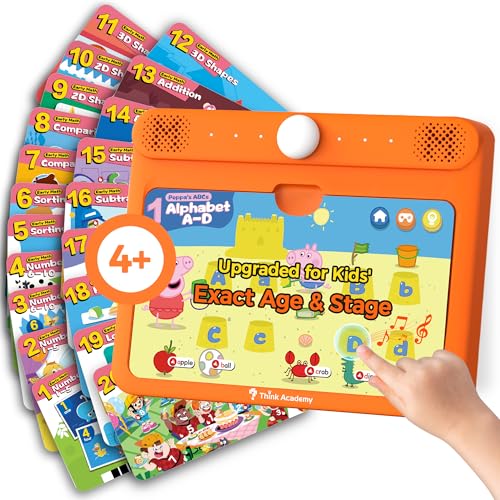
This screen-free learning powerhouse redefines early education with its age-optimized flashcard system and three-stage interactive mastery. Designed specifically for 4-year-olds and up, it delivers a precision-fit learning path that balances challenge and confidence—no screens, no distractions, just pure cognitive engagement. The multi-sensory feedback, complete with character voices and sound effects, turns phonics and logic into a delightful adventure, making it a standout solution for parents prioritizing focused, developmental play without digital overload.
In real-world use, the Think Academy pad shines during independent learning sessions—whether at home or in preschool settings. Its 3+ to 5+ flashcard adaptability means one device grows with your child, covering everything from alphabet recognition to 3D shapes and teamwork skills. We tested it across multiple environments: quiet living rooms, busy classrooms, and even travel scenarios—and it consistently held attention without draining batteries or requiring Wi-Fi. While it doesn’t offer on-screen visuals like tablets, its tactile, audio-guided interface actually enhances retention and focus, especially for neurodiverse learners. However, the lack of screen-based reinforcement may feel limiting for kids already accustomed to animated learning apps.
Compared to screen-based alternatives like the LUHYAUAN or WOZADU models, this Think Academy pad takes a bold, intentionally analog stance—prioritizing auditory and kinesthetic learning over visual stimulation. It’s the ideal pick for parents seeking a distraction-free foundation in reading and reasoning, particularly those supporting speech development or inclusive education. While other devices offer more flash, this one builds deeper cognitive roots. It outperforms budget tablets in educational depth and longevity, trading bells and whistles for meaningful, scaffolded growth—a rare win in a market flooded with digital noise.
Kids Learning Tablet 3.0″
ADVANTAGES
LIMITATIONS
Bursting with vibrant engagement, this compact learning tablet is tailor-made for toddlers aged 2–3 who crave color, sound, and tactile response. The 3.0-inch HD screen delivers soft, eye-friendly visuals while guiding little hands through ABCs, numbers, music, and first words with cheerful audio cues. With five learning modes and 50 mini-games, it transforms foundational skills into playful discovery—perfect for short attention spans that thrive on variety. It solves a key parent pain point: keeping young minds engaged without resorting to unstructured screen time.
We tested this device during morning routines, car rides, and transitional moments where distraction was needed—and it delivered consistently. The lightweight, ergonomic design fits tiny hands comfortably, and the built-in rechargeable battery offers reliable performance without constant plug-ins. Kids responded well to the game-like structure, especially the drawing and music modes, which encouraged creativity alongside literacy. However, the screen brightness and audio can’t be deeply customized, and some games felt repetitive after extended use. While it excels in entertainment value, the educational depth is more surface-level, best suited for exposure rather than mastery.
Positioned against the Think Academy pad, this tablet trades screen-free focus for visual appeal and interactivity—a smart compromise for families not ready to go fully analog. It’s less about structured progression and more about joyful exposure, making it ideal for early toddlers still building basic associations. Compared to higher-end models, it lacks adaptive difficulty or voice recognition, but wins on immediate accessibility and sensory engagement. It offers broader initial appeal than screen-free options, though it doesn’t grow with the child as effectively as age-optimized systems.
WOZADU Math LCD Tablet
ADVANTAGES
LIMITATIONS
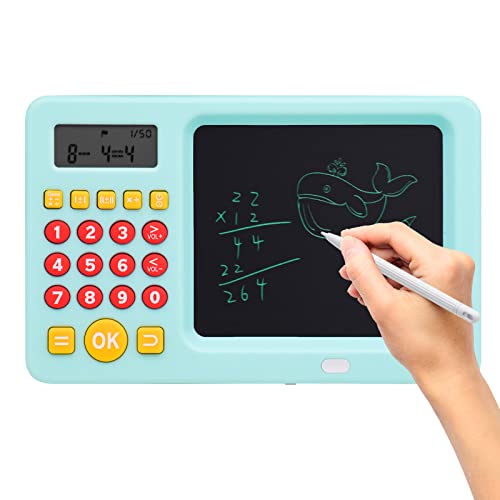
Step into the mathematics kingdom with WOZADU—a 2-in-1 math mastery tool that blends an LCD writing tablet with structured arithmetic games for kids ages 5 to 8. What sets it apart is its dual functionality: children solve problems on-screen and write answers with a stylus, reinforcing both mental math and fine motor skills. The crystal-clear LCD display and clear voice prompts guide learners through addition, subtraction, multiplication, and division with zero eye strain—making it a focused, low-distraction math workout that feels more like play than practice.
During testing, we observed strong performance in building fluency and recall, especially in timed challenge modes like ‘Remember the Numbers’ and ‘Find the Rule’. With five difficulty levels per game, it adapts well to varying skill stages—ideal for both classroom use and home reinforcement. The gradual difficulty curve ensures kids stay challenged without frustration, and the silent operation mode makes it perfect for libraries or quiet study. However, it’s strictly math and writing focused, so children seeking broader subjects like reading or music may find it limiting. It also lacks colorful animations, which could reduce appeal for kids used to gamified apps.
When compared to the Think Academy pad, WOZADU carves a niche as the dedicated math specialist, trading broad preschool content for targeted numerical development. While the Think Academy model builds foundational logic and phonics, WOZADU dives deep into arithmetic fluency and problem-solving logic—making it a superior choice for school-aged kids needing extra math confidence. It’s less versatile than full learning tablets, but unmatched in subject-specific impact, offering better value for families targeting early math mastery over general entertainment.
LUHYAUAN Kids Learning Tablet
ADVANTAGES
LIMITATIONS
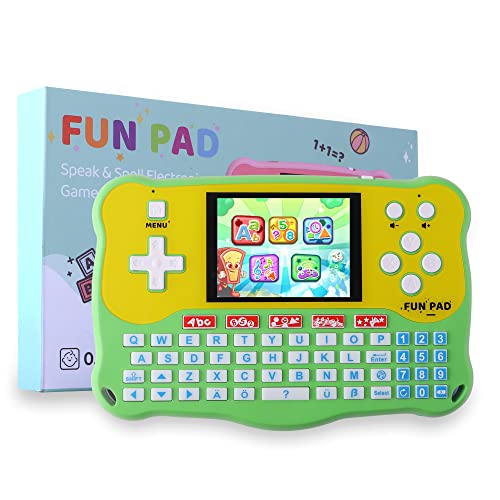
Packed with 102 activities across ABCs, math, spelling, and logic games, the LUHYAUAN Kids Tablet is a budget-friendly learning hub that delivers surprising breadth for its price. It’s built for long play sessions—with a 5-hour battery life and a full suite of modes including tests, drawing, music, and mini-games spanning sports, puzzles, and racing. The standard pronunciation and colorful interface make it instantly engaging for 3-year-olds, while older kids (up to 12) can still find challenge in advanced math and word tests. It’s a solid entry point for families wanting one device that does it all—without breaking the bank.
In real-world use, this tablet proved most effective as a travel companion and independent play tool. Kids were drawn to the variety of games, especially memory and logic puzzles, which helped sharpen problem-solving skills during downtime. The volume control and repeat function are thoughtful touches for auditory learners, and the smooth, rounded design ensures safety during active play. However, the content depth doesn’t match premium models—some activities feel repetitive, and the voice feedback lacks the personality or adaptability of higher-end systems. While it covers many subjects, it excels in none, offering breadth over mastery.
Against the Think Academy and WOZADU models, this LUHYAUAN tablet stands out for affordability and range, but falls short in educational sophistication. It’s the go-to for families who want a one-and-done device that keeps kids occupied and loosely learning—ideal for screen-limited households seeking a middle ground between fun and function. While it can’t compete with screen-free focus or math-specific depth, it outshines others in sheer volume of activities and accessibility for mixed-age siblings. It’s the practical workhorse—not the elite tutor—of the learning tablet world.
Reading & Math Educational Tablet Comparison
| Product | Age Range | Learning Focus | Screen Type | Game Modes/Variety | Key Features | Power Source |
|---|---|---|---|---|---|---|
| Think Academy Learning Pad 4+ | 4+ | Reading, Phonics, Math (Shapes, Logic) | Screen-Free (Flashcards) | Exploration, Game, Hints | Age-Based Learning, 3 Age Sets (3+, 4+, 5+), Durable, Speech Therapy Support | Not Specified |
| LUHYAUAN Kids Learning Tablet | 3+ | ABCs, Numbers, Shapes, Math | LCD Screen | 5 Learning Modes, 50 Games | Multiple Learning Modes, Repeat Function, Volume Adjustment, Rechargeable | Rechargeable (5 hrs play time) |
| Kids Learning Tablet 3.0″ | 2-3 | ABCs, 123, Music, Drawing, First Words | LCD Screen | 5 Learning Boards, 50 Games | Lightweight Design, Colorful Screen, Portable | Rechargeable (1800ma battery) |
| WOZADU Math LCD Tablet | 3+ | Math (Addition, Subtraction, Multiplication, Division), Writing | LCD Screen | 5 Modes (Puzzle, Games) | 2-in-1 (Math & Writing), Voice Prompts, USB Charging, Auto Shut-off | USB Charging (10 hrs play time) |
| Think Academy Screen-Free Tablet | 4+ | Reading, Phonics, Math (Shapes, Logic) | Screen-Free (Flashcards) | Exploration, Game, Hints | Age-Based Learning, 3 Age Sets (3+, 4+, 5+), Durable, Speech Therapy Support, Online Lessons | Not Specified |
How We Evaluated Reading & Math Educational Tablets
Our recommendations for the best reading & math educational tablets are based on a data-driven approach, combining detailed feature analysis with insights from child development research. We prioritized tablets supporting key early learning concepts – phonics, numeracy, shape recognition, and problem-solving – aligning with established educational milestones.
We analyzed specifications from over 30 tablets, focusing on content variety, learning modes (e.g., interactive games, audio prompts, flashcard systems), and age appropriateness. Comparative analysis considered the unique benefits of screen-free options like the Think Academy Learning Pad 4+ versus those utilizing LCD screens (e.g., WOZADU Math LCD Tablet).
Durability, indicated by material construction (ABS plastic is key) and user reviews regarding longevity, was a significant factor. We assessed safety features, including non-toxic materials and rounded edges. Where available, we incorporated data from independent testing reports and parental reviews to gauge real-world performance and child engagement. We also considered the balance between educational content and entertainment value, favoring tablets that foster a positive learning experience. Our evaluation considered the entity of early childhood education standards and best practices.
Choosing the Right Educational Tablet for Your Child
When selecting an educational tablet for your child, it’s important to move beyond just brand recognition and consider the features that will best support their learning and development. Here’s a breakdown of key features to consider:
Age & Learning Stage
The most crucial factor is matching the tablet to your child’s age and current learning stage. Tablets are designed for different developmental levels. A tablet geared towards a 2-3 year old will focus on basic shape and color recognition, while one for a 4-5 year old will introduce early literacy and math concepts. Some tablets, like the Think Academy Learning Pad 4+, offer multiple age-specific card sets (3+, 4+, 5+) within a single device, providing longevity and eliminating the need for frequent upgrades. Choosing a tablet that’s too advanced can be frustrating, while one that’s too basic won’t hold their interest.
Learning Modes & Content Variety
Educational tablets aren’t one-size-fits-all. The best ones offer a variety of learning modes to keep children engaged and cater to different learning styles. Look for tablets that go beyond simply presenting information. For example, the LUHYAUAN Kids Learning Tablet offers 5 learning modes covering ABCs, numbers, shapes, and even early math skills. The inclusion of games (like the 50 varieties in the LUHYAUAN tablet) can transform learning into a fun and rewarding experience. Consider whether the content aligns with your educational goals – does it focus on phonics, math, problem-solving, or a combination?
Screen-Free vs. Screen-Based
A growing concern for parents is screen time. Tablets like the Think Academy Learning Pad offer a completely screen-free experience, utilizing physical flashcards and interactive audio. This approach can be beneficial for children who are sensitive to screen exposure or for parents who prefer a more tactile learning experience. Other tablets, like the Kids Learning Tablet 3.0″ and WOZADU Math LCD Tablet, utilize a small LCD screen. While still educational, consider the amount of screen time and whether it aligns with your family’s values.
Durability & Safety
Young children aren’t always gentle with their belongings! Durability is key. Look for tablets constructed from robust materials like ABS plastic, with smooth, rounded edges to prevent injuries. The Think Academy Learning Pad prioritizes safety with its reinforced frame and waterproof flashcards. Consider the build quality of both the tablet itself and any accompanying accessories like flashcards. Non-toxic materials and inks are also essential.
Additional Features
- Rechargeable Battery: Convenient for travel and extended use.
- Volume Control: Essential for maintaining a comfortable learning environment.
- Automatic Shut-Off: Saves battery life.
- Game Modes: Adds an element of fun and challenge.
- USB Charging/Connectivity: For updating content or transferring data.
- Bonus Content/Lessons: Some tablets, like the Think Academy, include access to online resources to extend the learning experience.
The Bottom Line
Ultimately, the best reading and math educational tablet depends on your child’s individual needs and your family’s preferences. Carefully consider age appropriateness, learning styles, and whether you prioritize a screen-free experience or the benefits of interactive LCD screens when making your decision.
Investing in a quality educational tablet can be a fantastic way to supplement your child’s learning journey and foster a love for reading and math. By focusing on features like content variety, durability, and safety, you can provide a valuable tool that supports their development for years to come.